Vensterschool
Vensterschool
Vensterschool
The first community school in the Netherlands
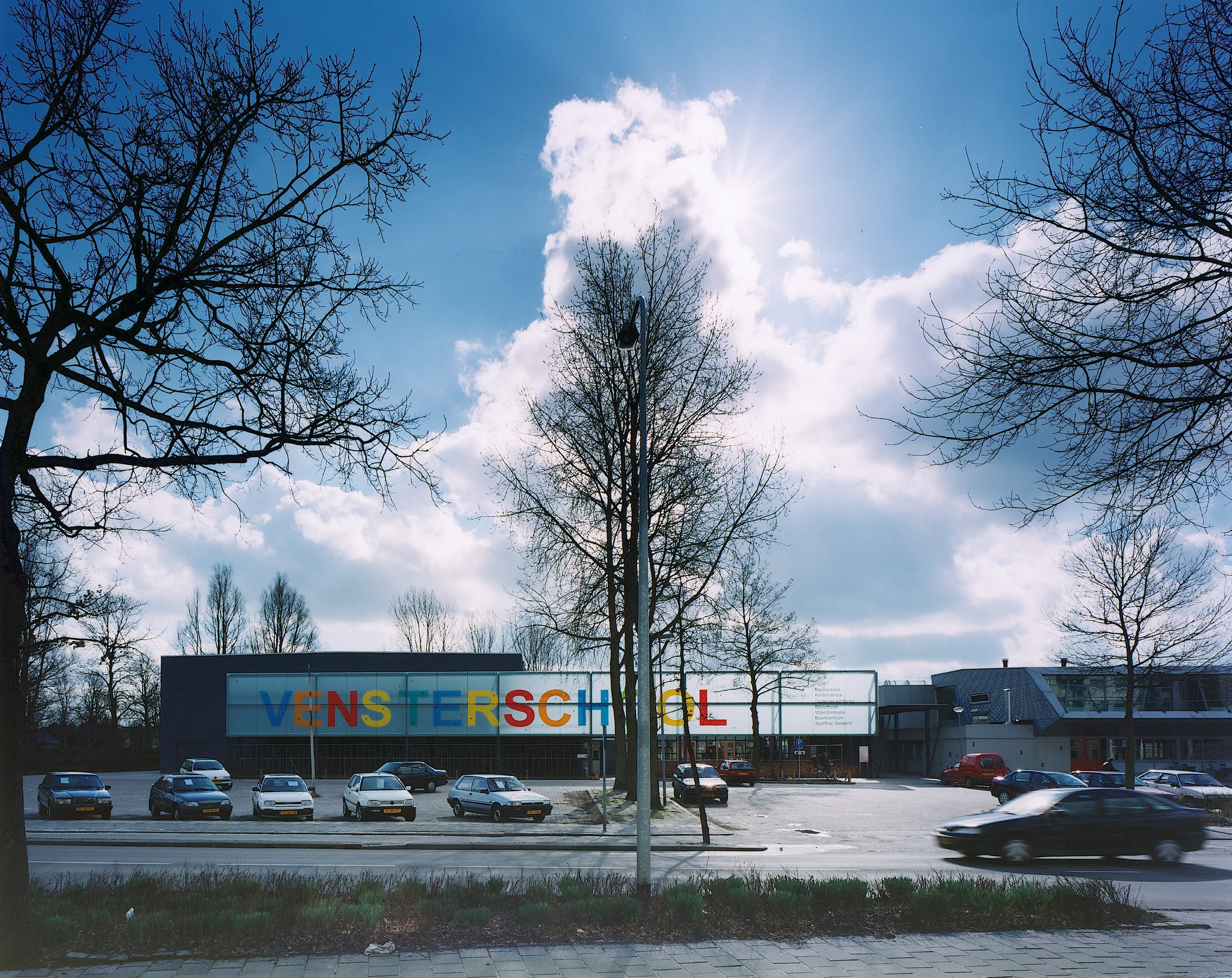
An experimental type of school
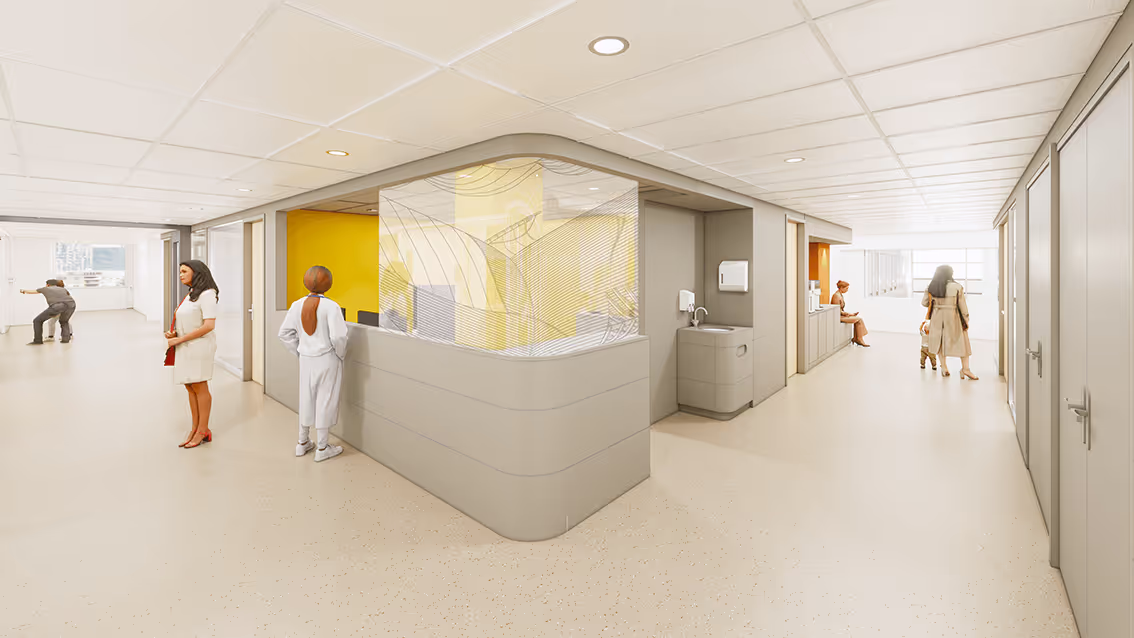
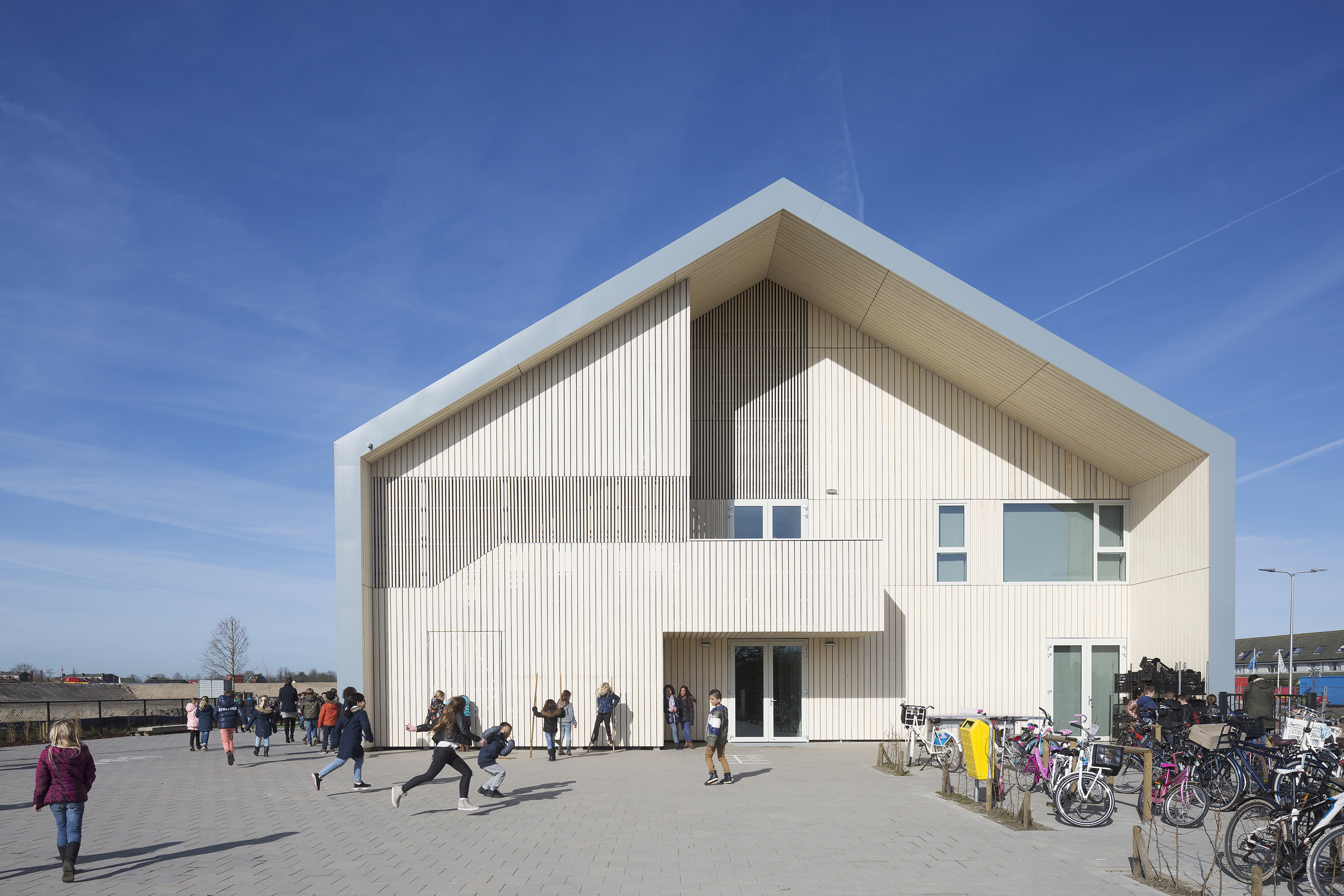
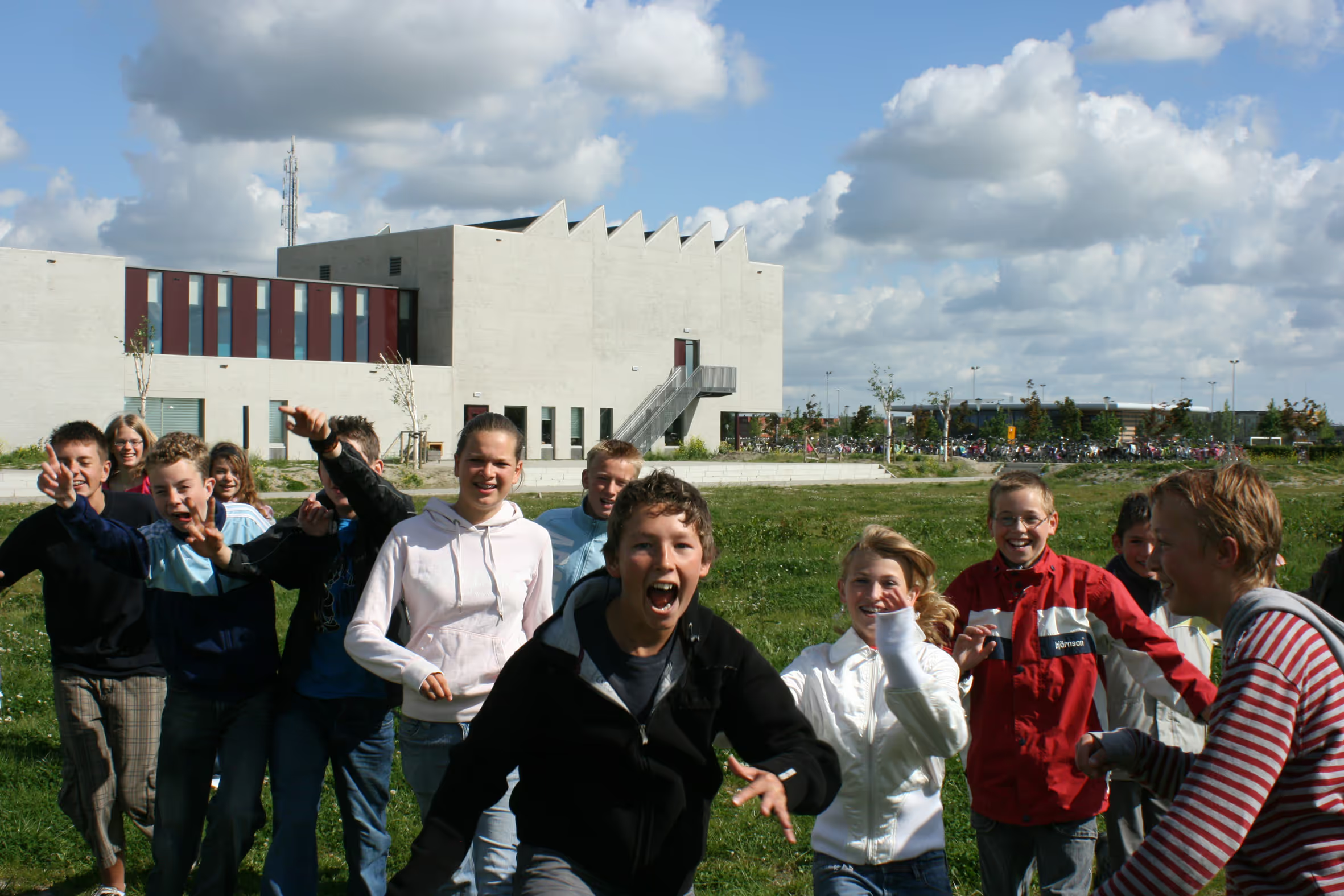
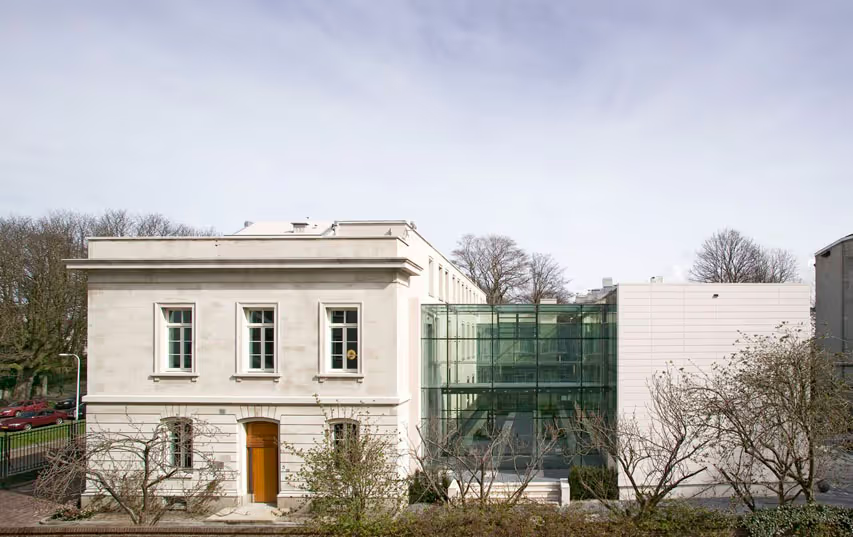
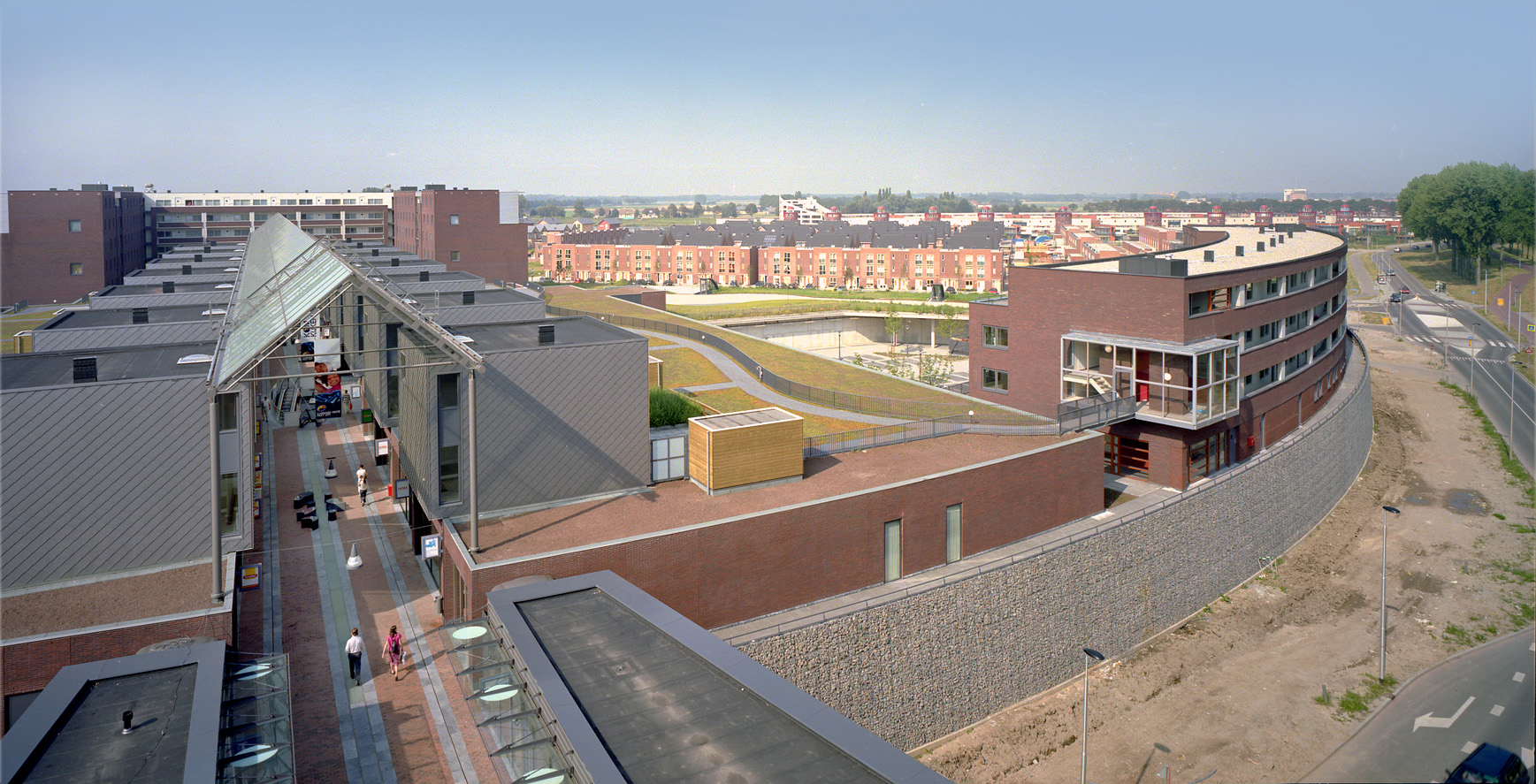
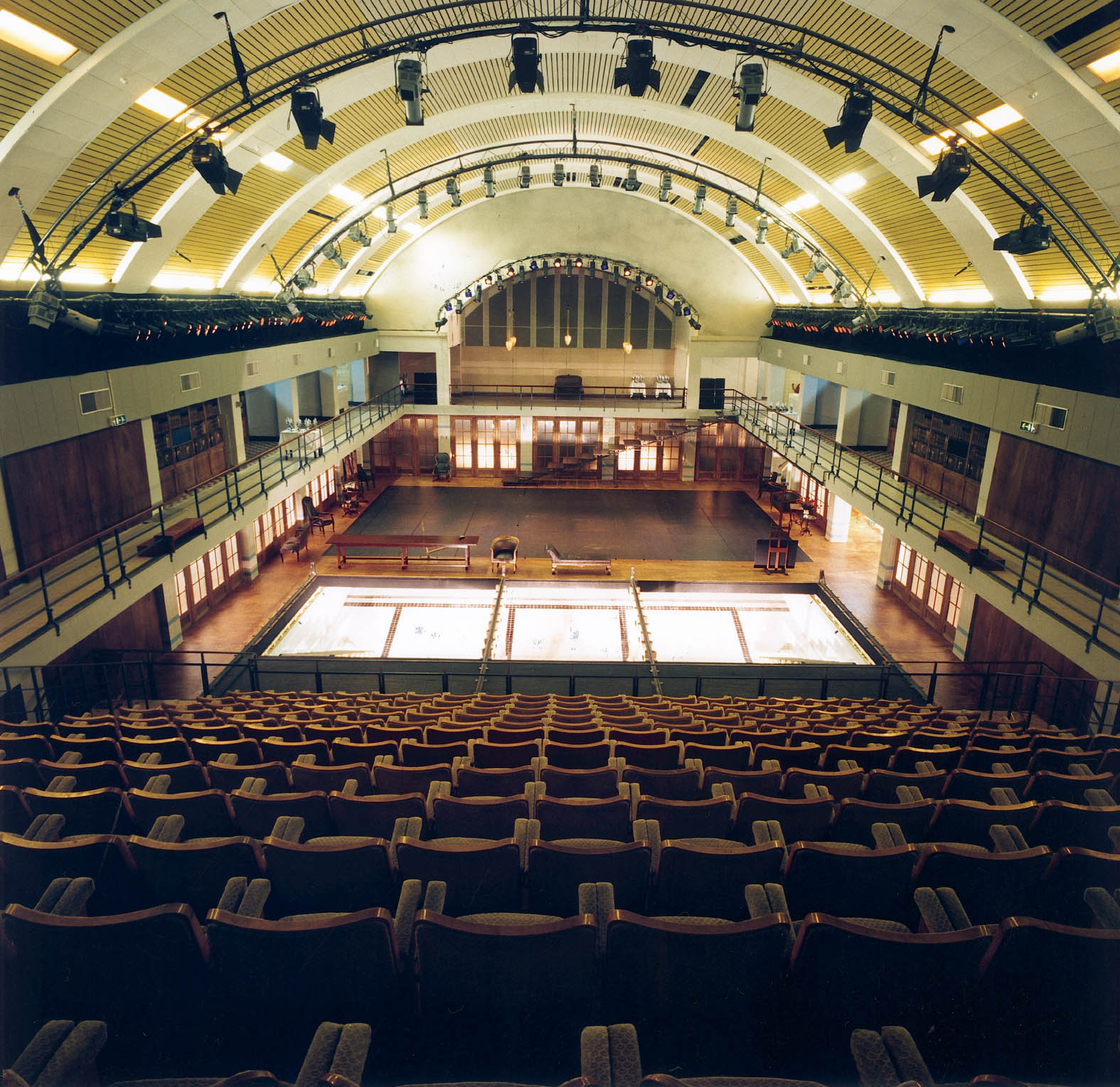
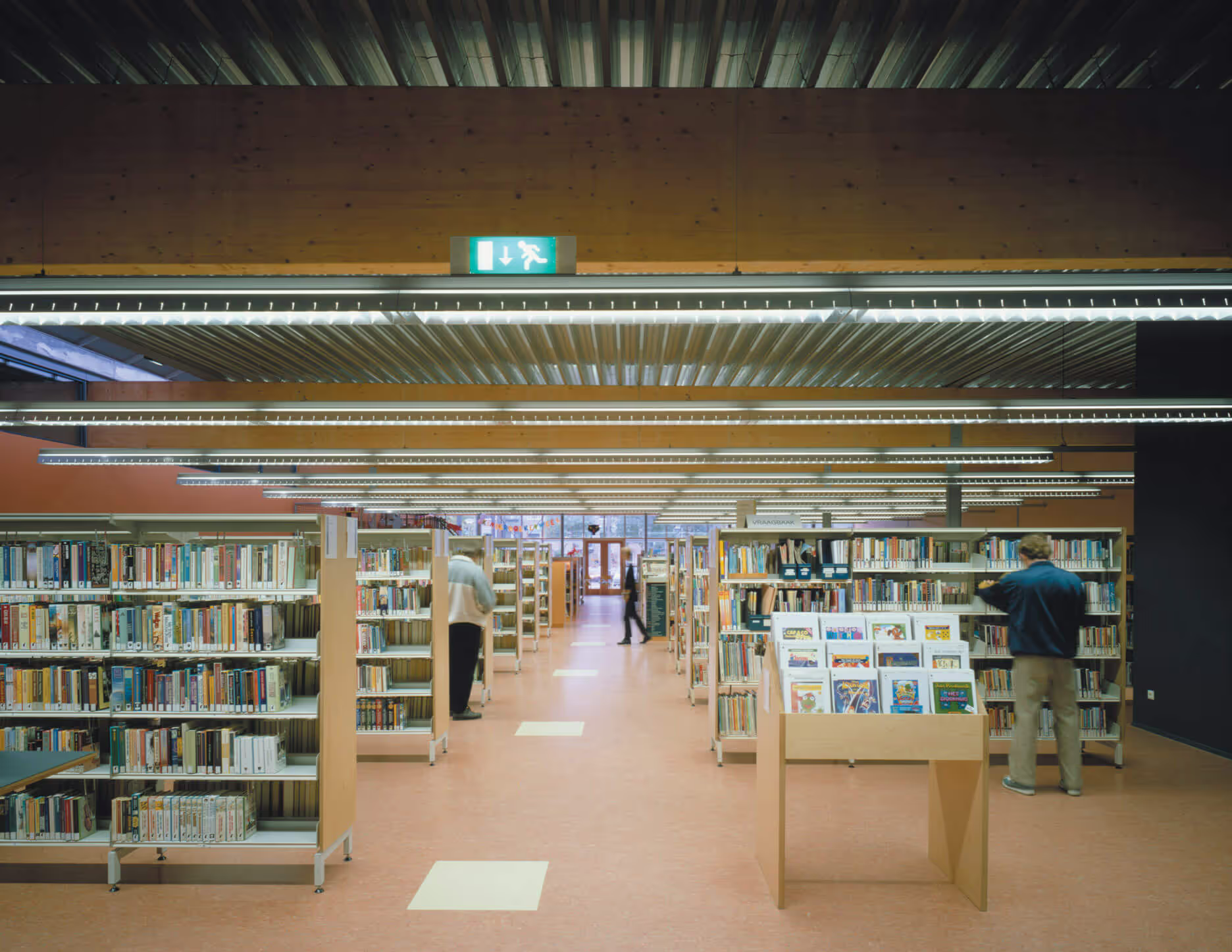
The phenomenon “Window School” is an experimental type of school that, in addition to education, also provides parenting support and after-school care in the form of a so-called “extended school day”. An existing swimming pool and an existing sports hall have been integrated into a new building that also houses a primary school (16 classes), a preschool, a daycare center, after-school care, the public library, community center and home care/GGD.
The process as a catalyst
Surely you're losing your own face a bit, or at least that was the natural fear of all participants in the process. The trick was therefore to make it clear that the experiment only succeeds if everyone recognizes that there are opportunities to develop added value by sharing together. It took a while before these possibilities were recognized, but the final plan was widely supported.
Atmosphere - integration and identity
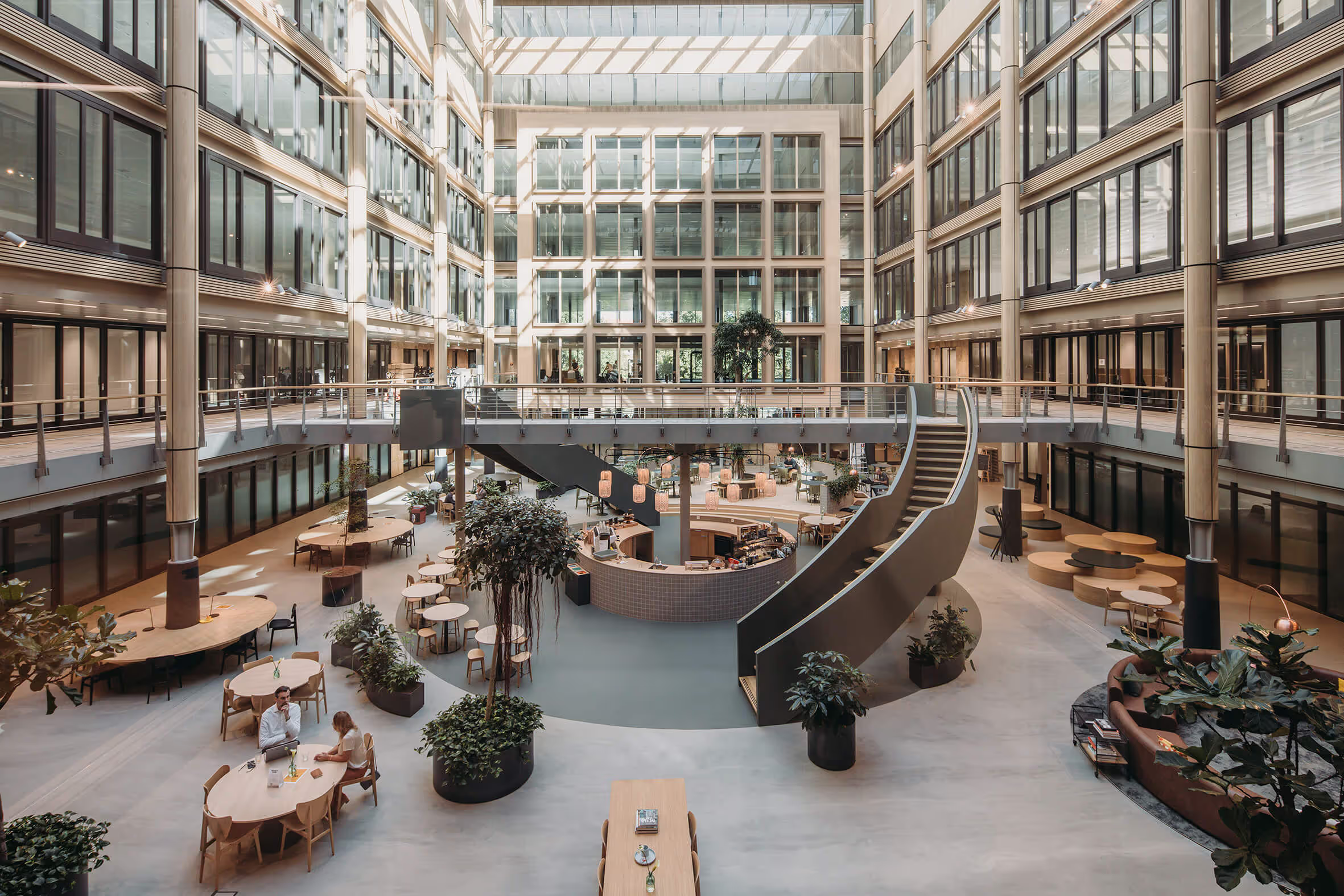
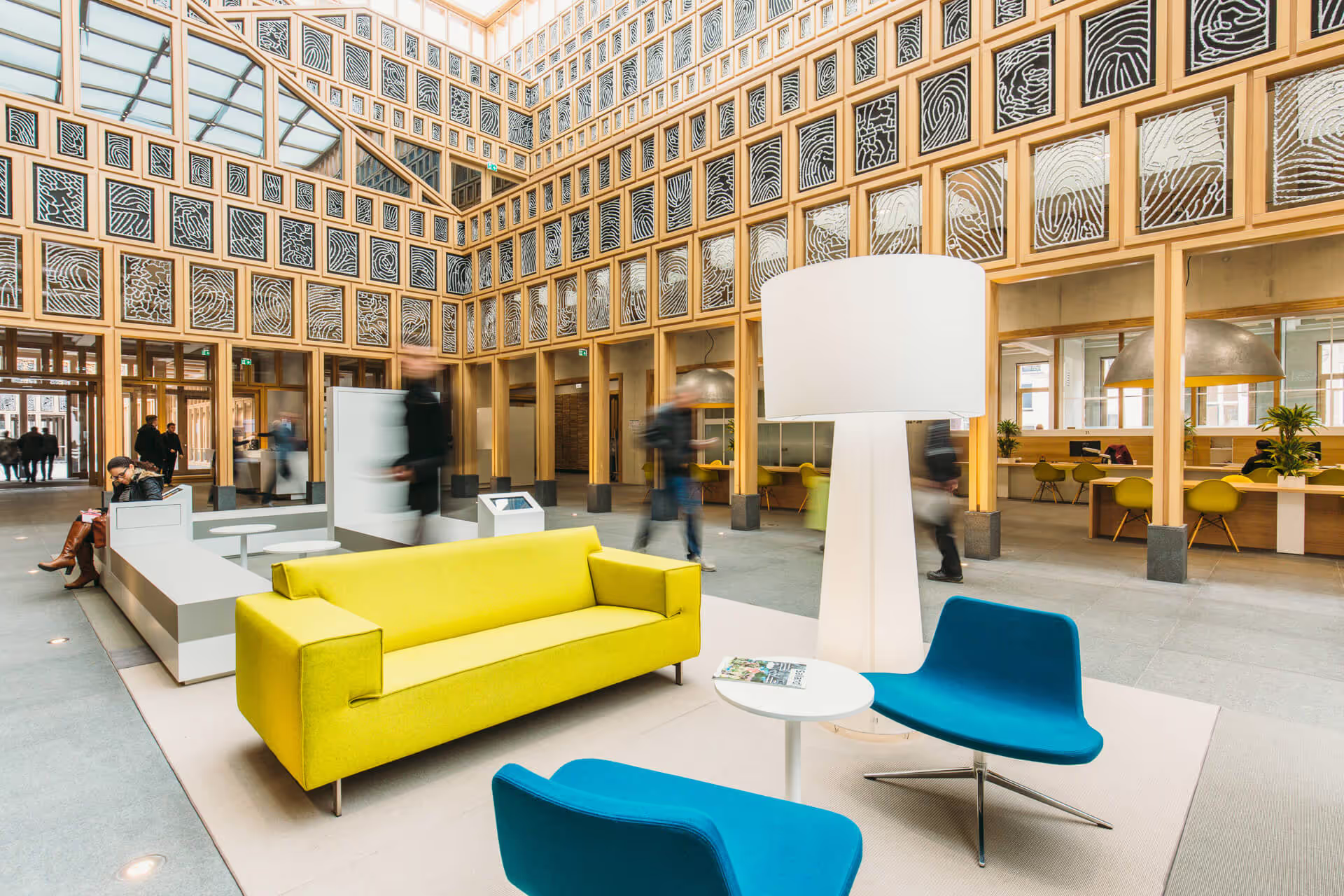
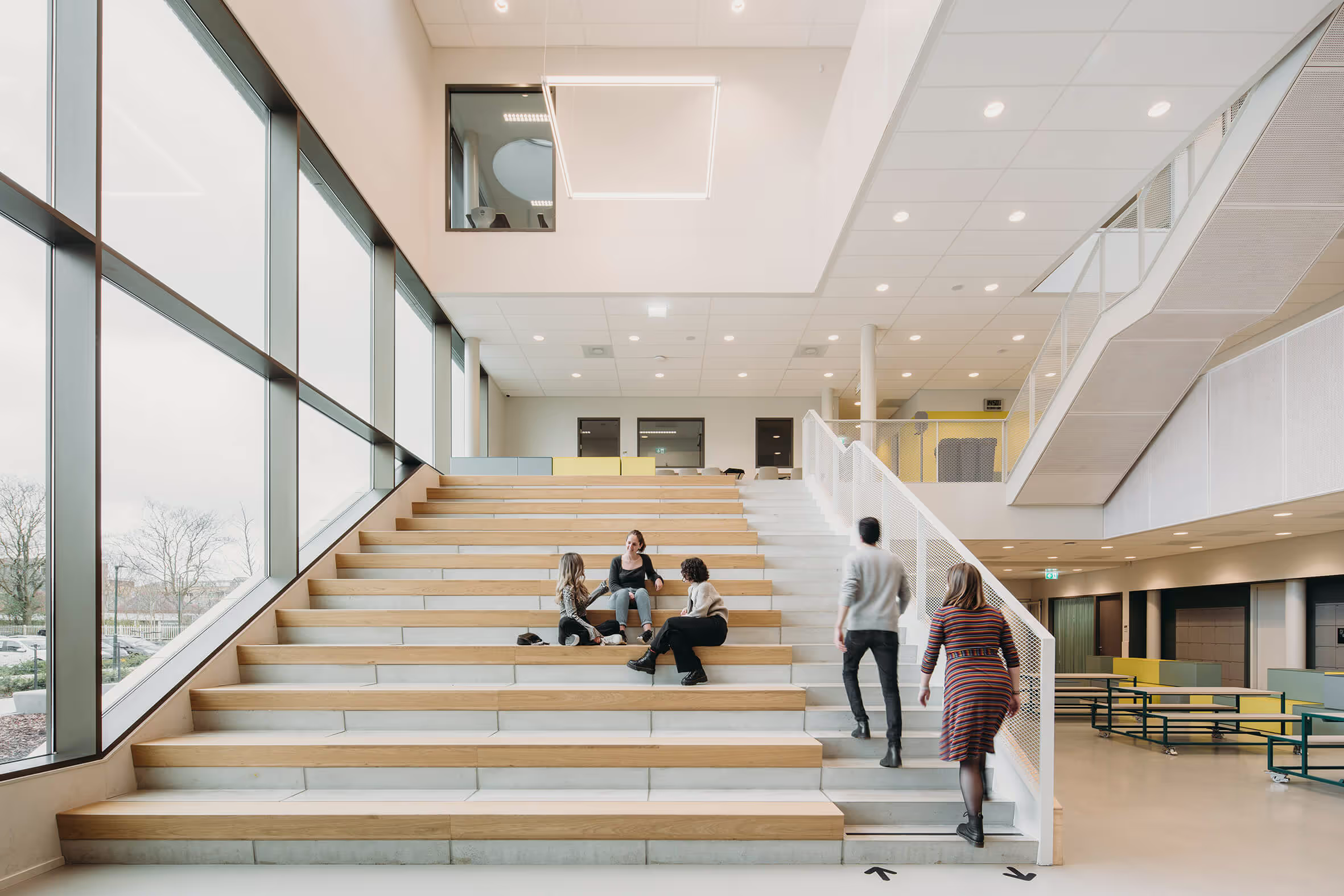
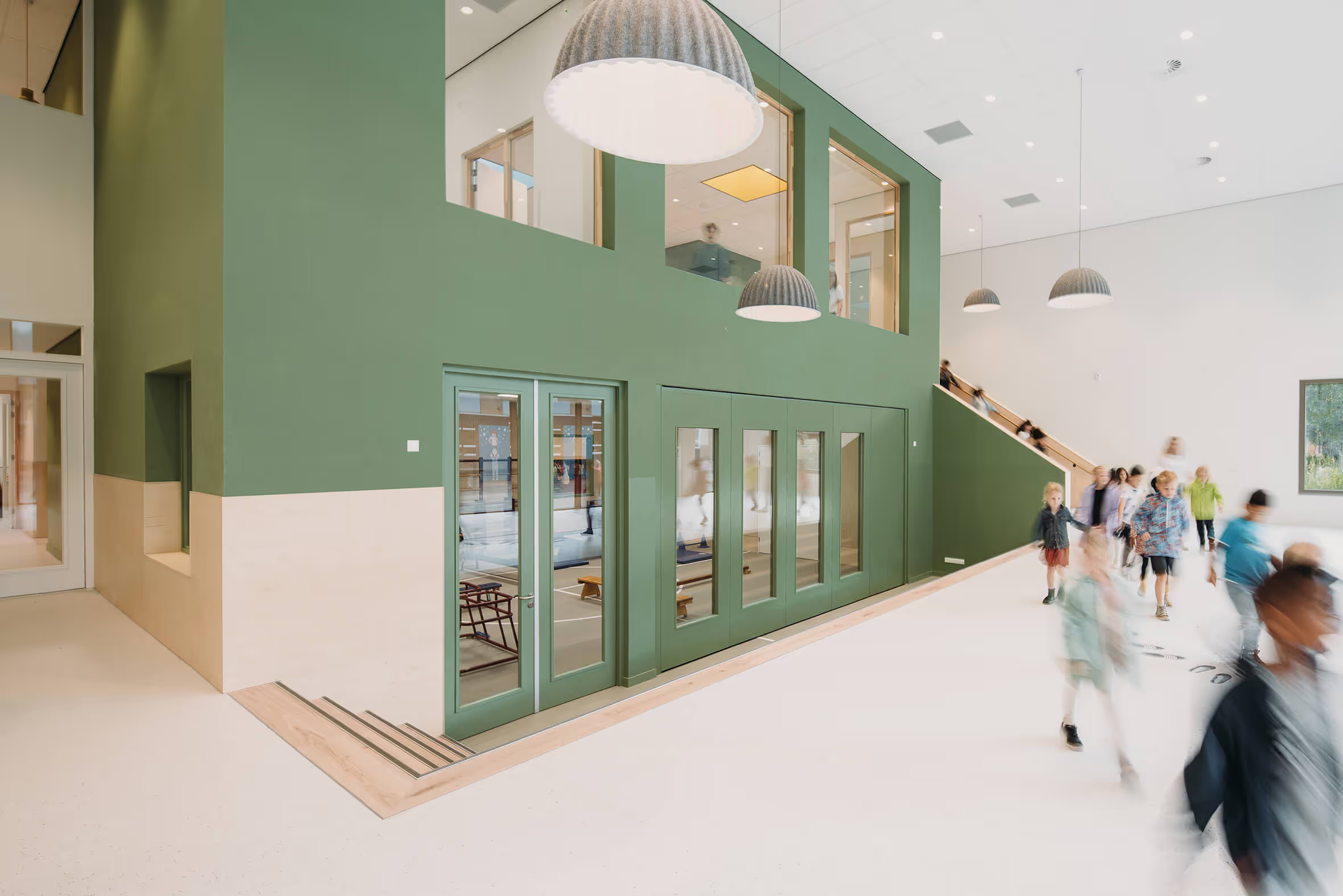
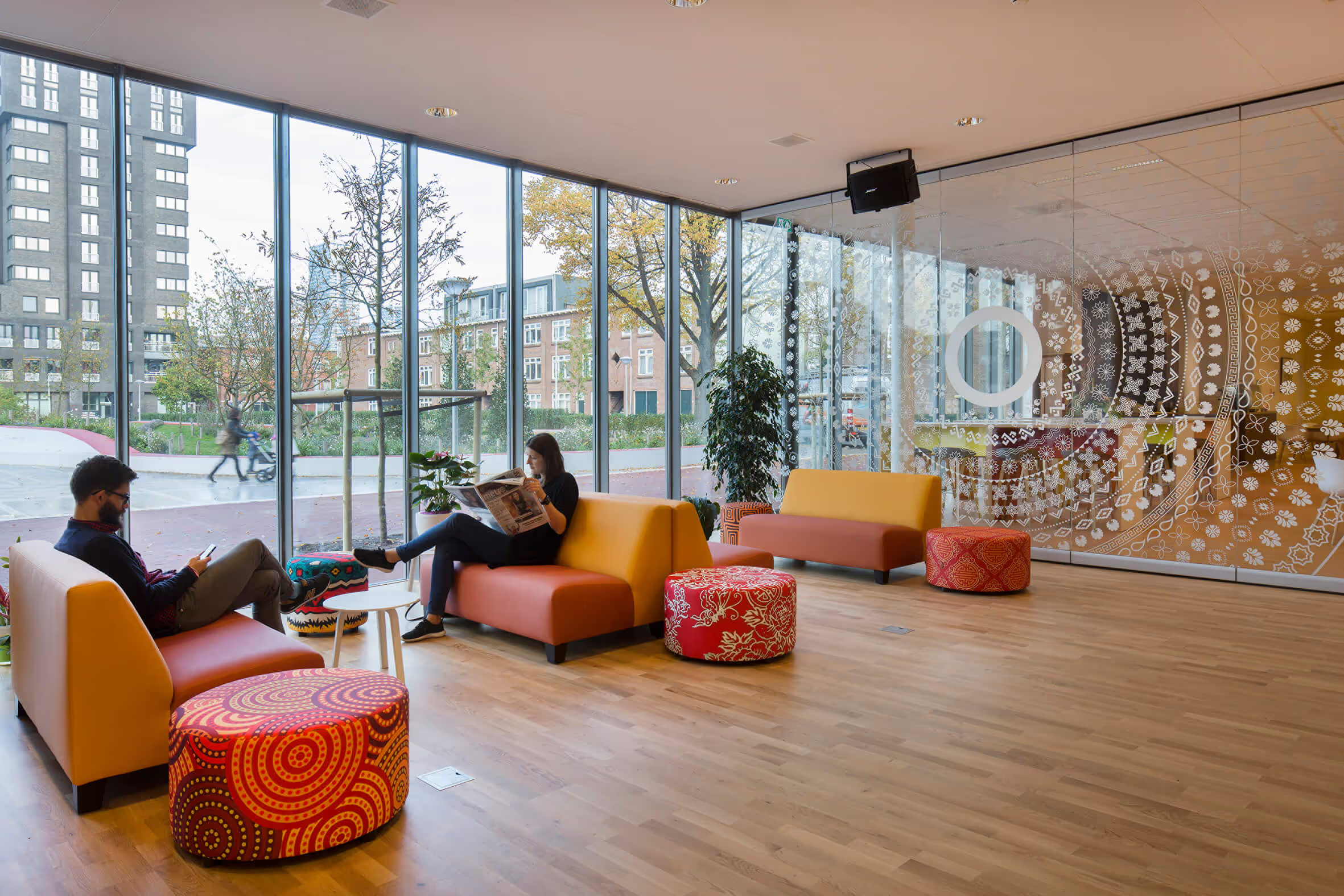
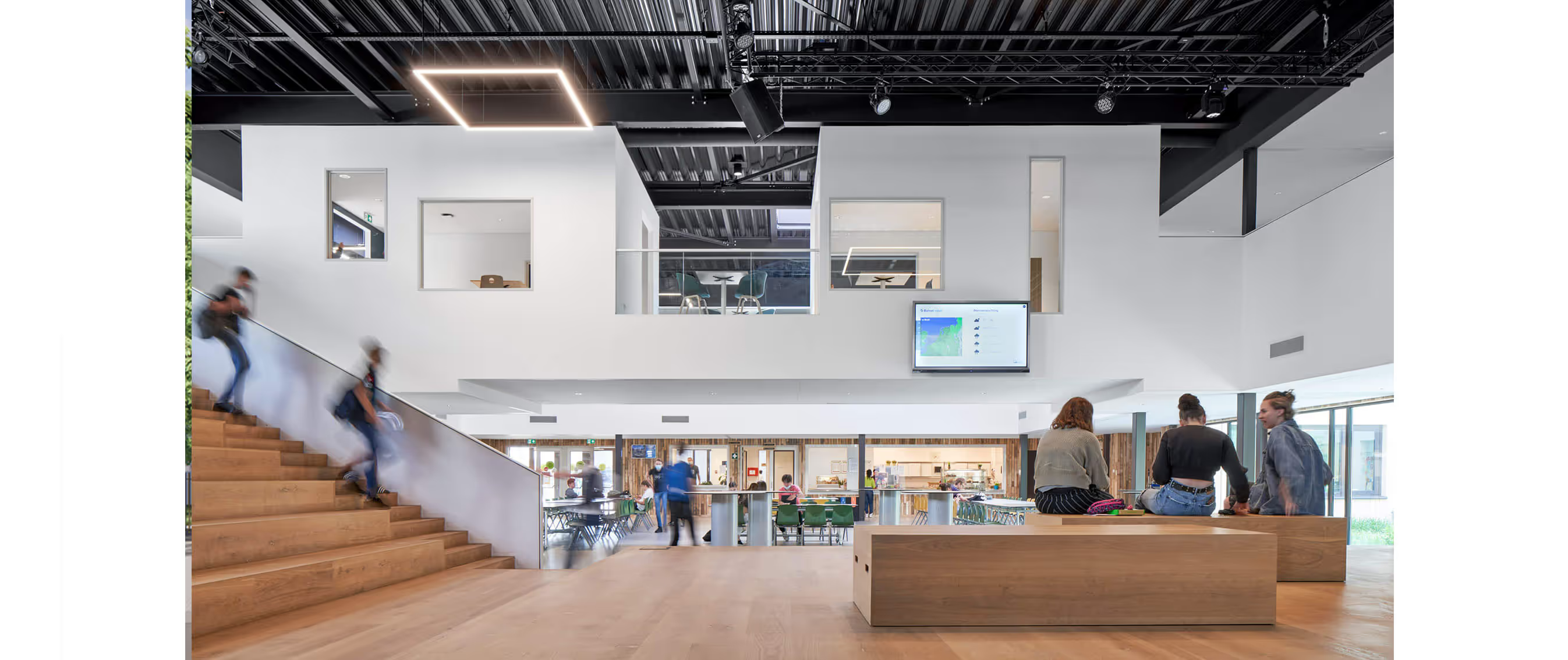
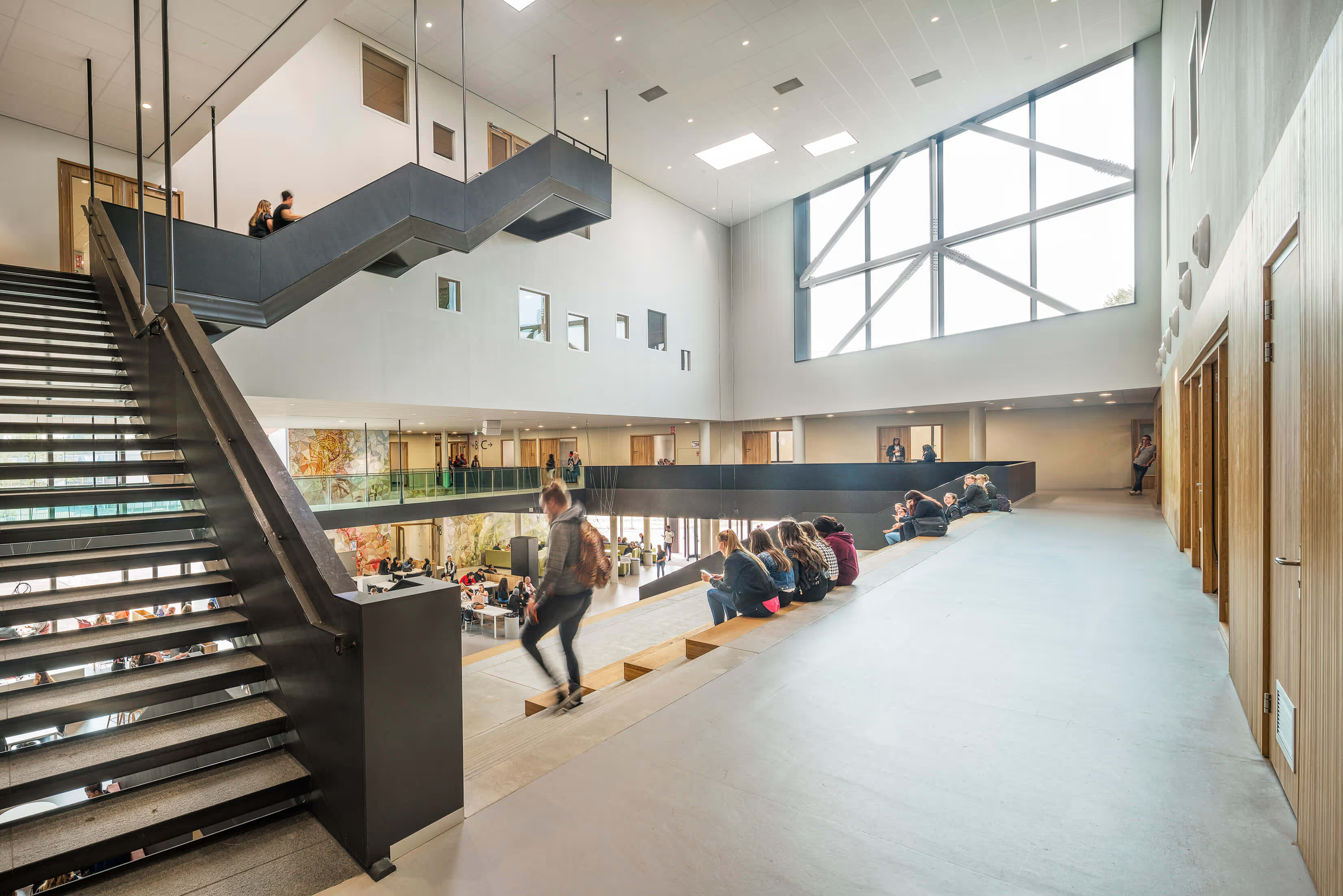
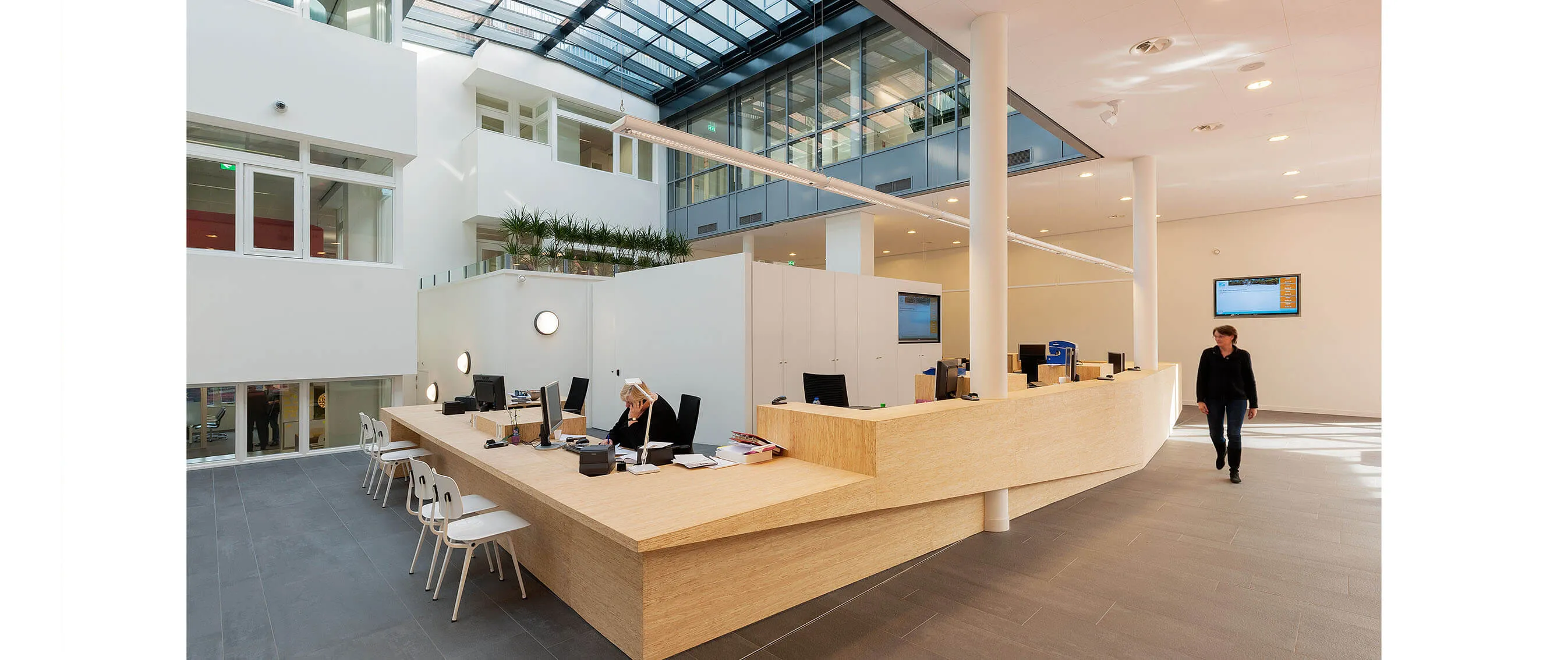
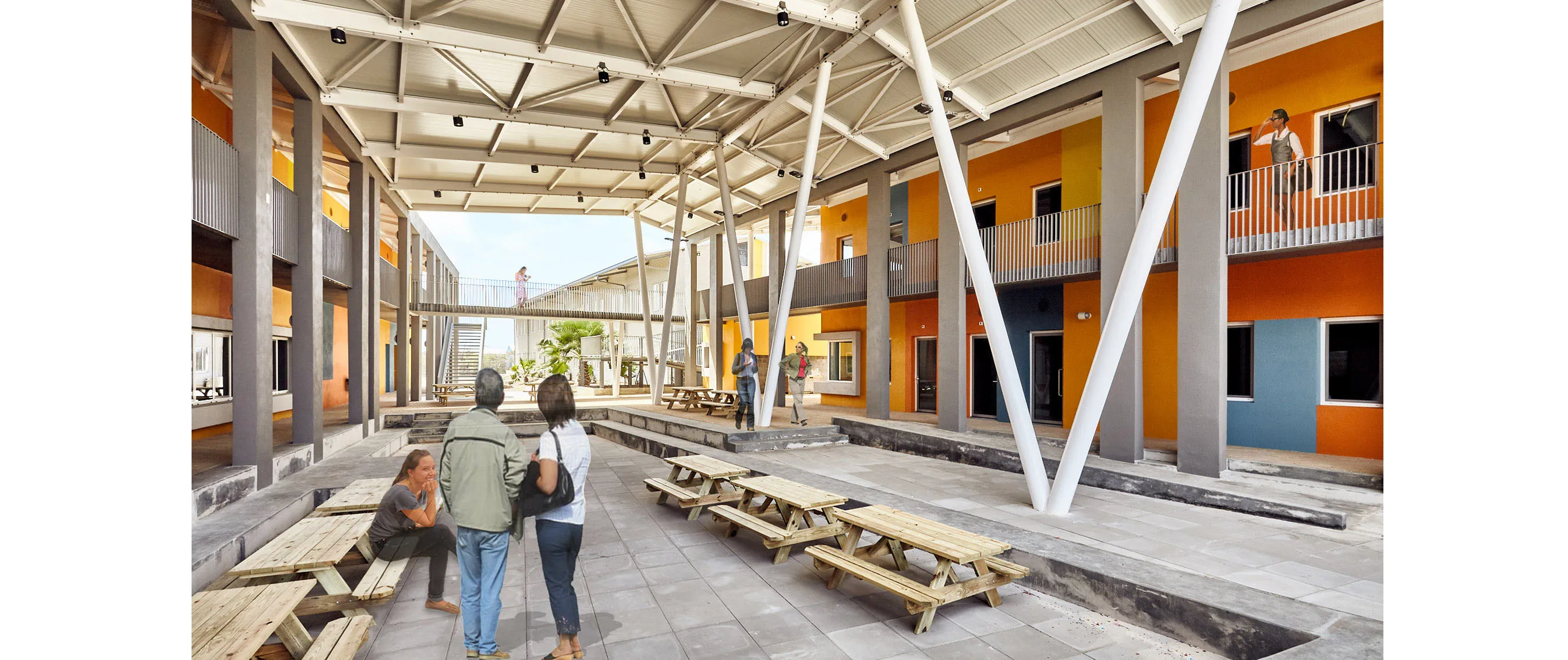
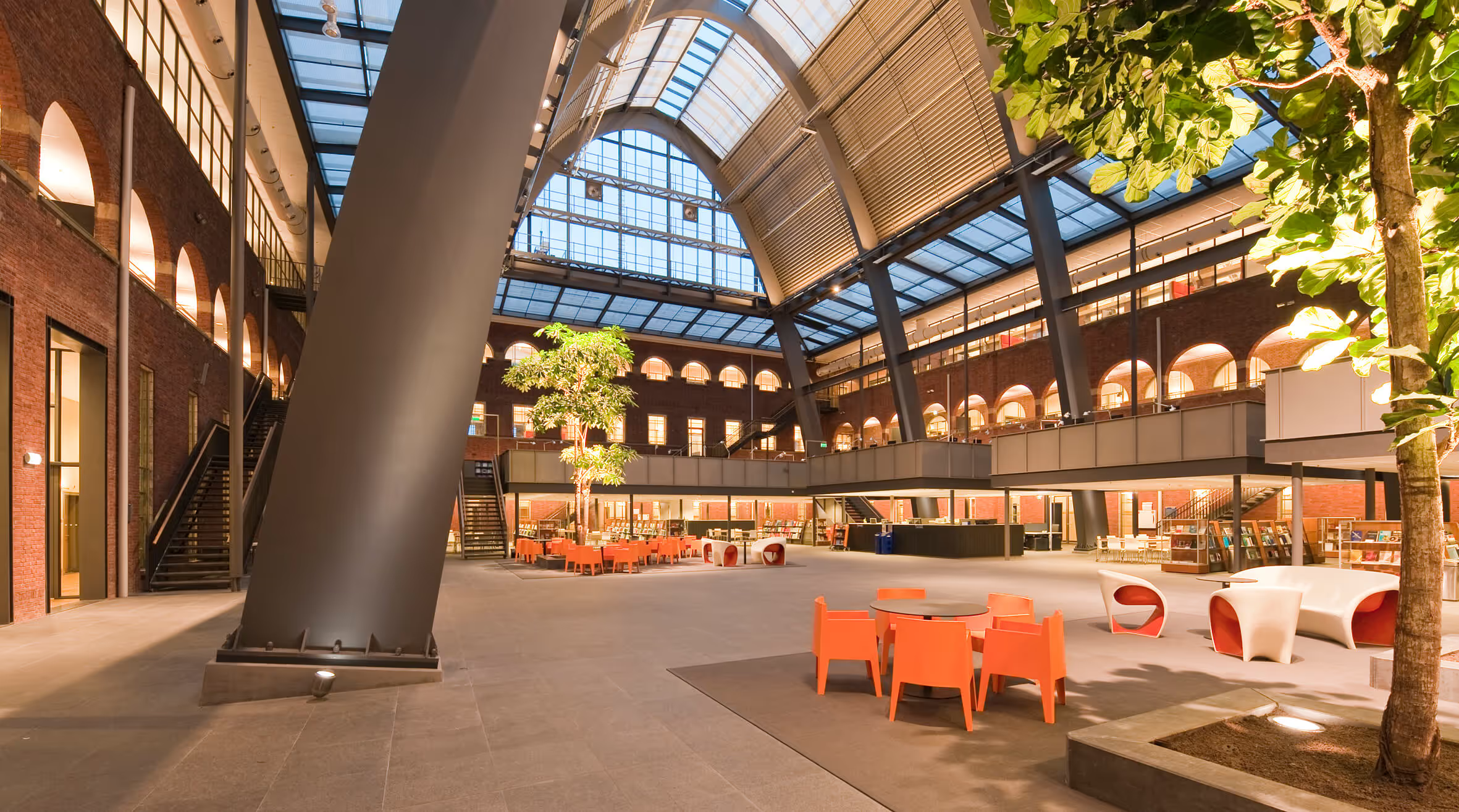
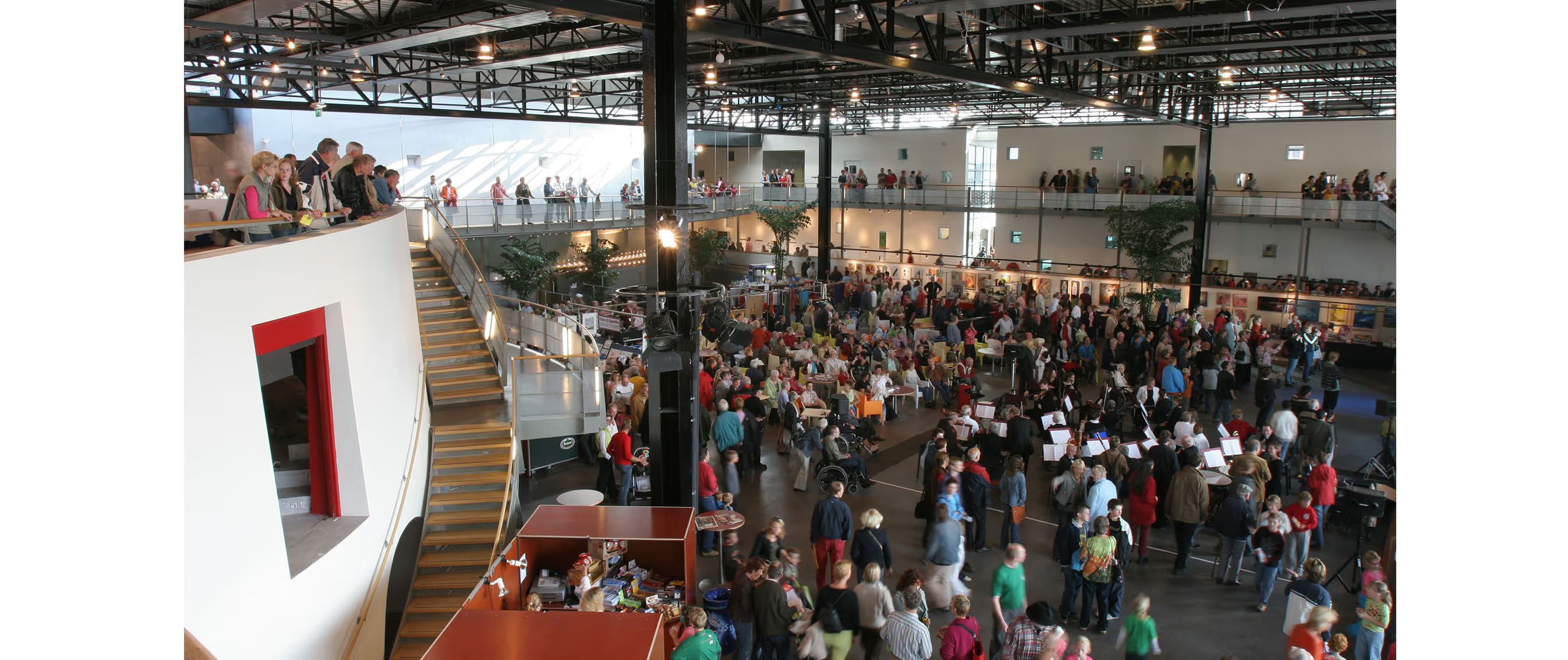
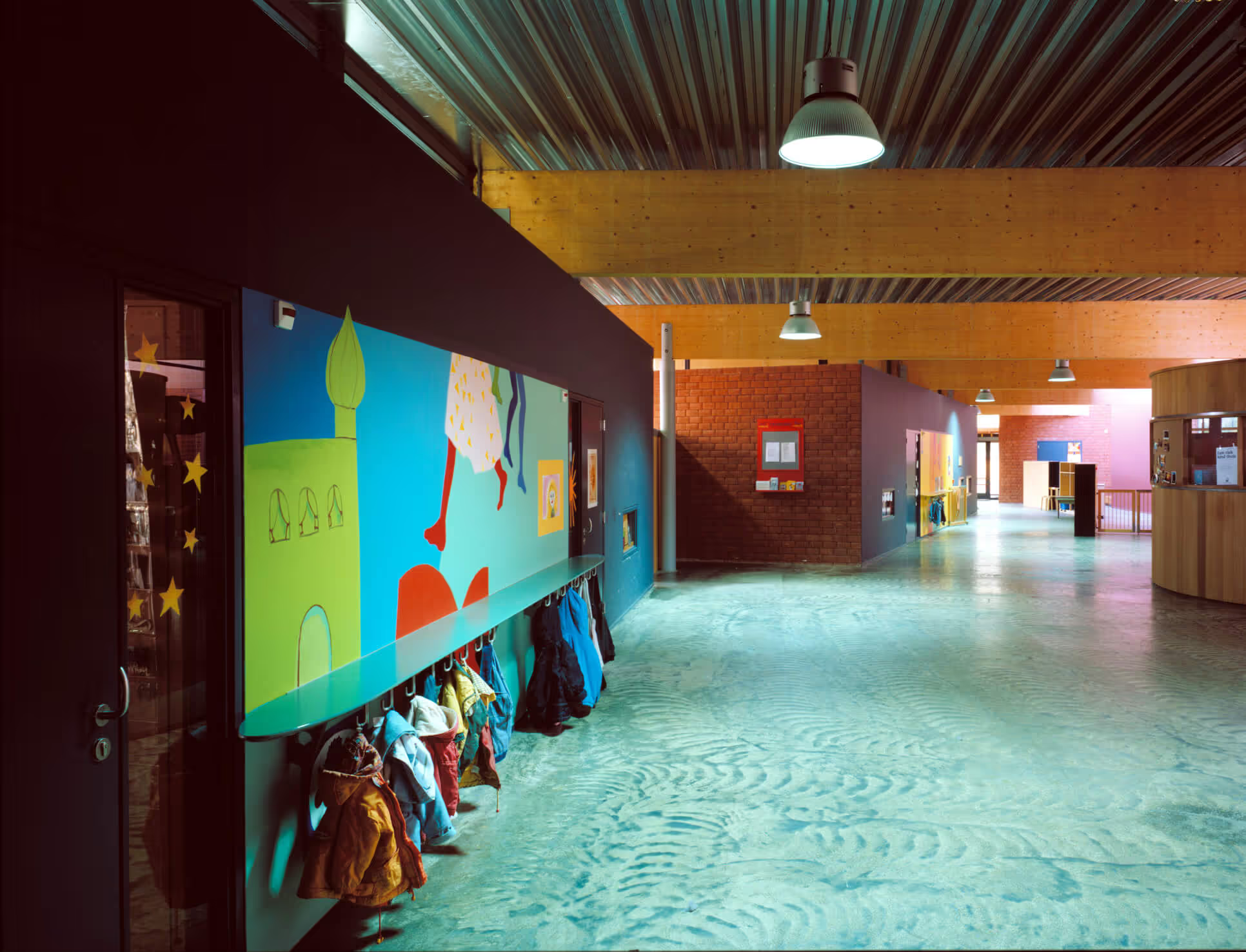
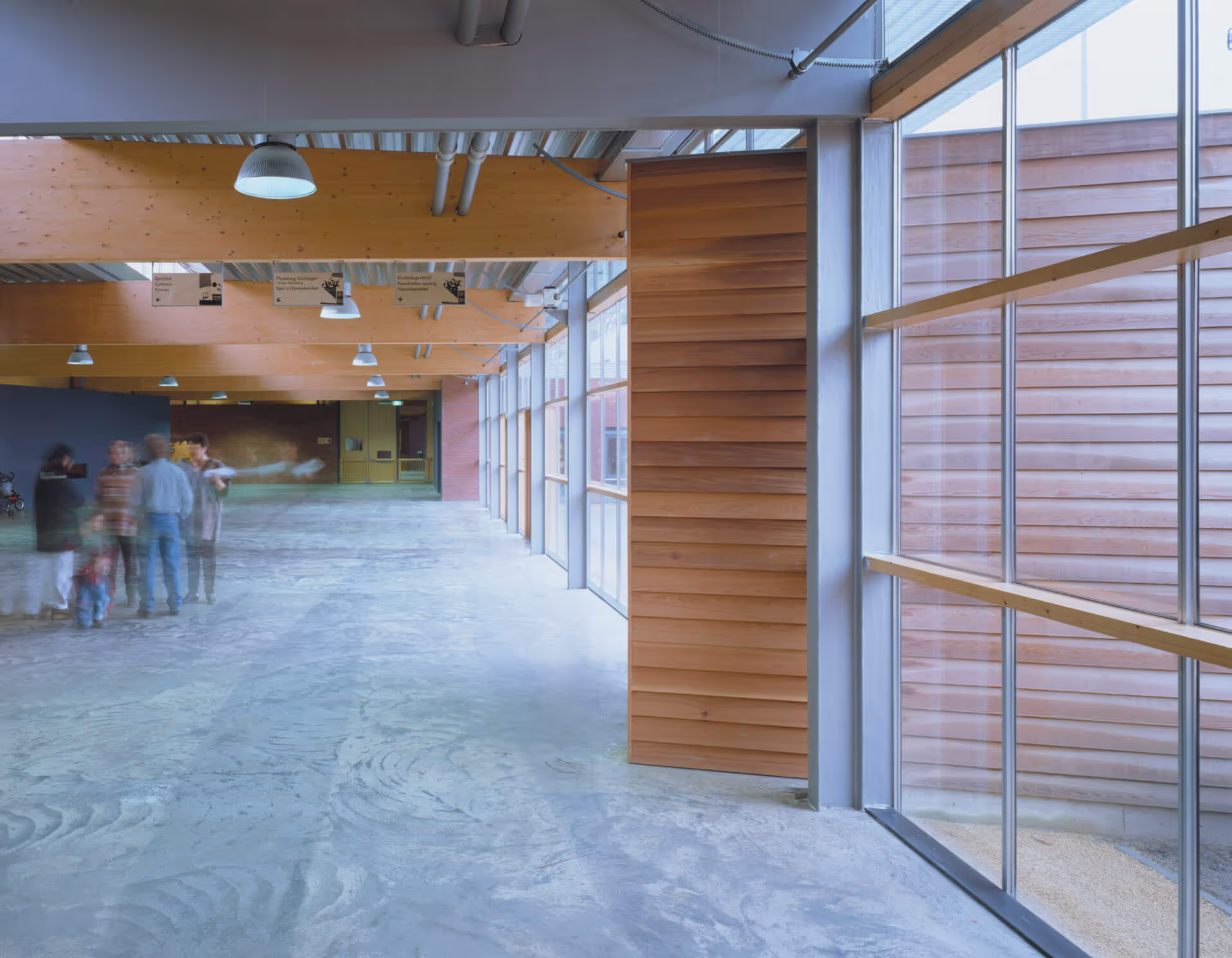
The integration of different functions into one complex, no matter how paradoxical, places high demands on one's own identity. The building has separate volumes with specific functions, which are always connected to the common area: the Vensterplein. This is covered, semi-public and can be involved in varying degrees in the various functions.
Design - street and square
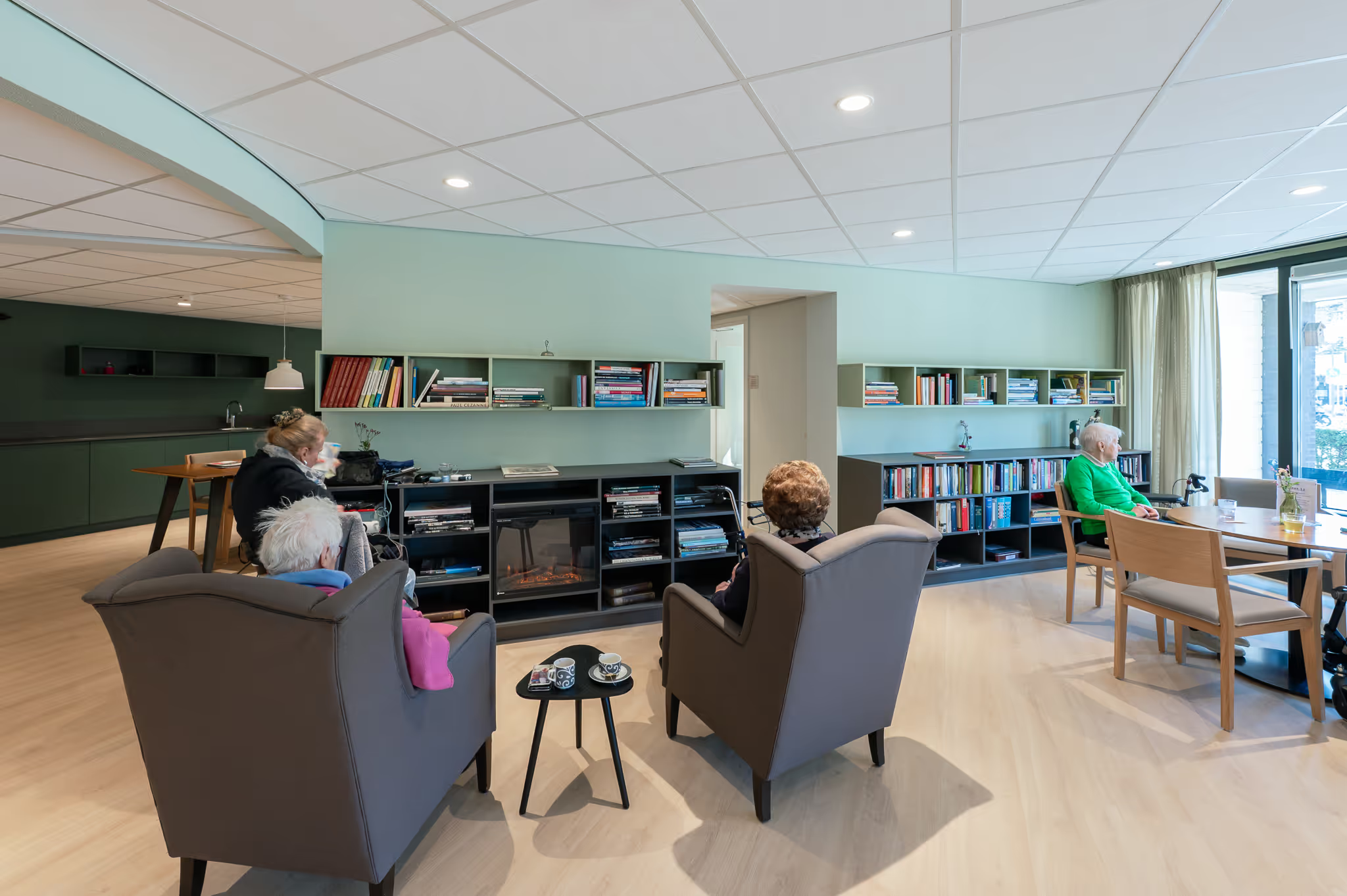
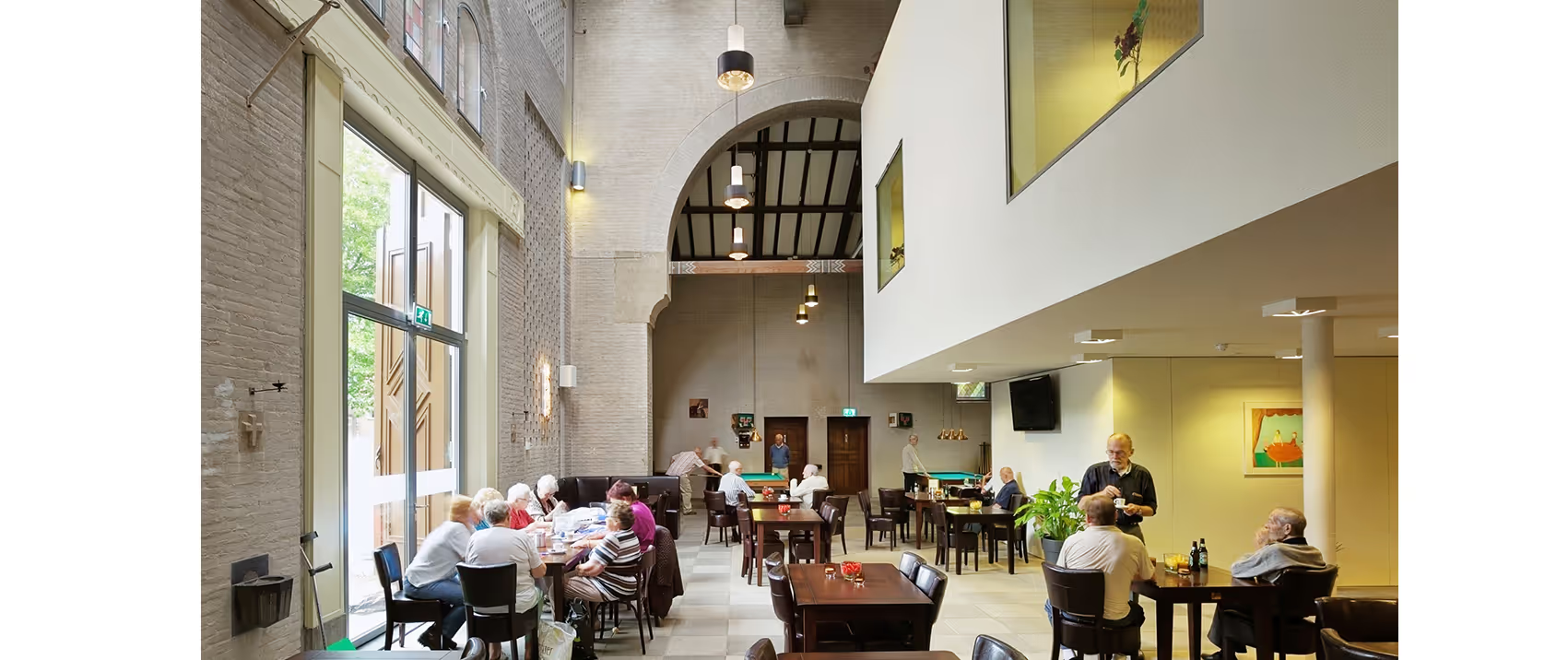
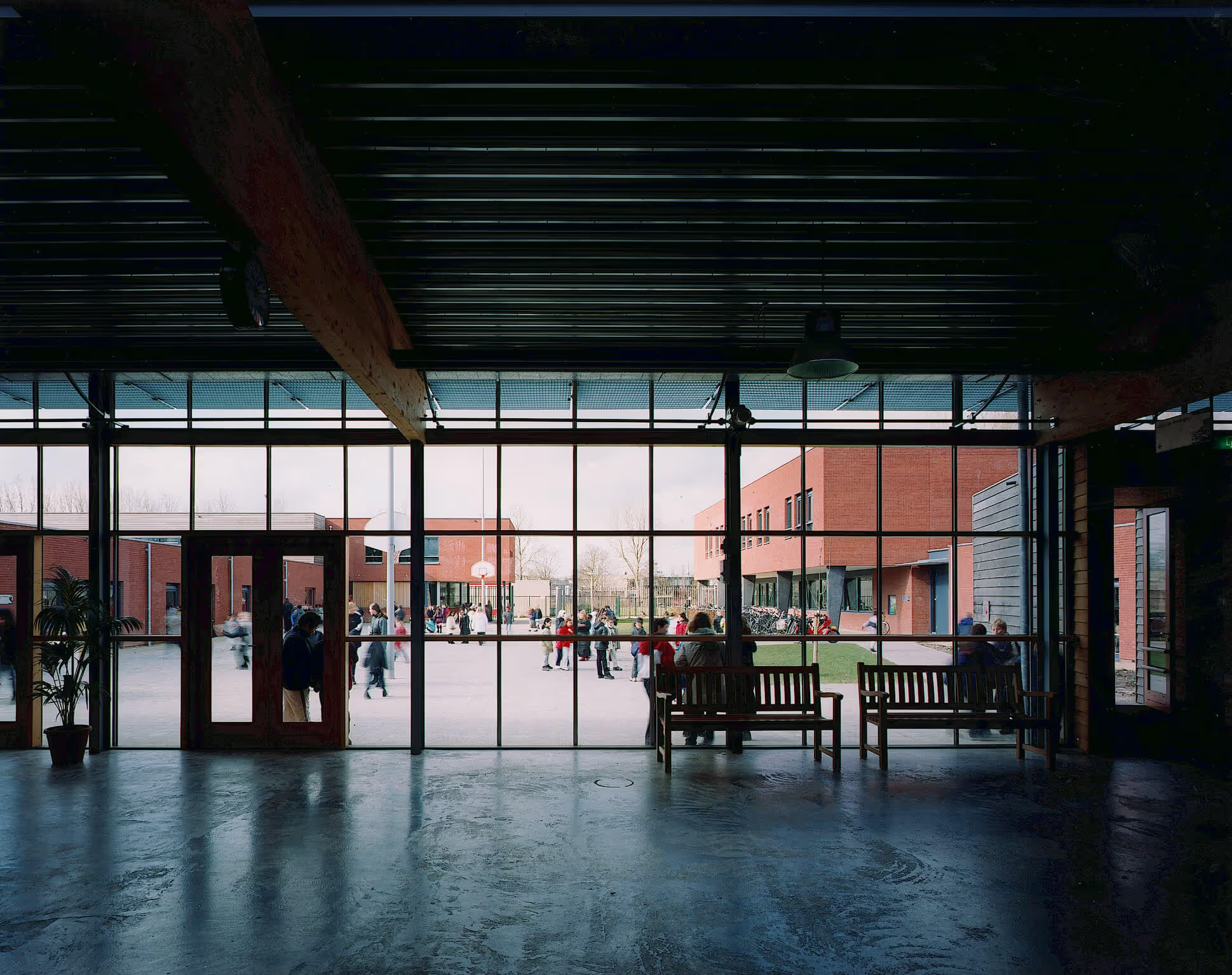
From the entrance, an inner street between the sports hall and swimming pool runs past the library to Vensterplein. The square is the heart of the complex and turns the various volumes into one building; from here, all functional clusters can be reached. Students walk from the school to the library and to the gym. Parents drink coffee here in the morning, hang around for a while, go to the clinic or library. Elderly people meet in the community center. After school, this space is used by parents and children, athletes and internet users. For example, the complex is like a small village, with streets, a square and “houses”.
Visibility and accessibility
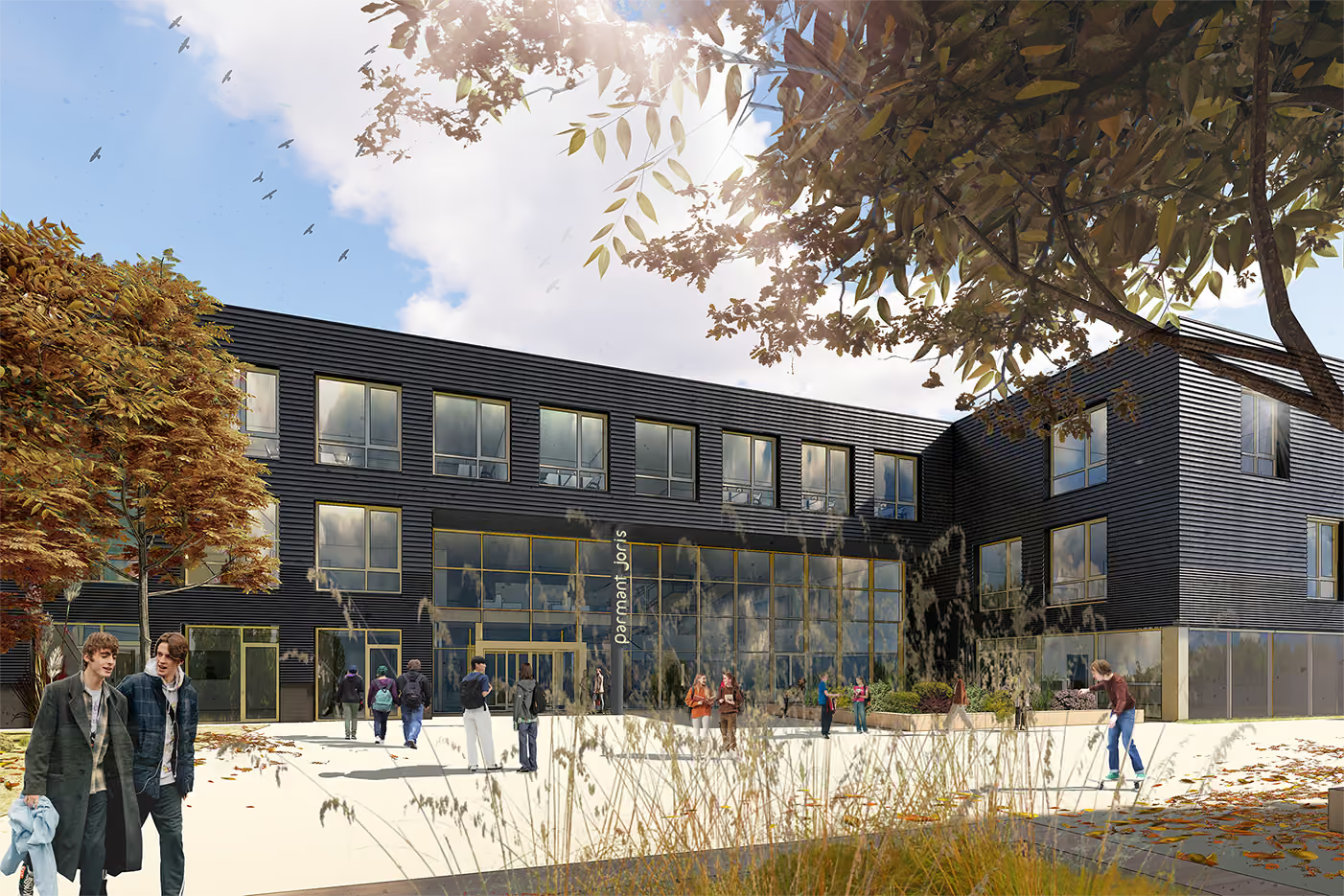
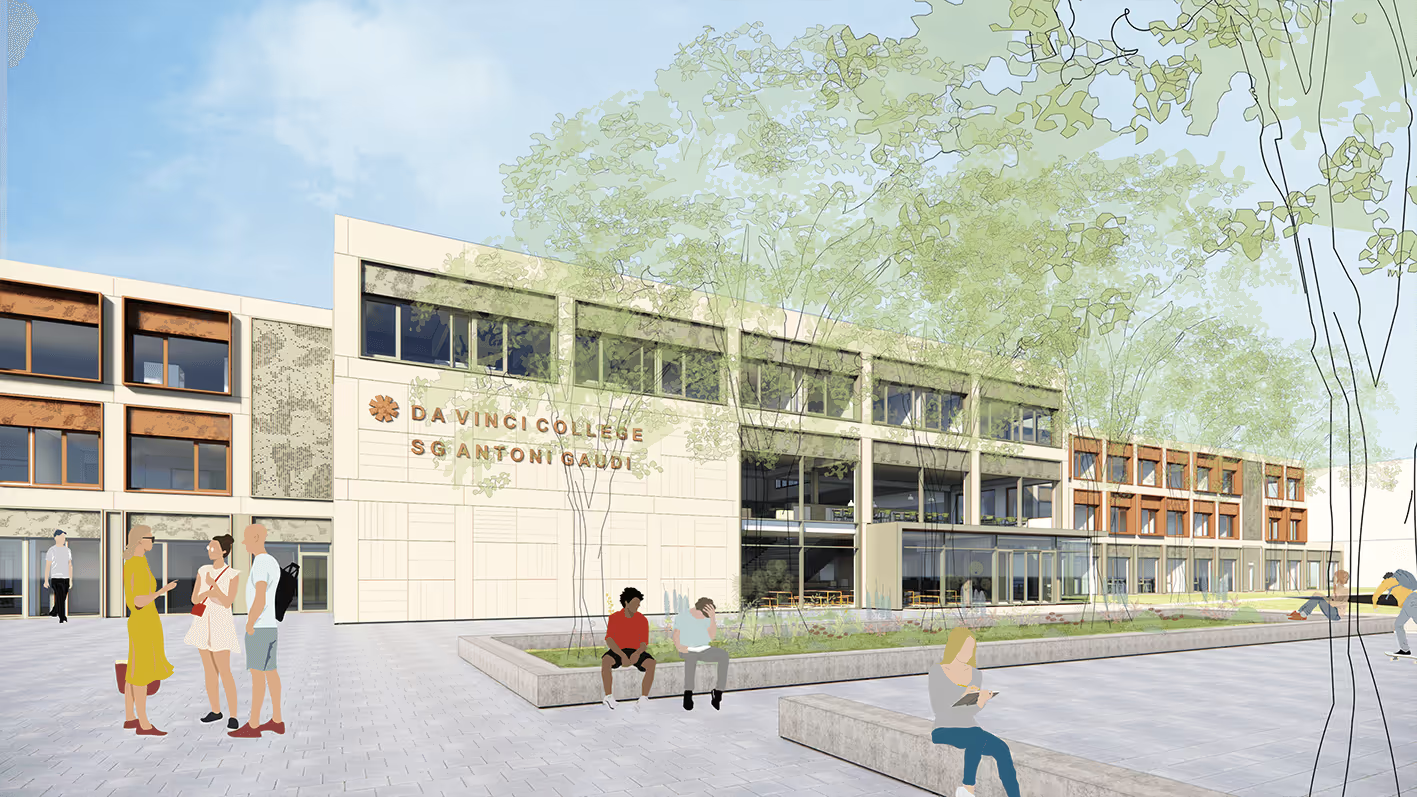
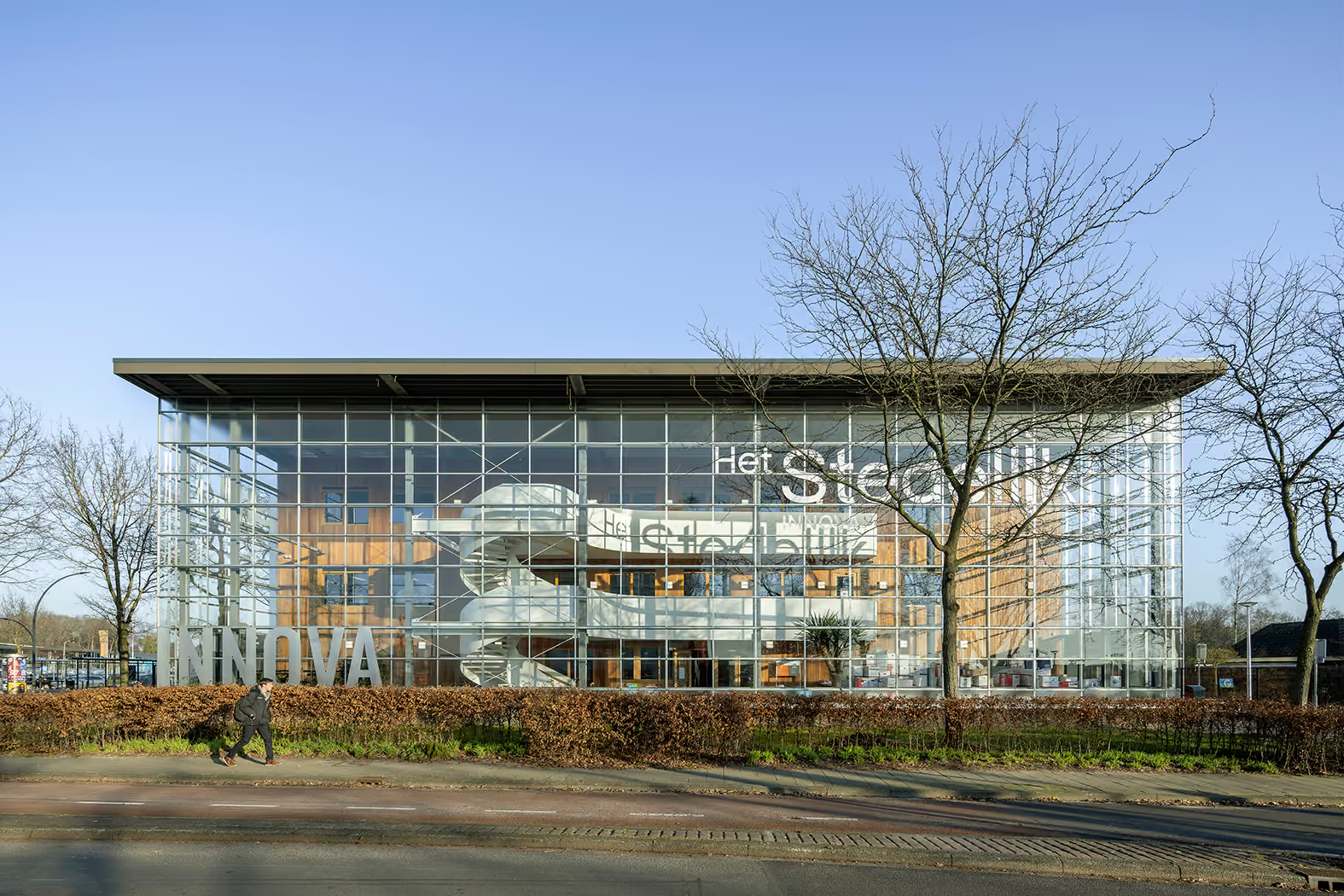
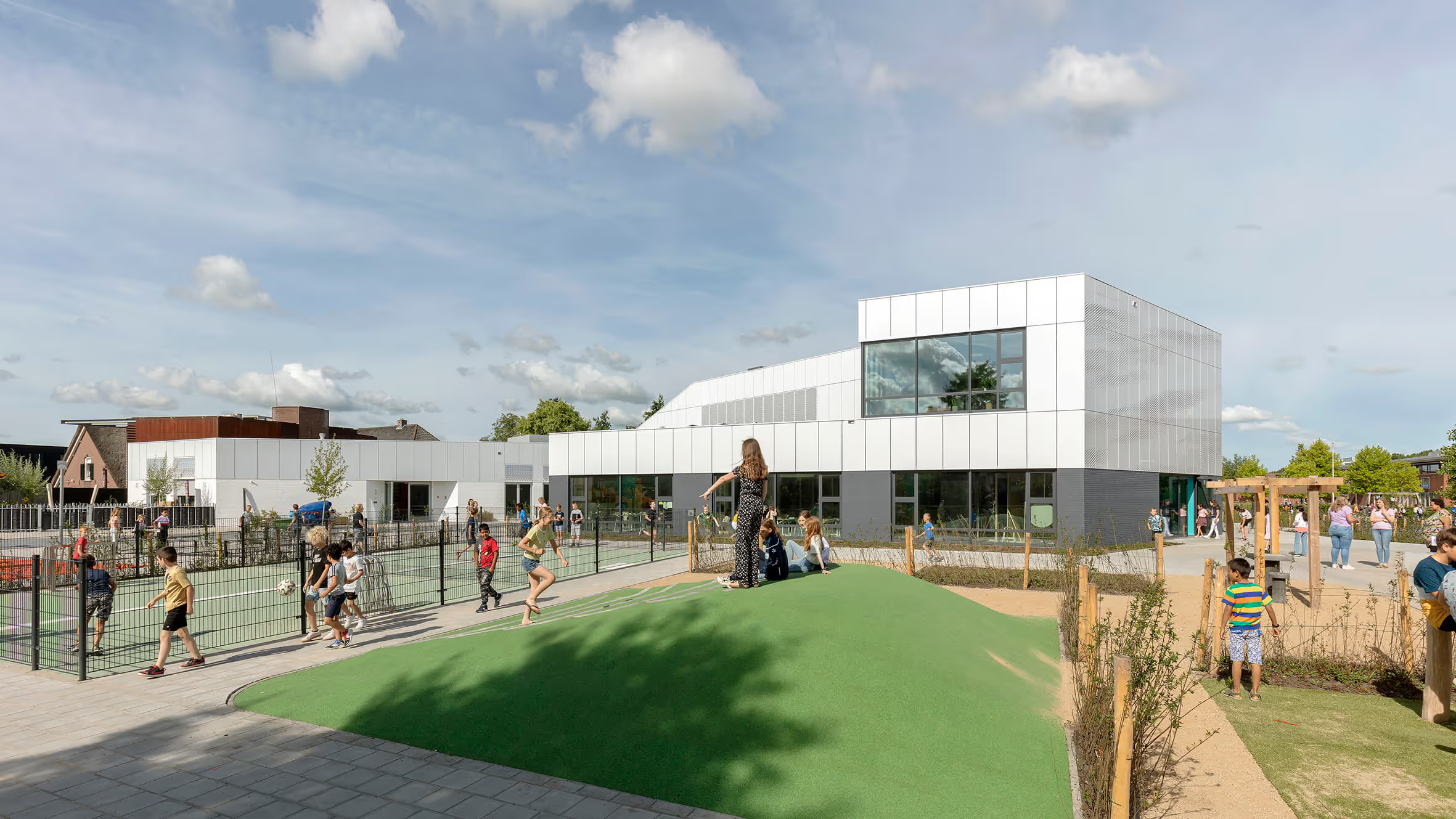
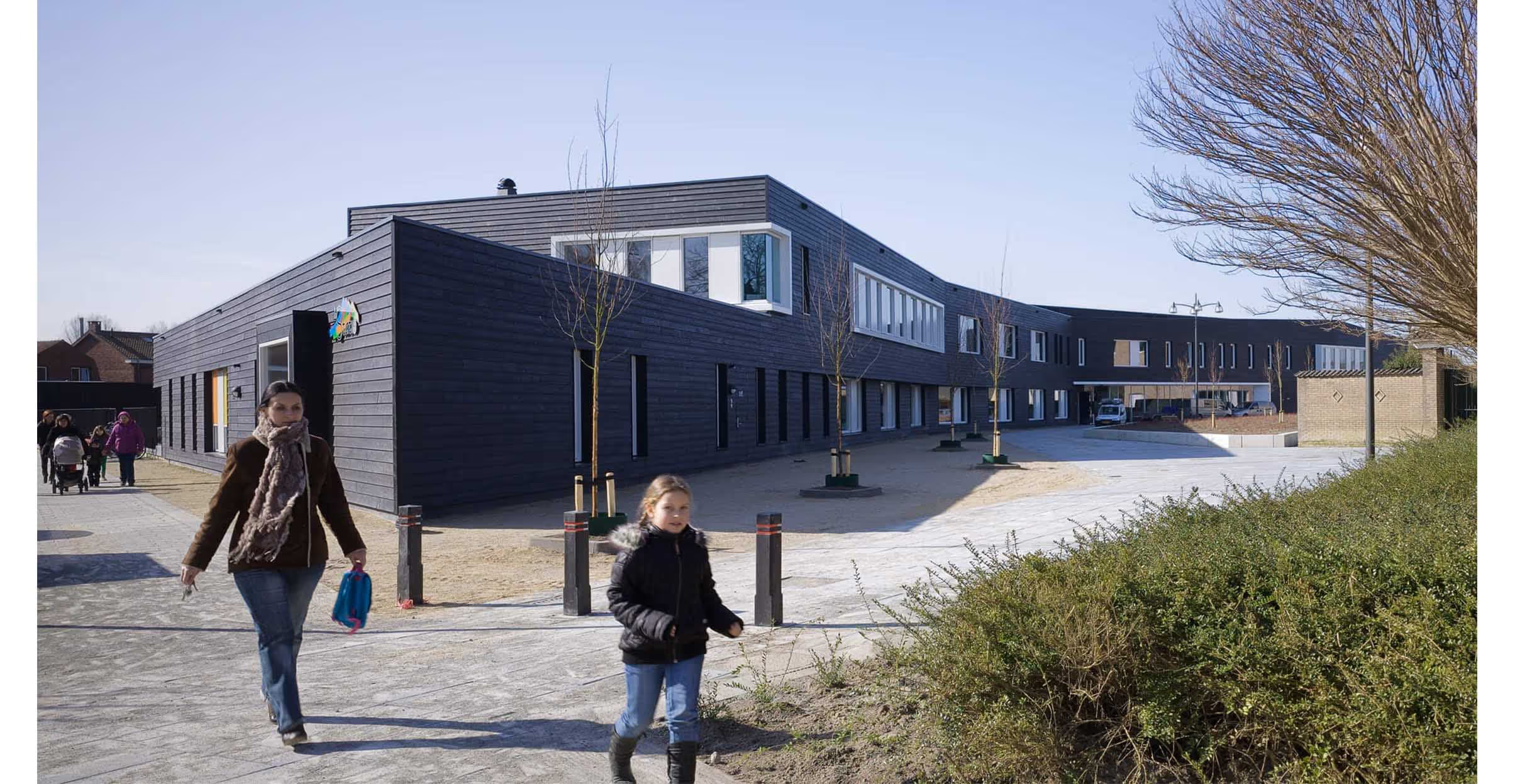
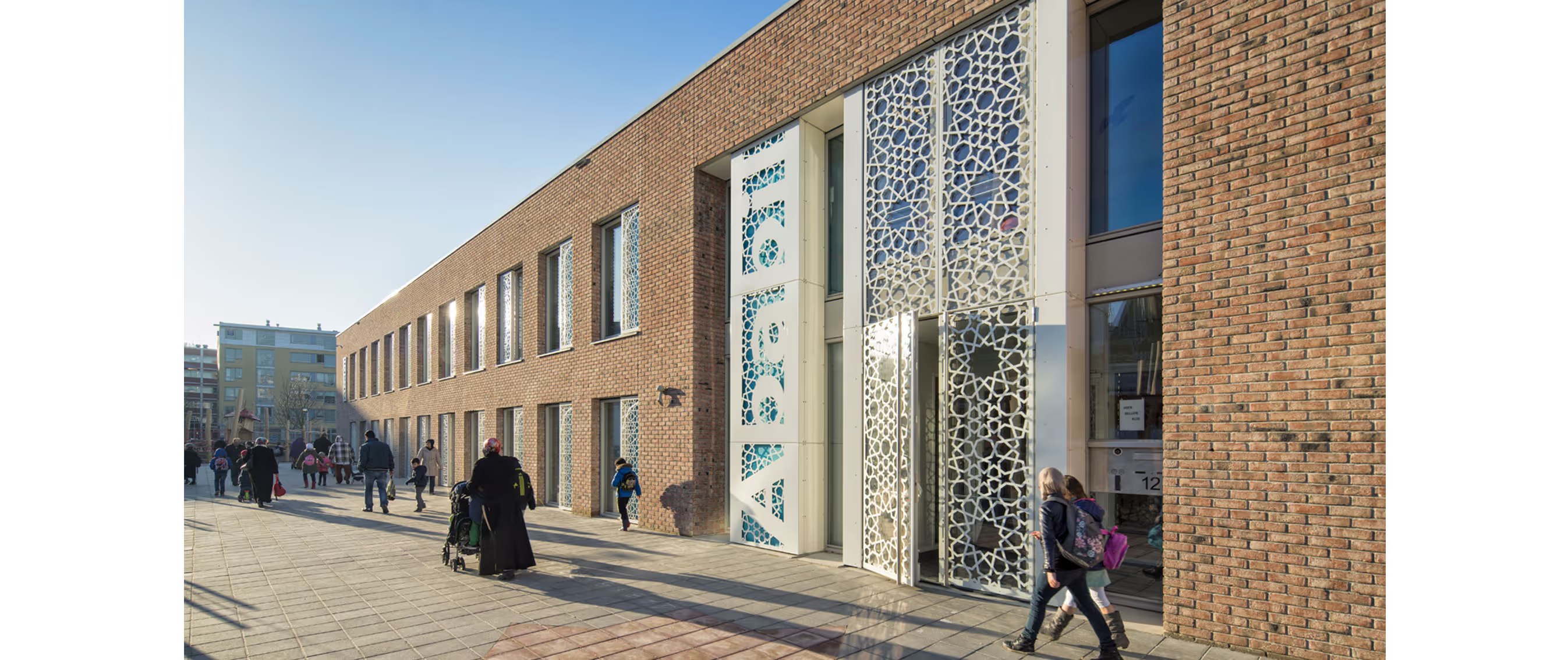
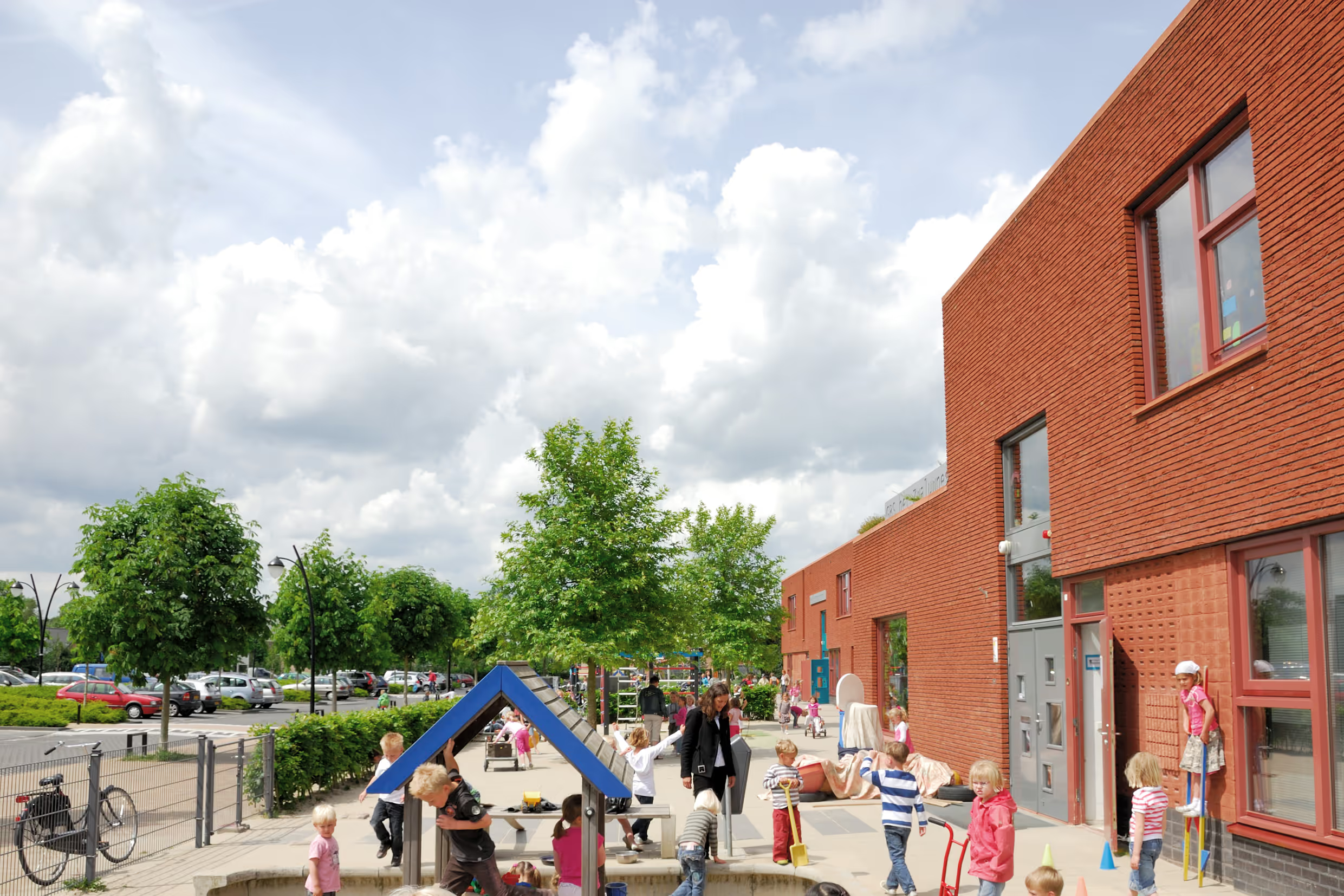
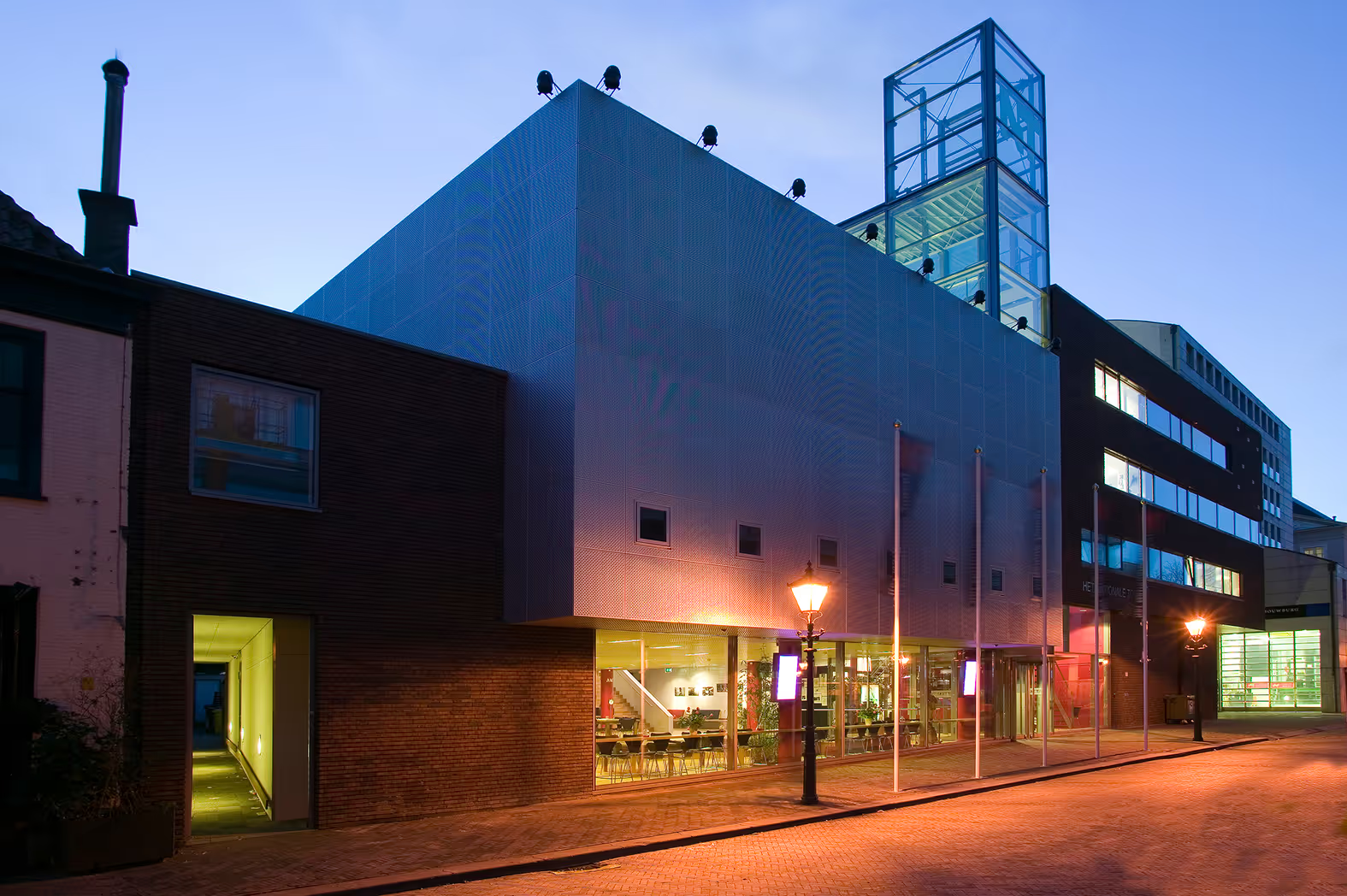
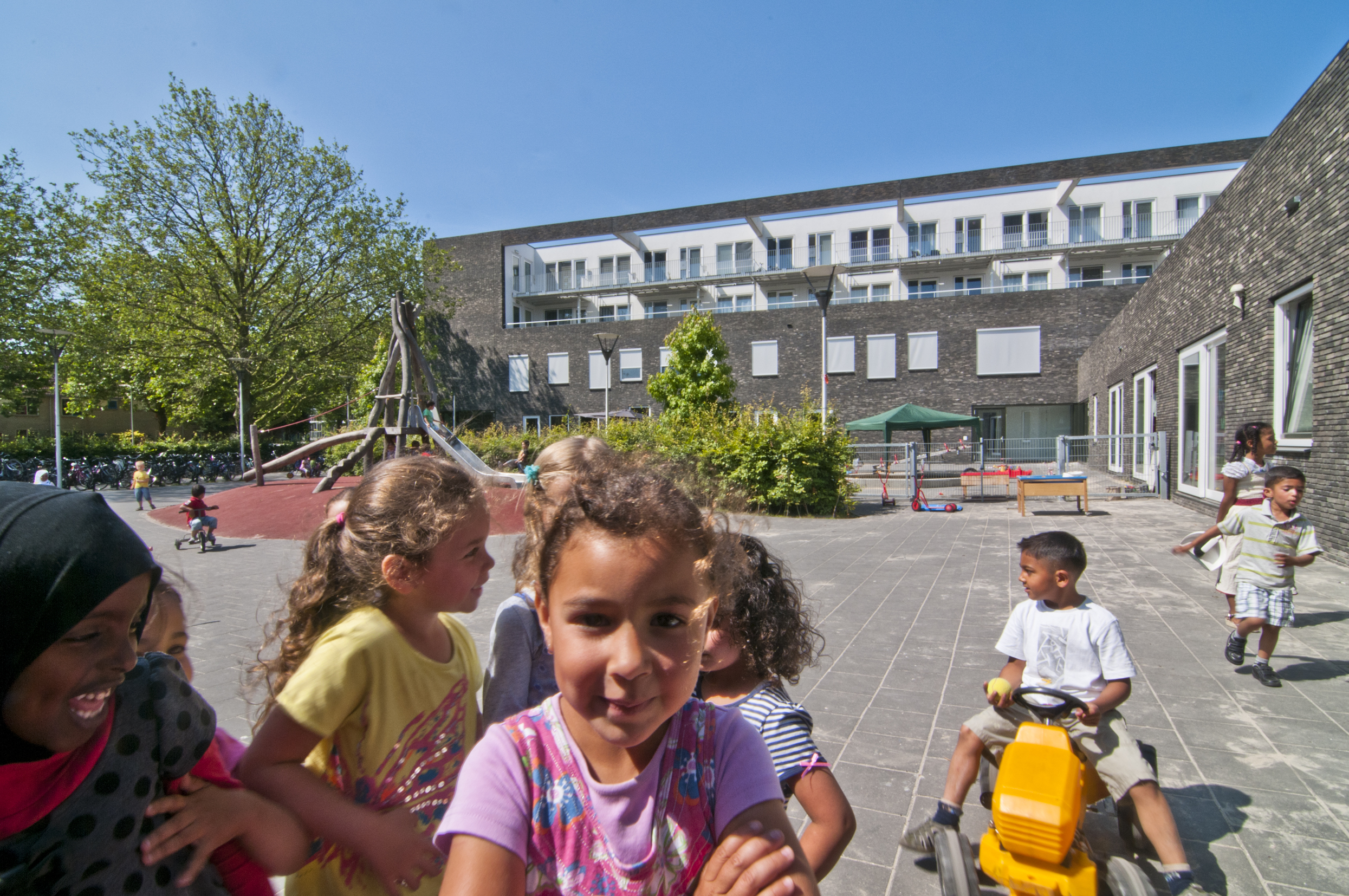
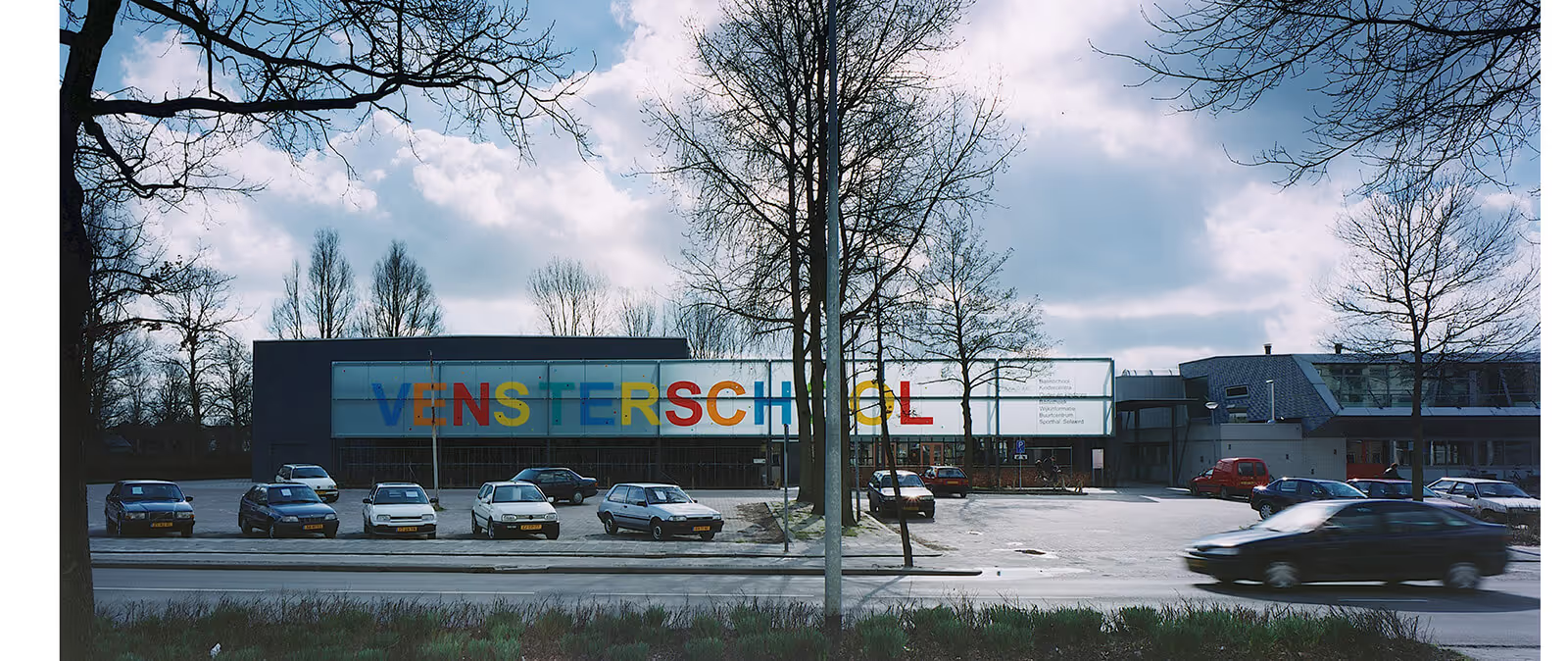
Outside, a tall glass screen acts as a billboard, presenting the various functions. The functions that are actually located behind the swimming pool and the sports hall will thus also have an entrance and an attractive façade on this street. The traditional schoolyard is located on the cycle route through the green area and between the community center and the school. Here, too, is an entrance to the Vensterplein. In this way, the Window School is [well] integrated into urban planning.
Ecological principles
Sustainable materials have been used and these materials have been used as optimally as possible. Where possible, materials have a dual function. For example, the thermal accumulating capacity of the concrete structure is used and naturally ventilated as much as possible. The 'closed' square is not 'directly' heated but will still be 'pleasant' due to (re) use of the loss heat flows and of the ventilation air heat from the adjacent building parts, the use of mass through a climate-slow floor, optimal use of passive solar energy through east-facing roof streets for a rapid morning heating of the Window Square and a large west-facing façade of glass before the sun sets in early and late season; the heat 'obtained' in this way is retained for as long as possible by a good thermal insulation of the Window Square.
Color and finish
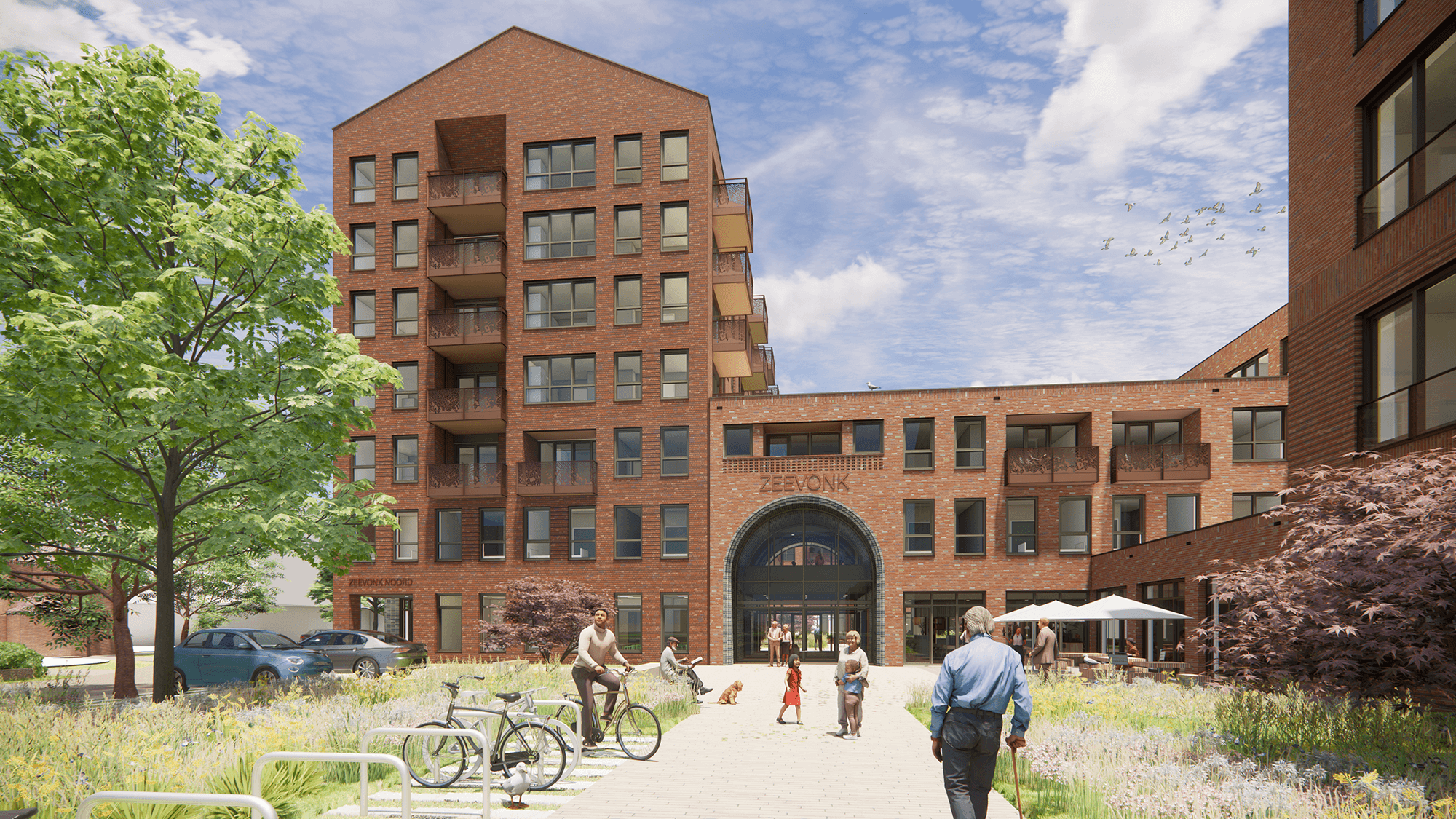
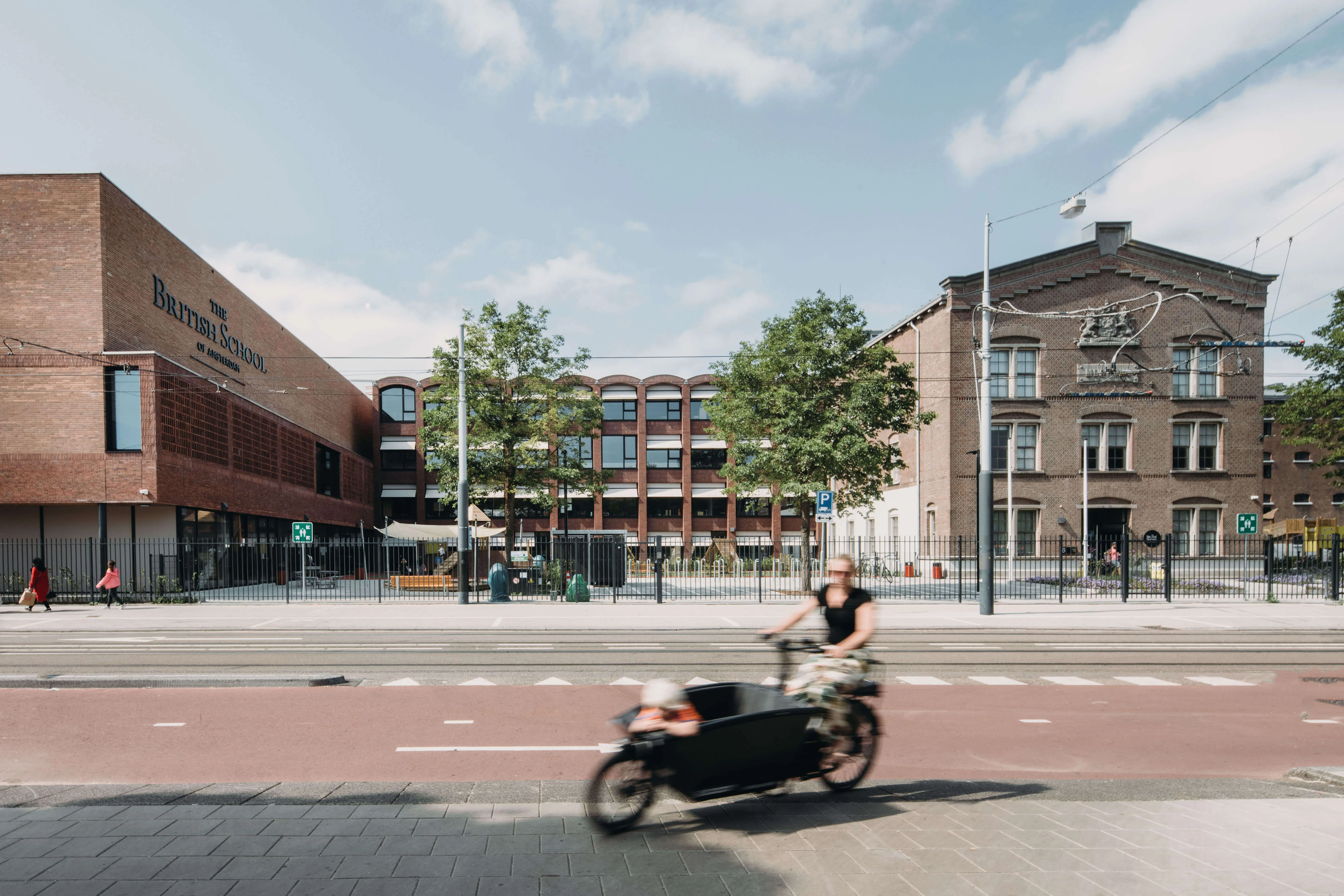
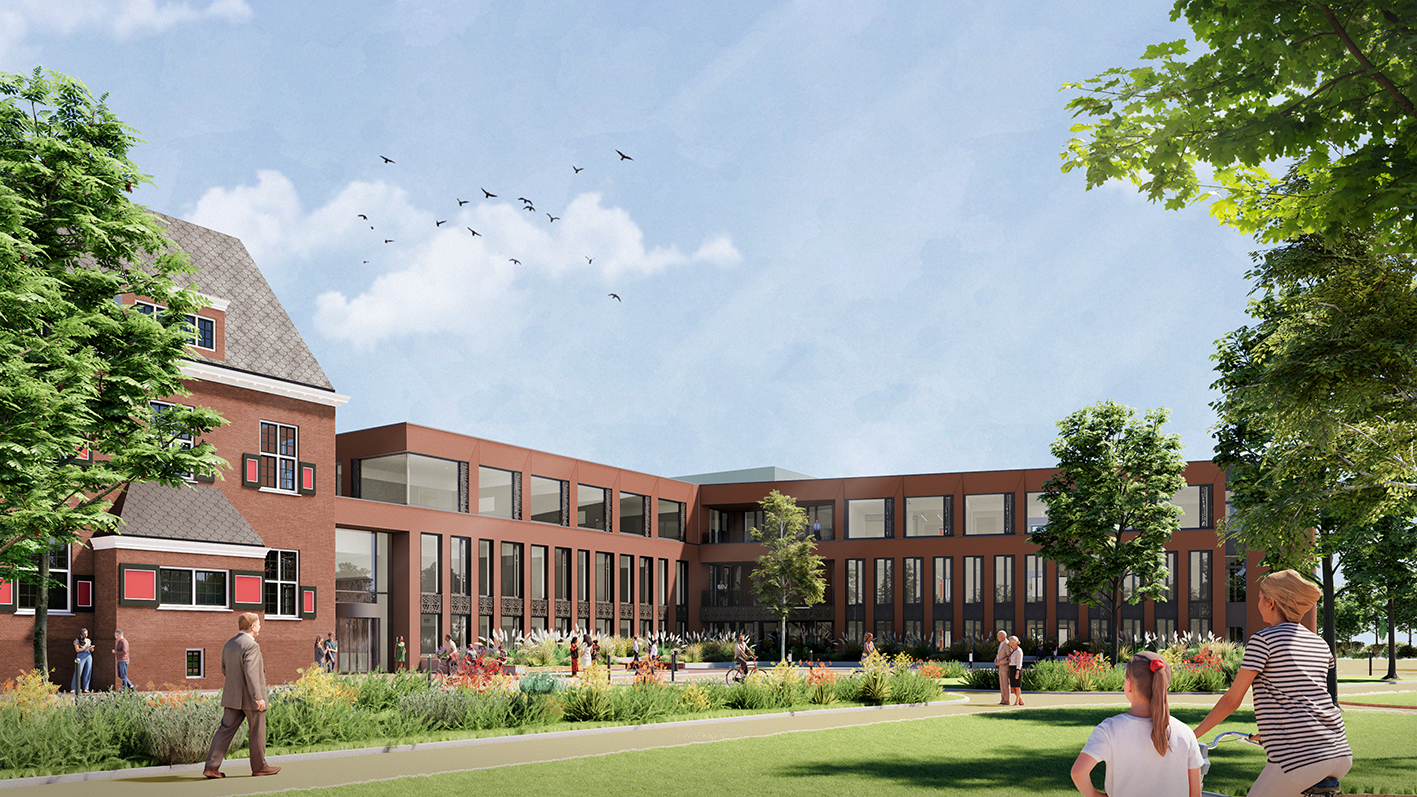
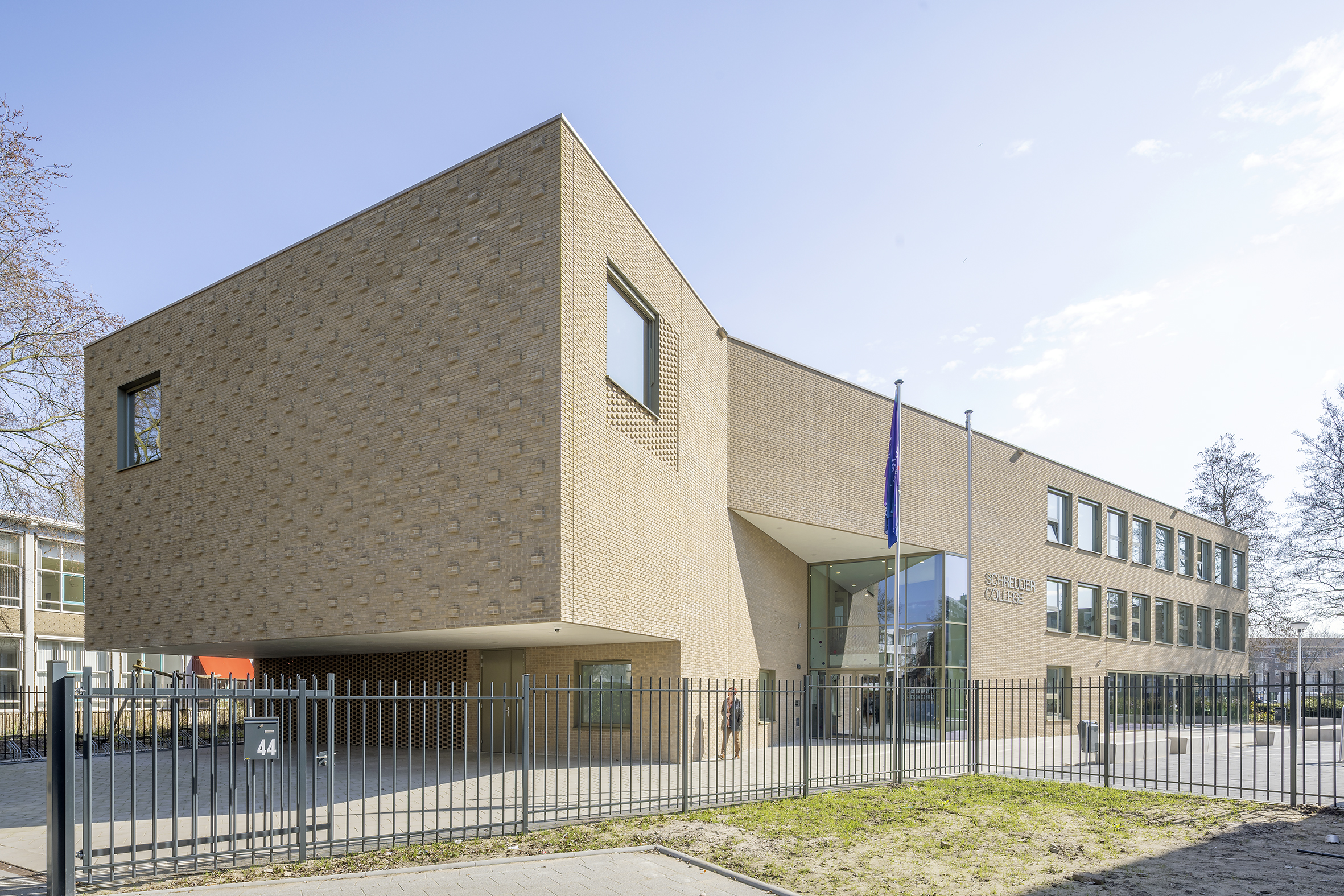
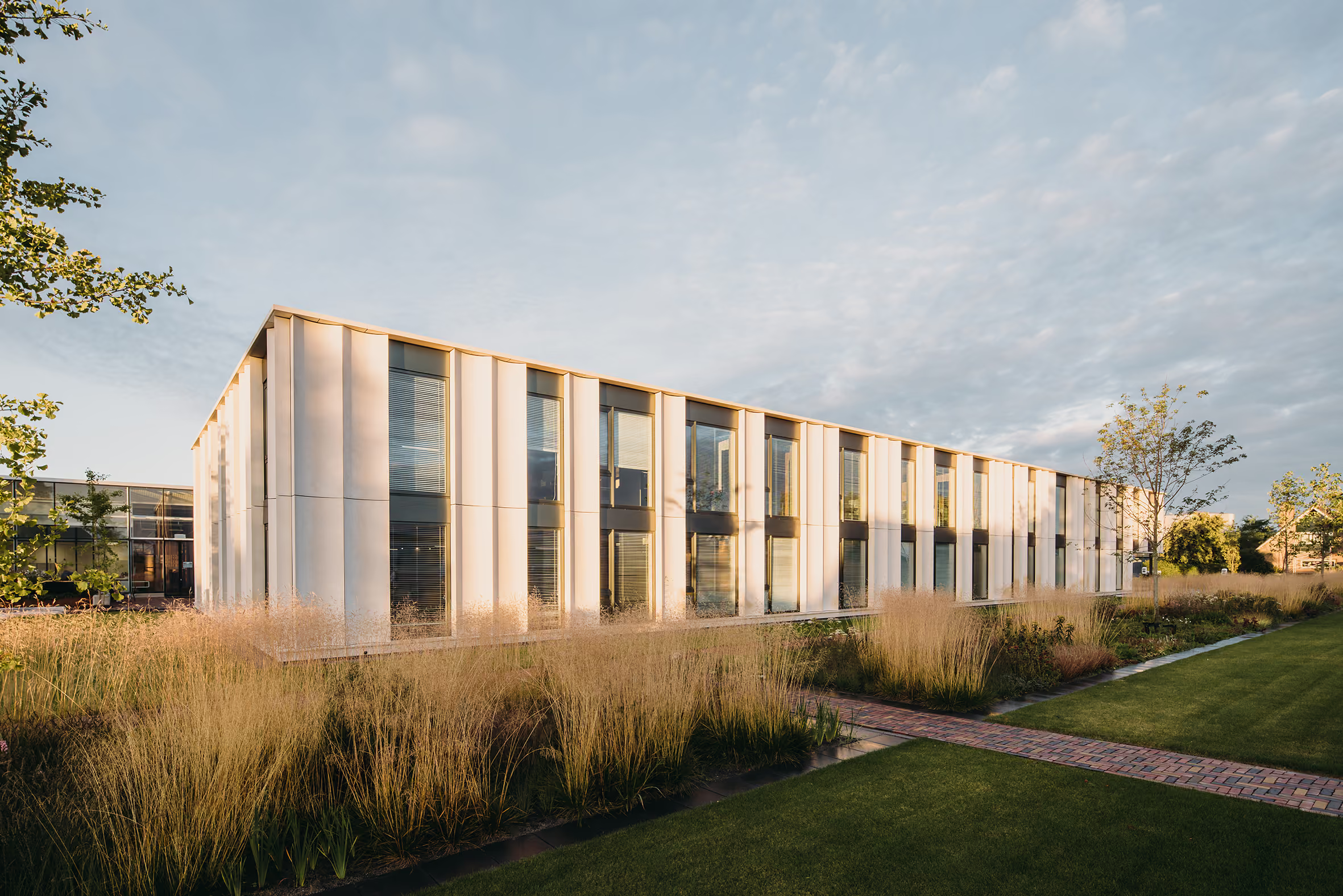
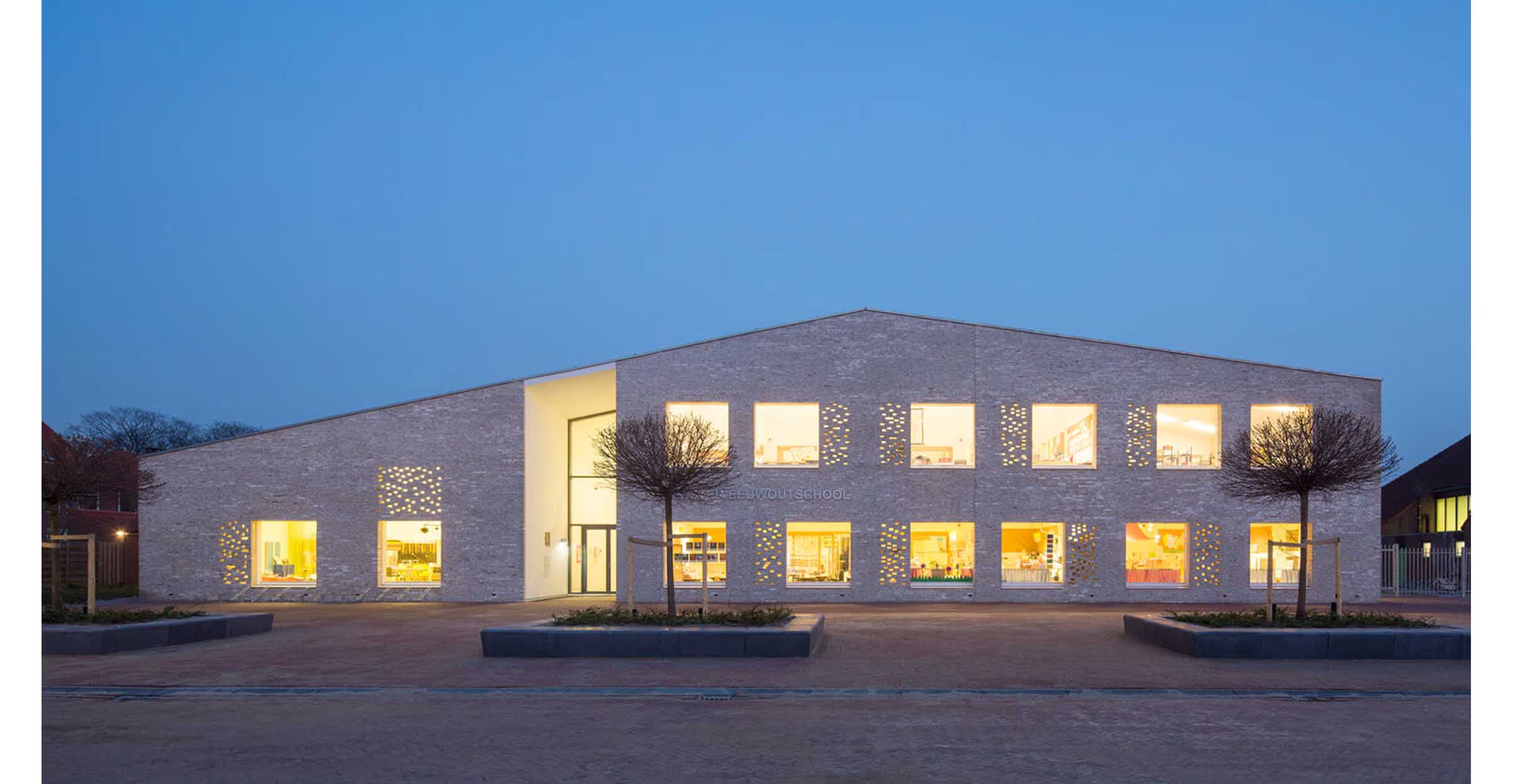
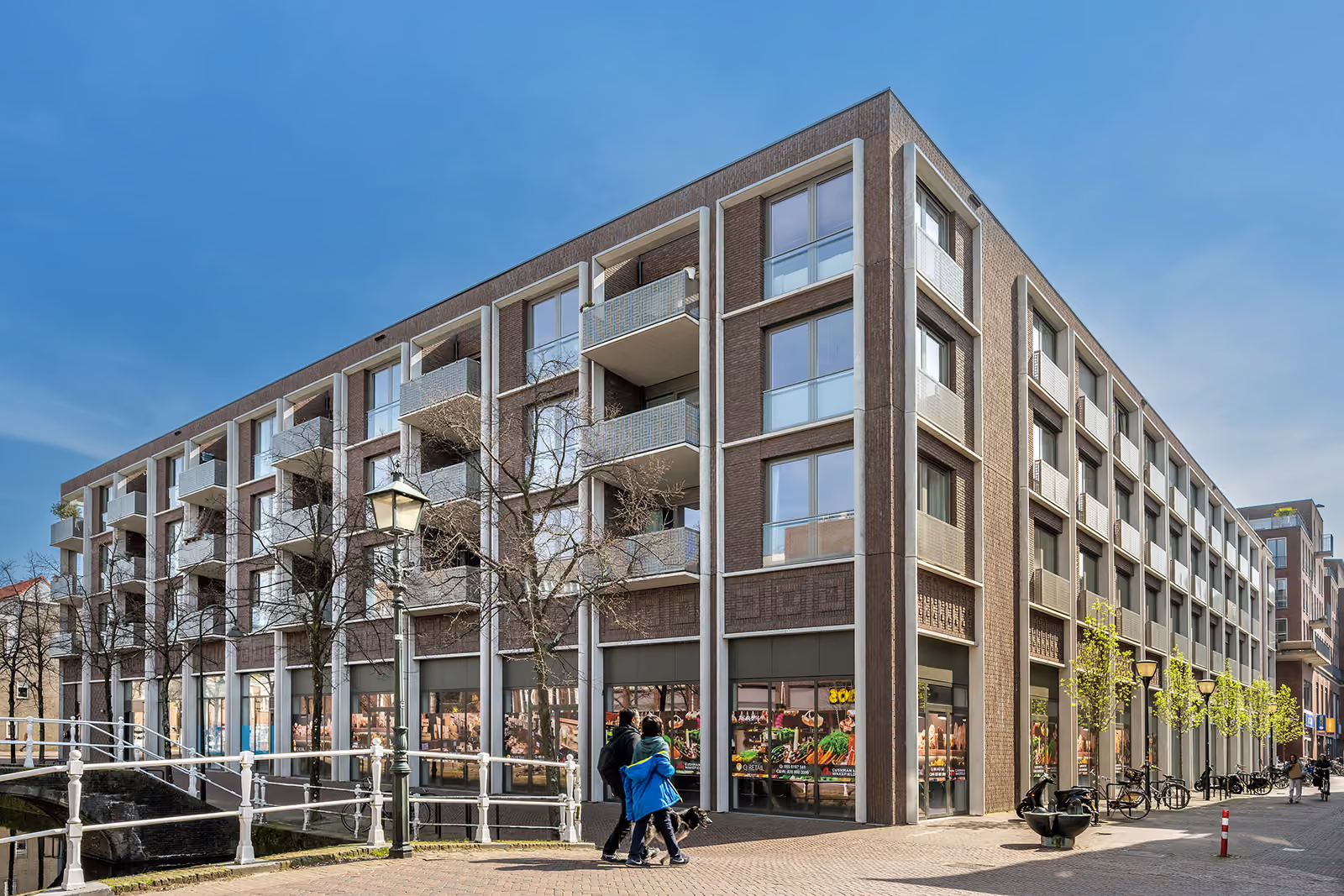
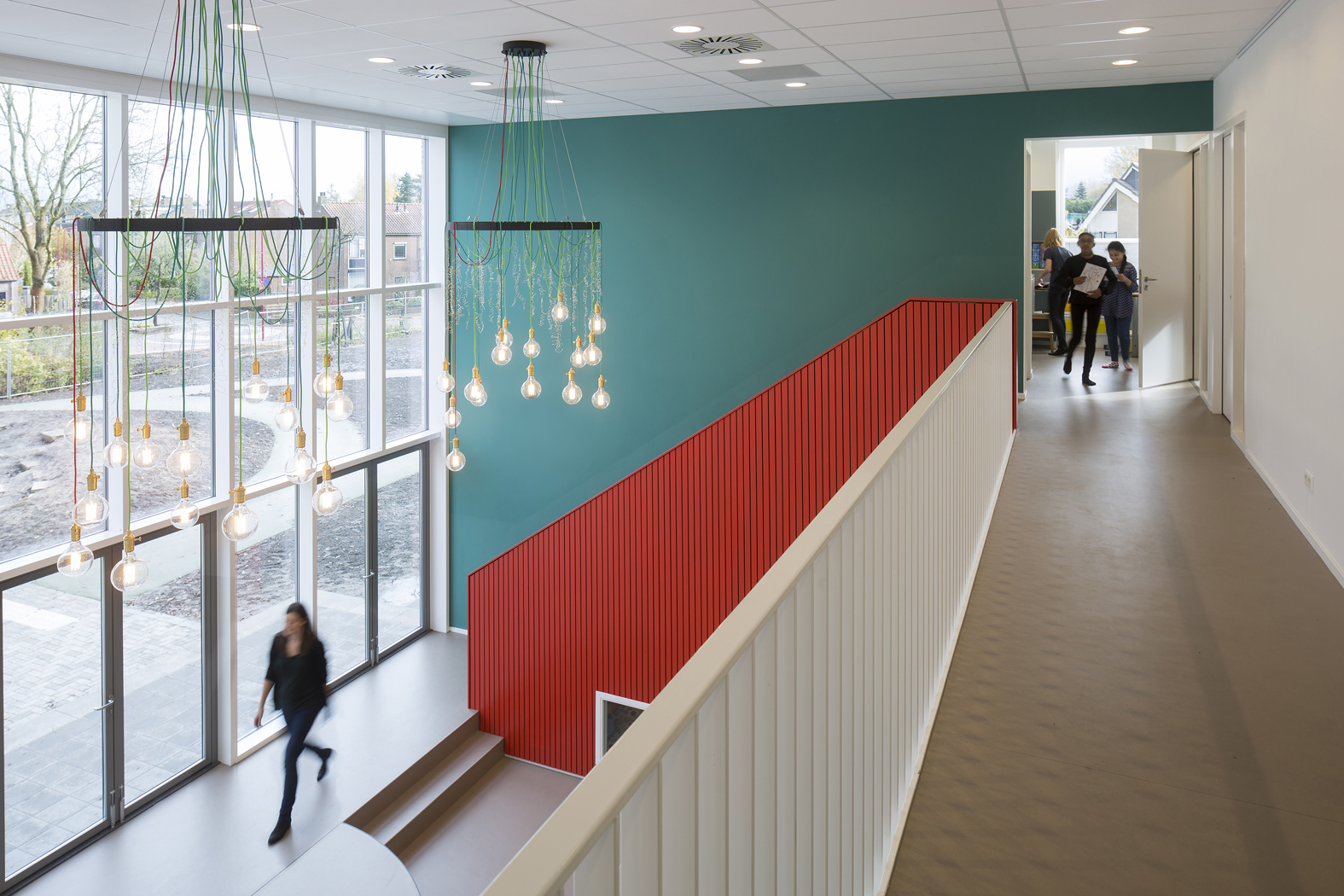
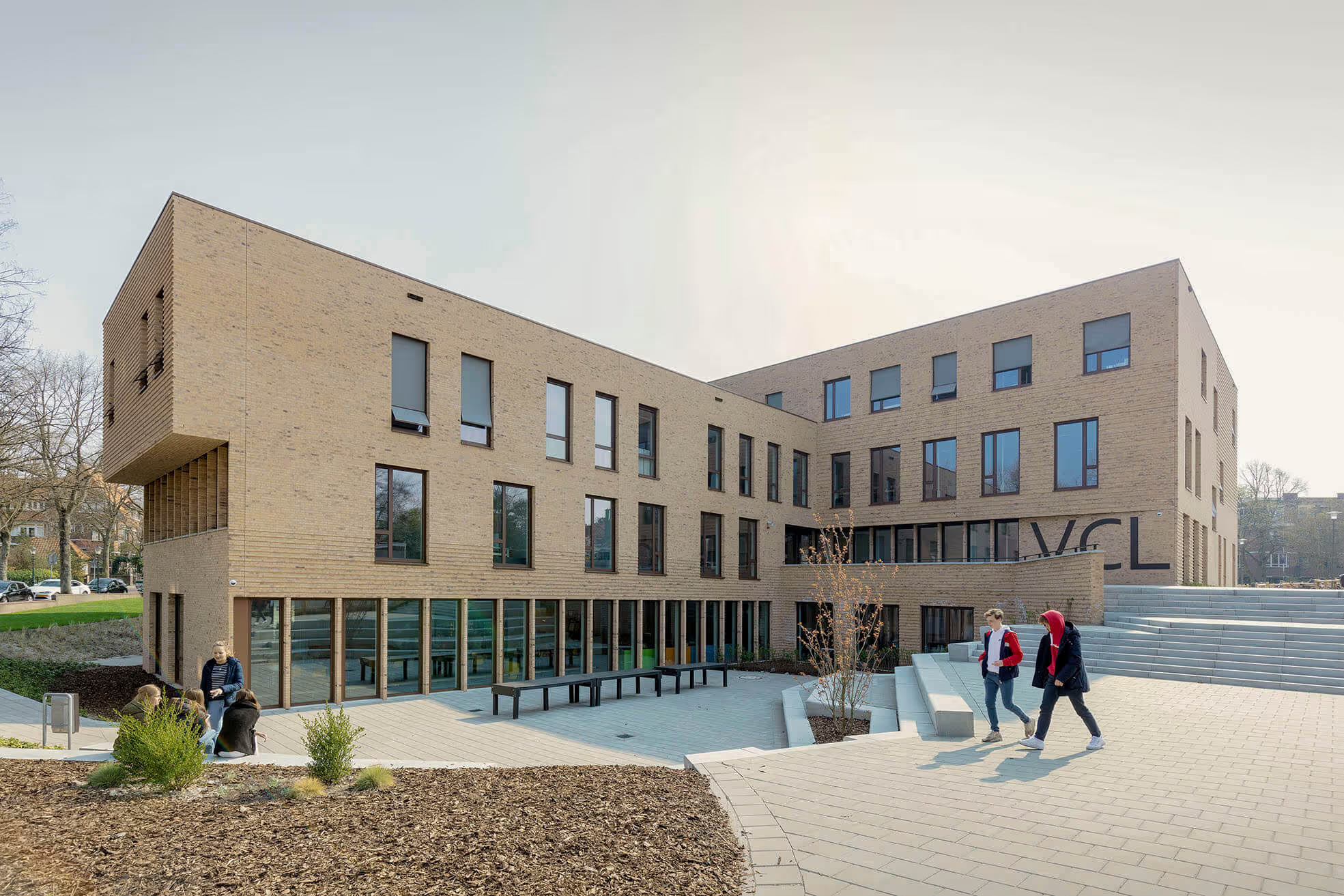
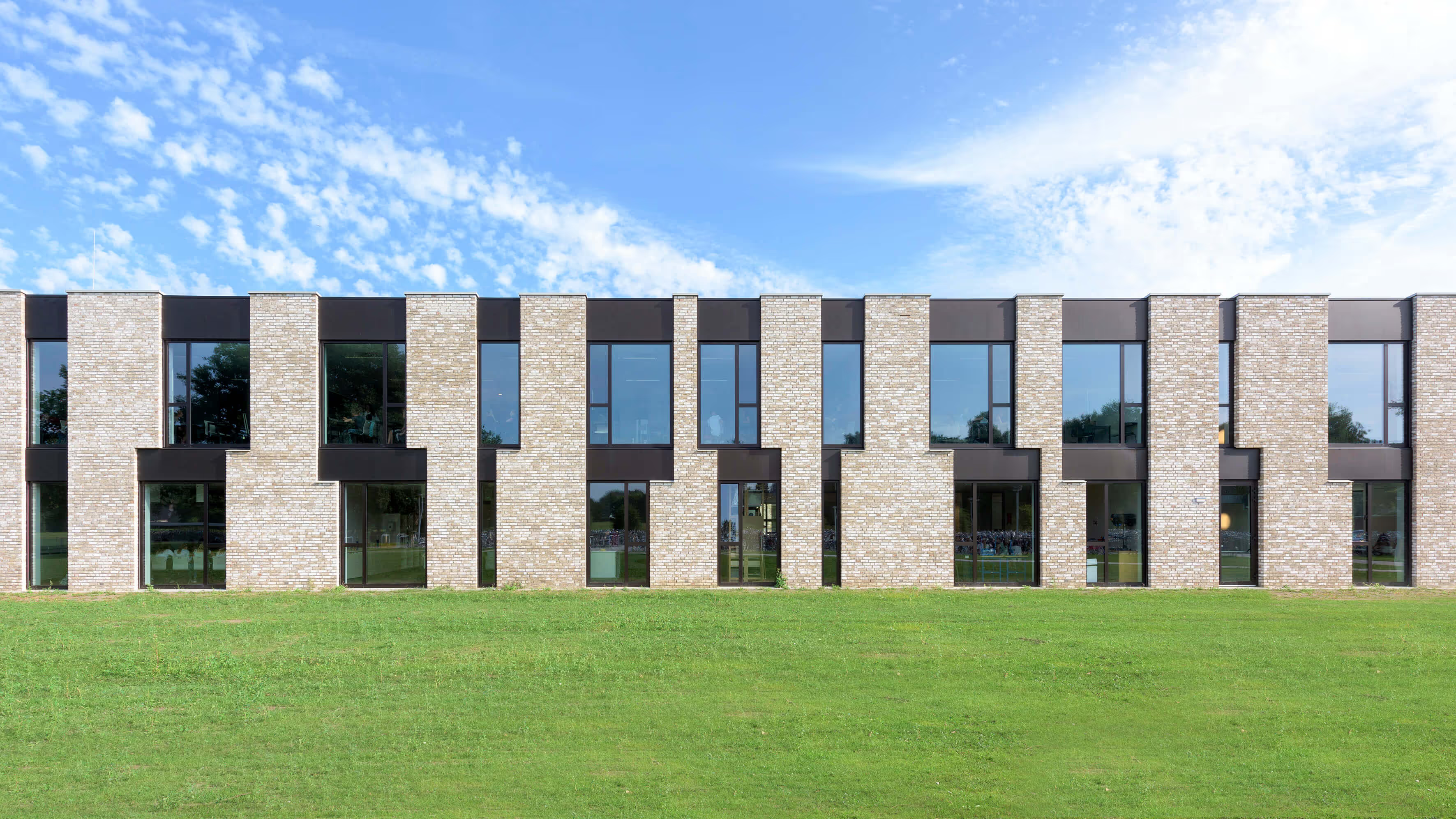
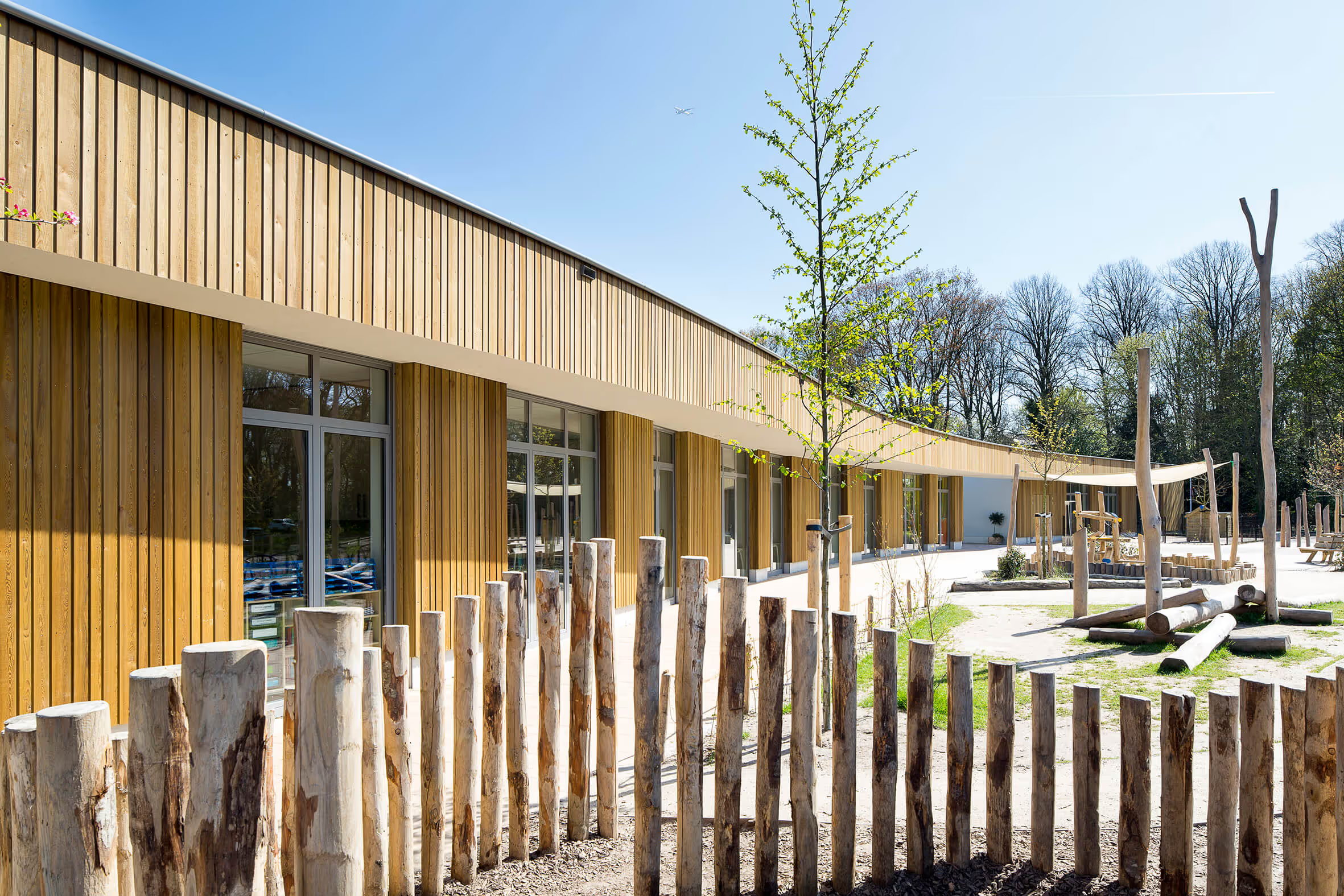
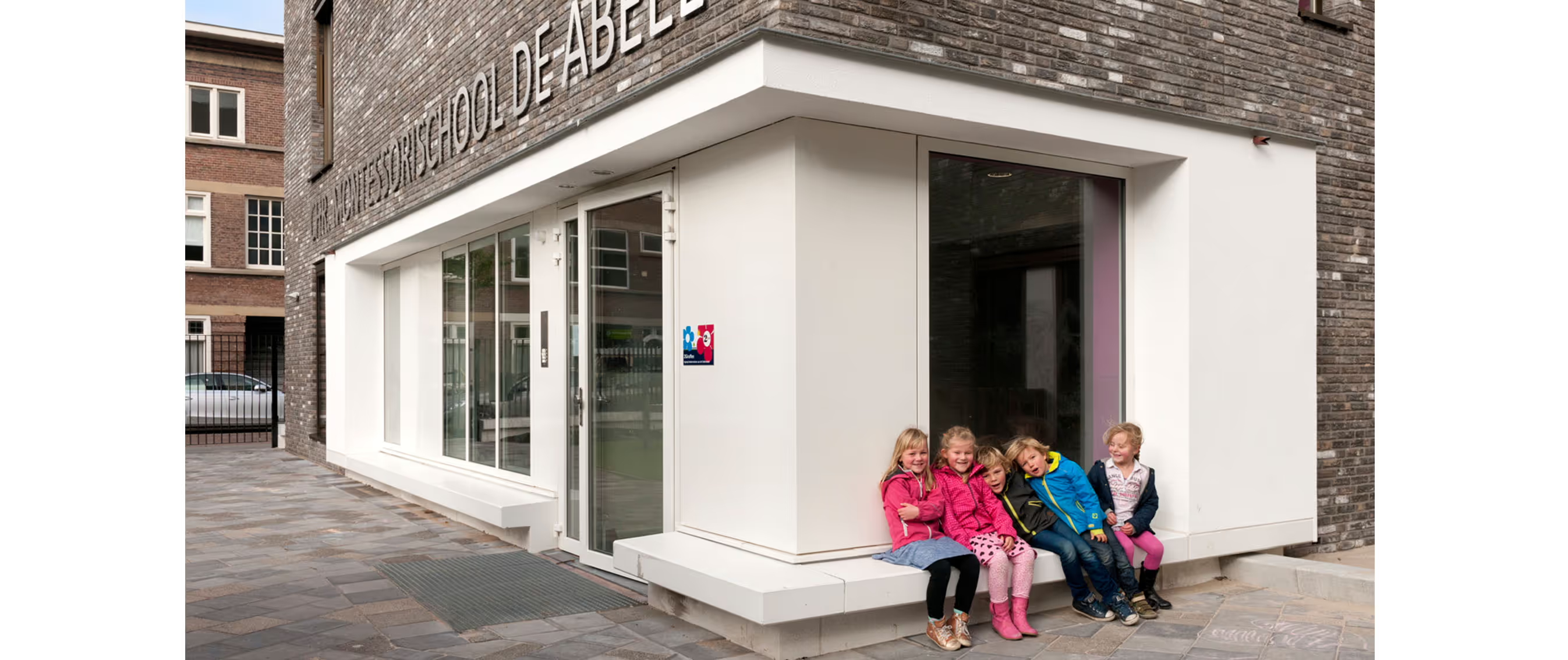
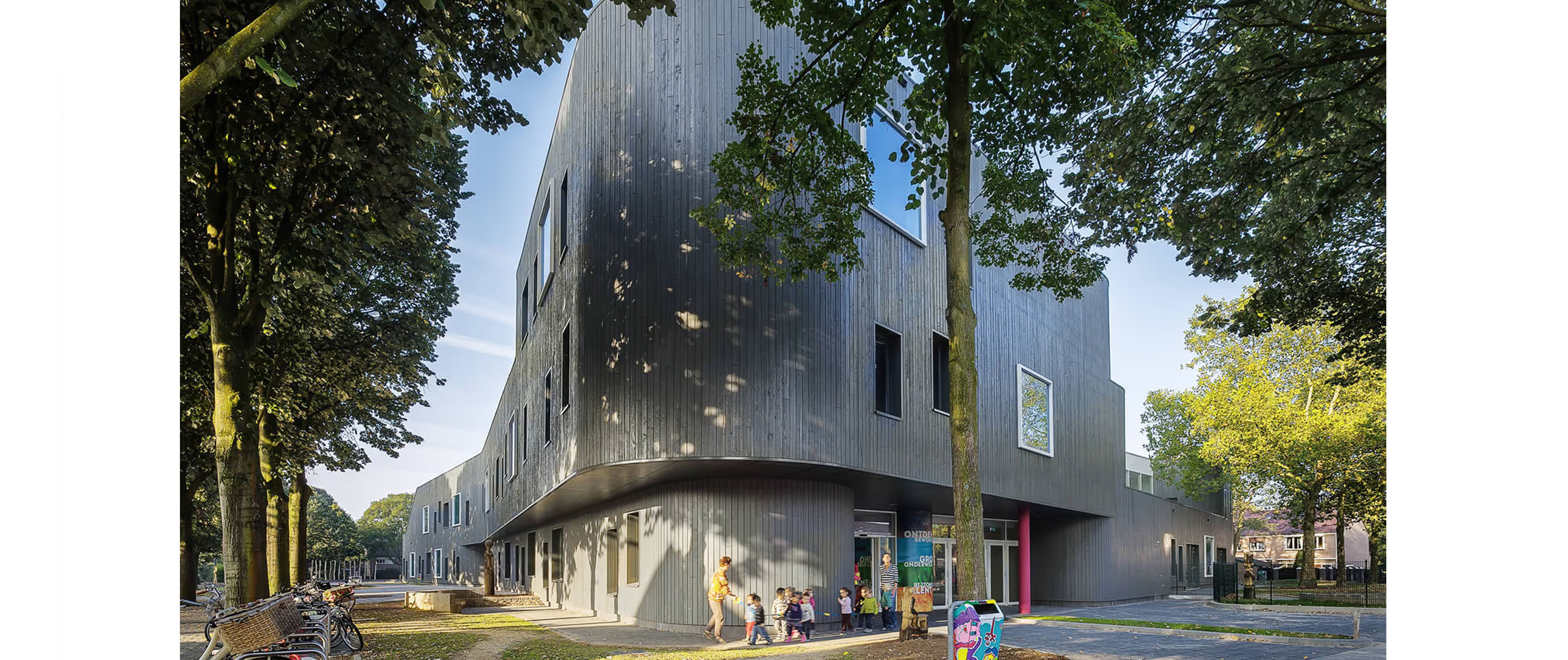
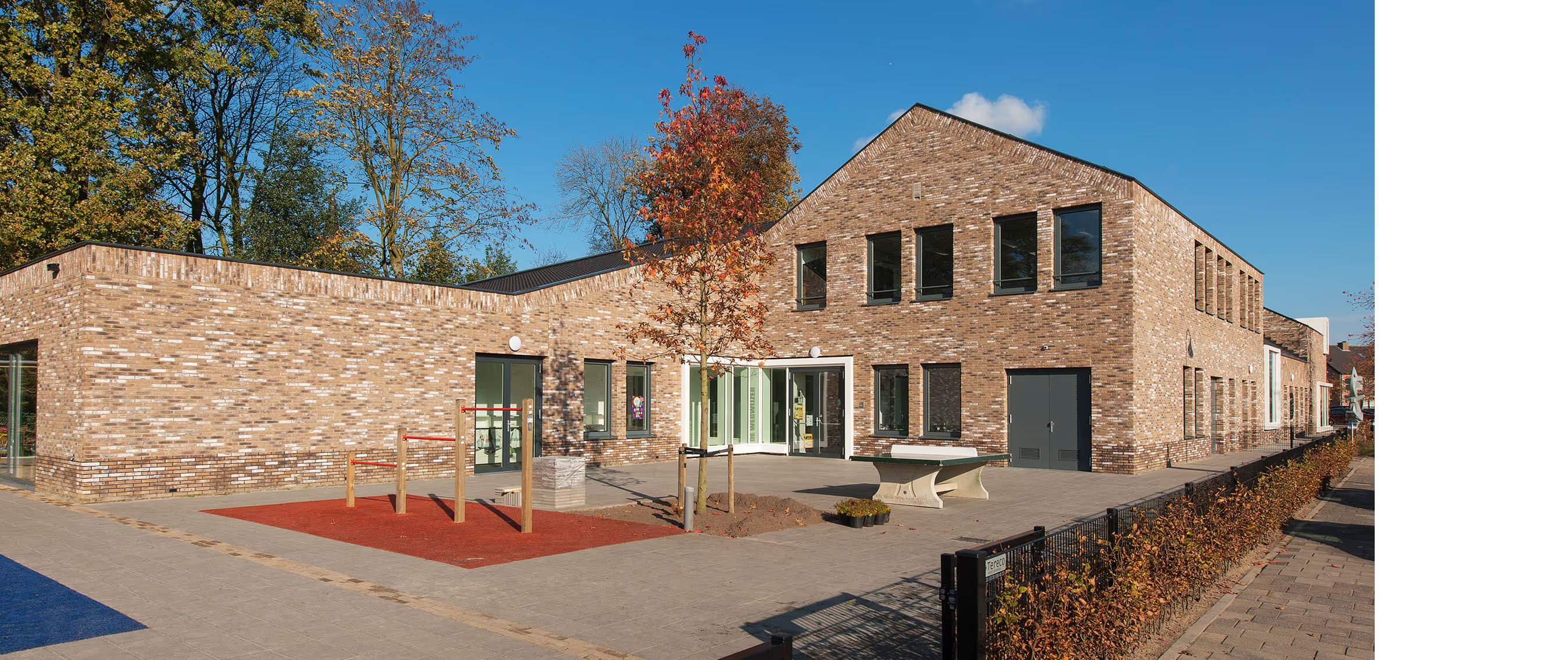
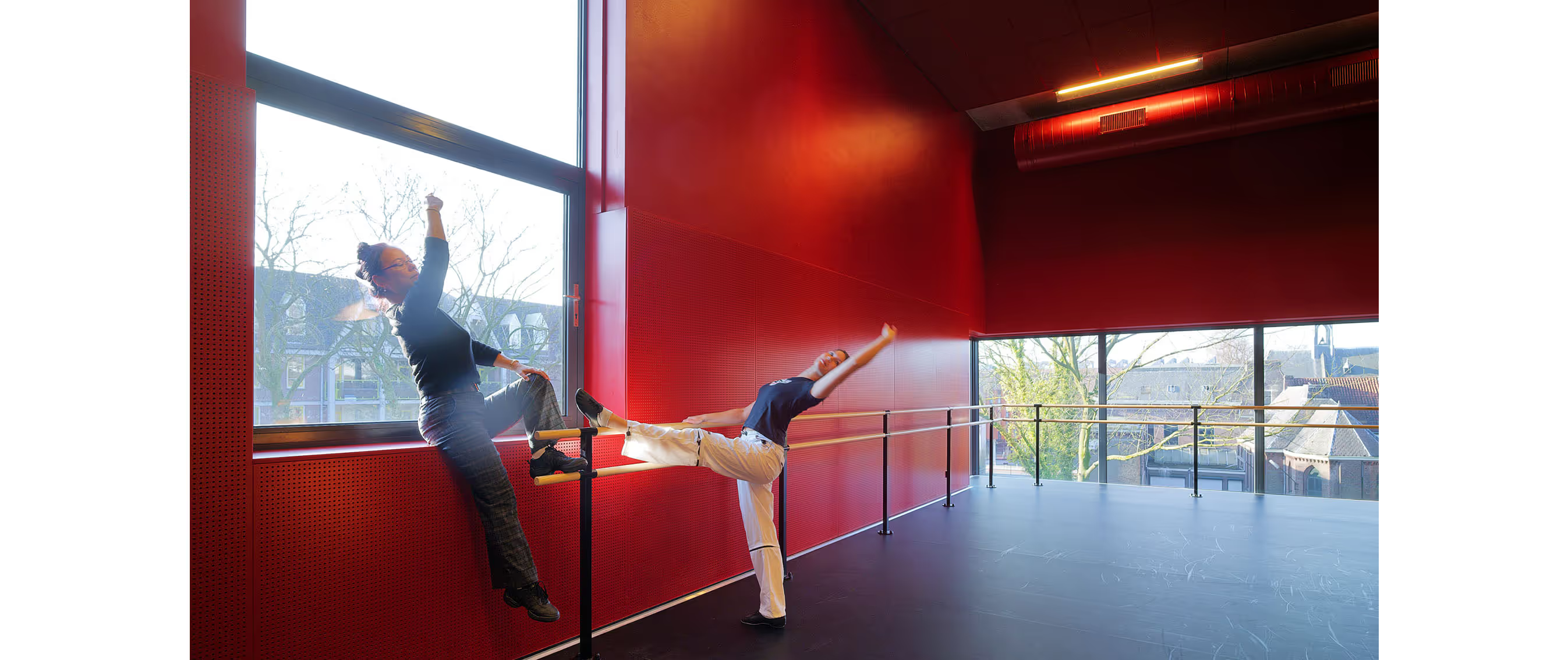
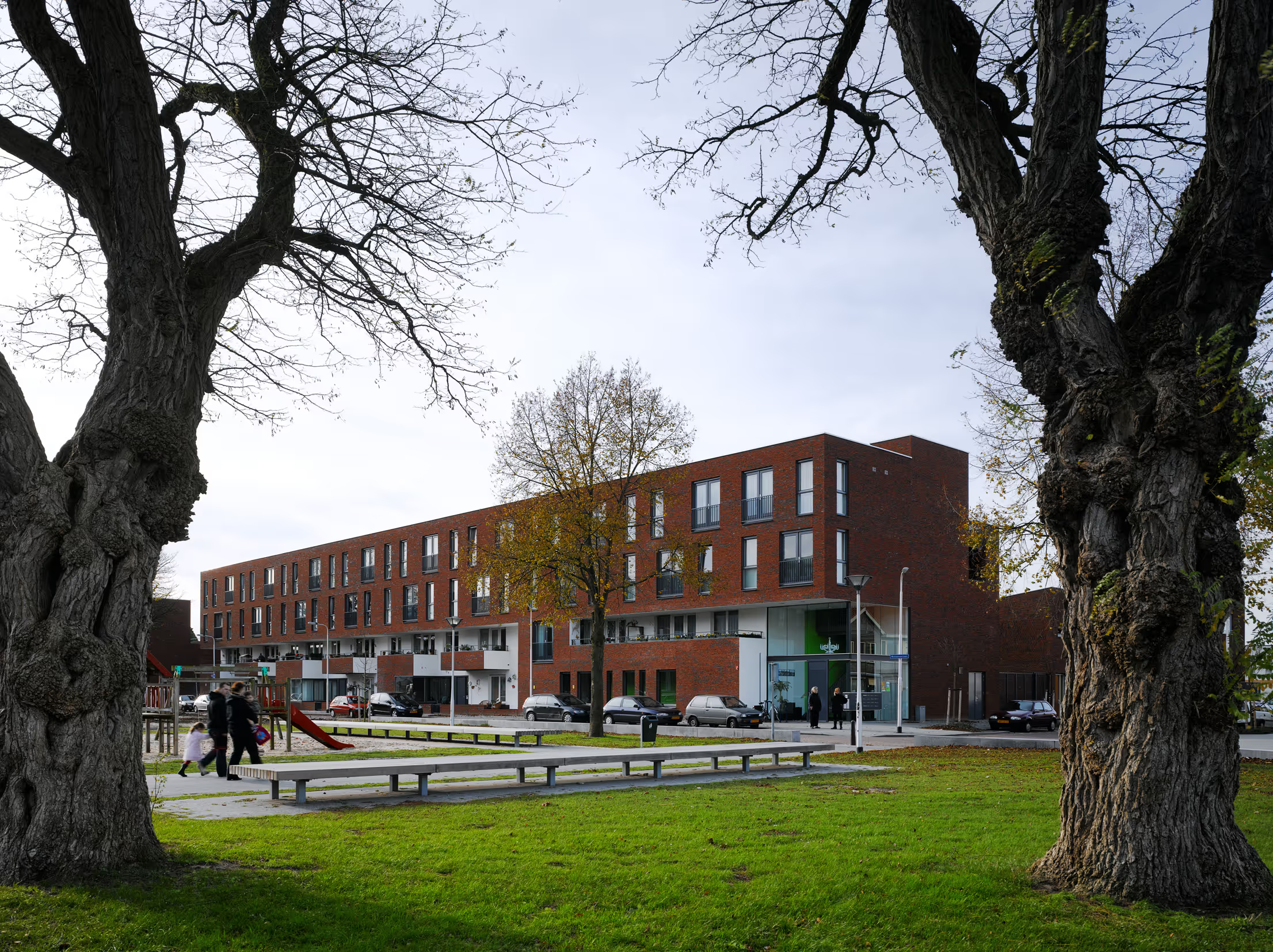
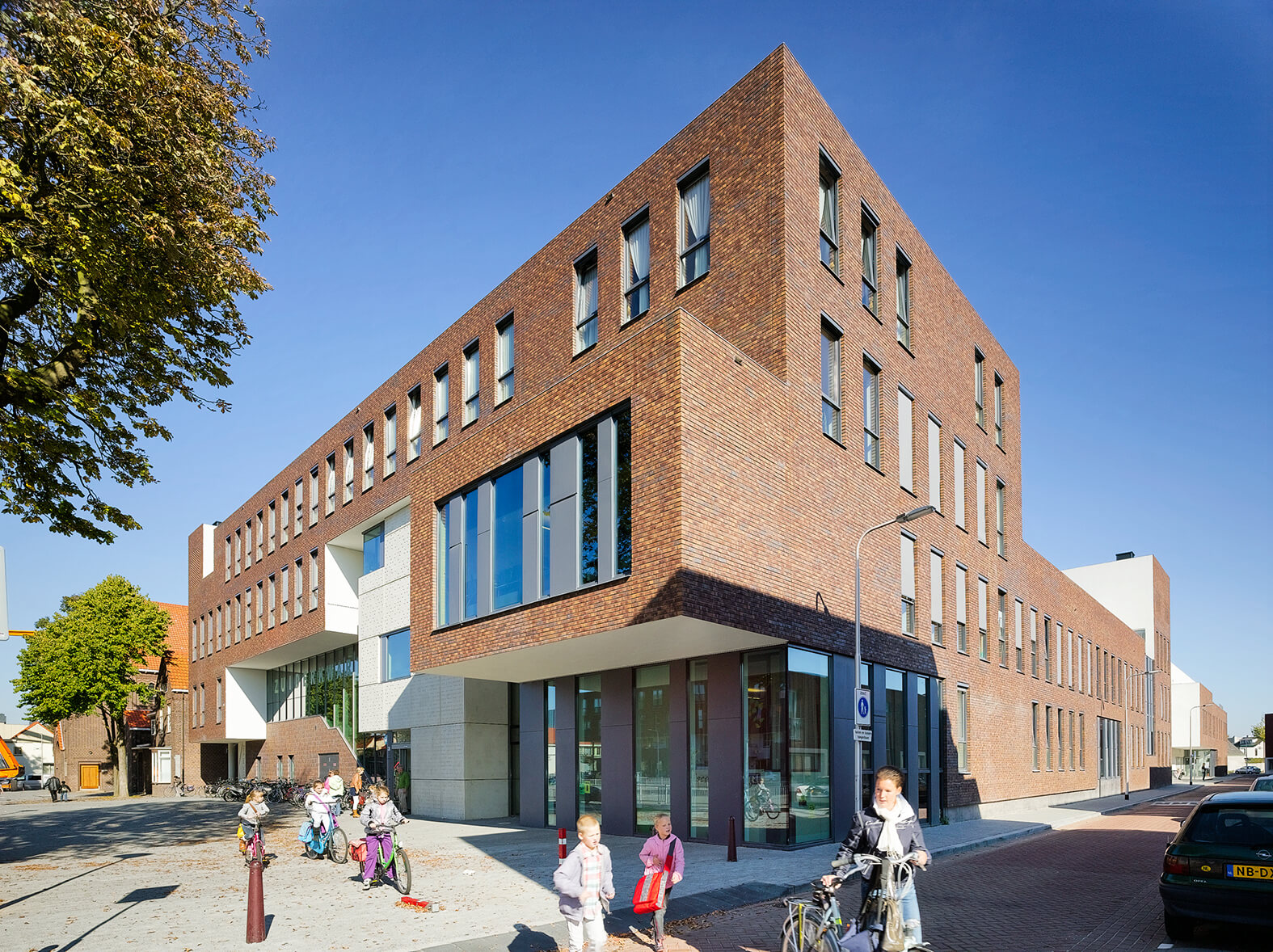
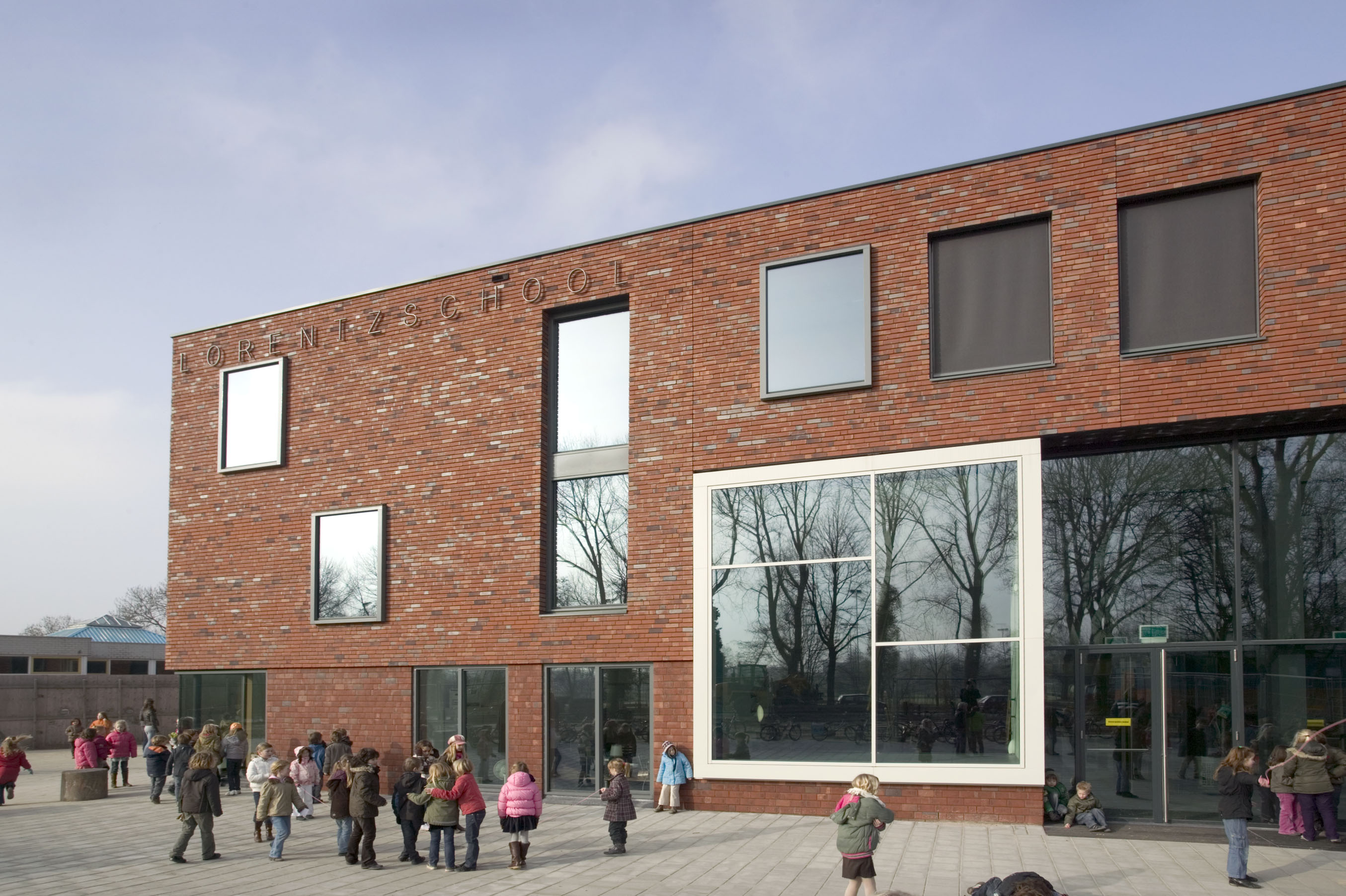
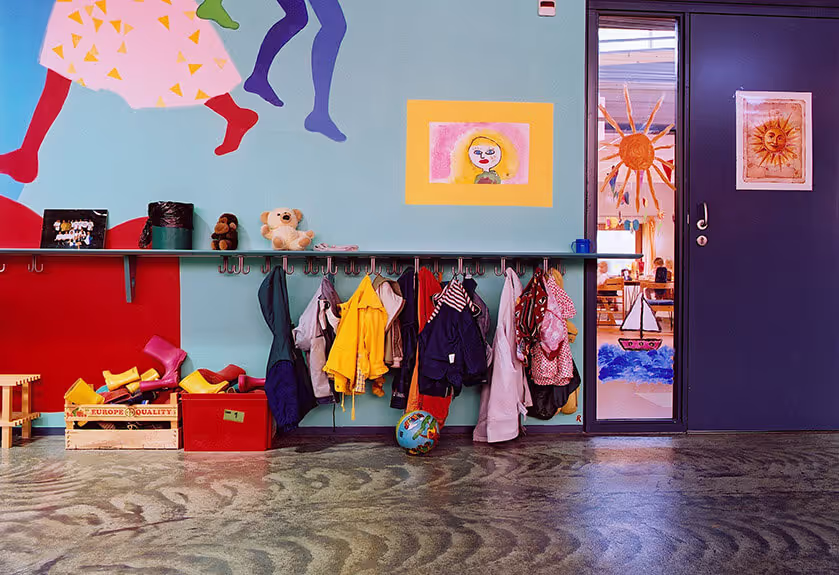
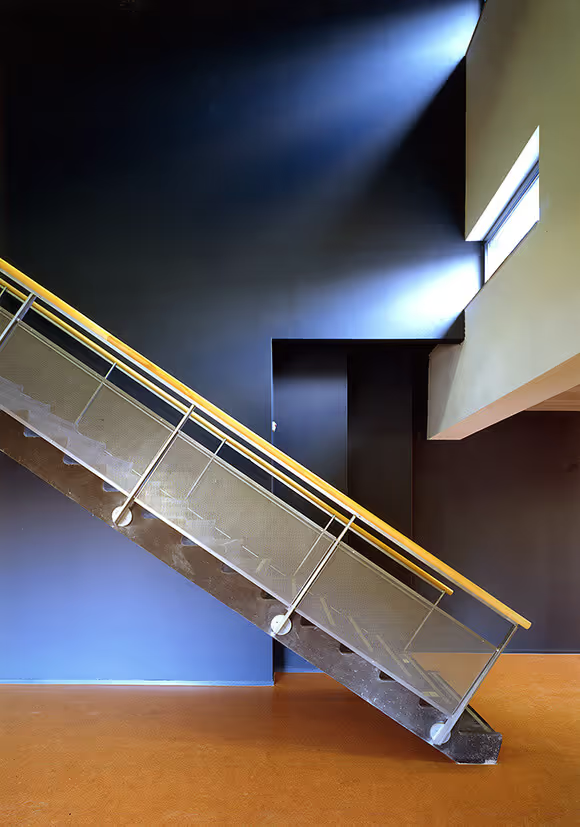
The appearance of the complex is defined by red brickwork boxes, with smaller wooden elements and a curtain wall as a binding element. Two types of masonry were used, [one for] larger volumes such as the community center, the gym and part of the school, [one for] the smaller boxes around the playground and Window Square. The large curtain walls around Vensterplein are made of aluminum greenhouse profiles with a horizontal [wooden] support structure. The roof of the Vensterplein is covered by galvanized steel roof panels on large laminated wooden trusses. The floor in this room has the same robust appearance: mottled and polished concrete floors. In addition, color has been added to certain wall surfaces to enhance the atmosphere and space. In some areas, Rix Wierenga created large murals inspired by children's drawings.