Meerpolder community school and homes

Meerpolder community school and homes
Meerpolder community school and homes
Dual use reinforces the quality of the neighborhood
The Community School as a new concept
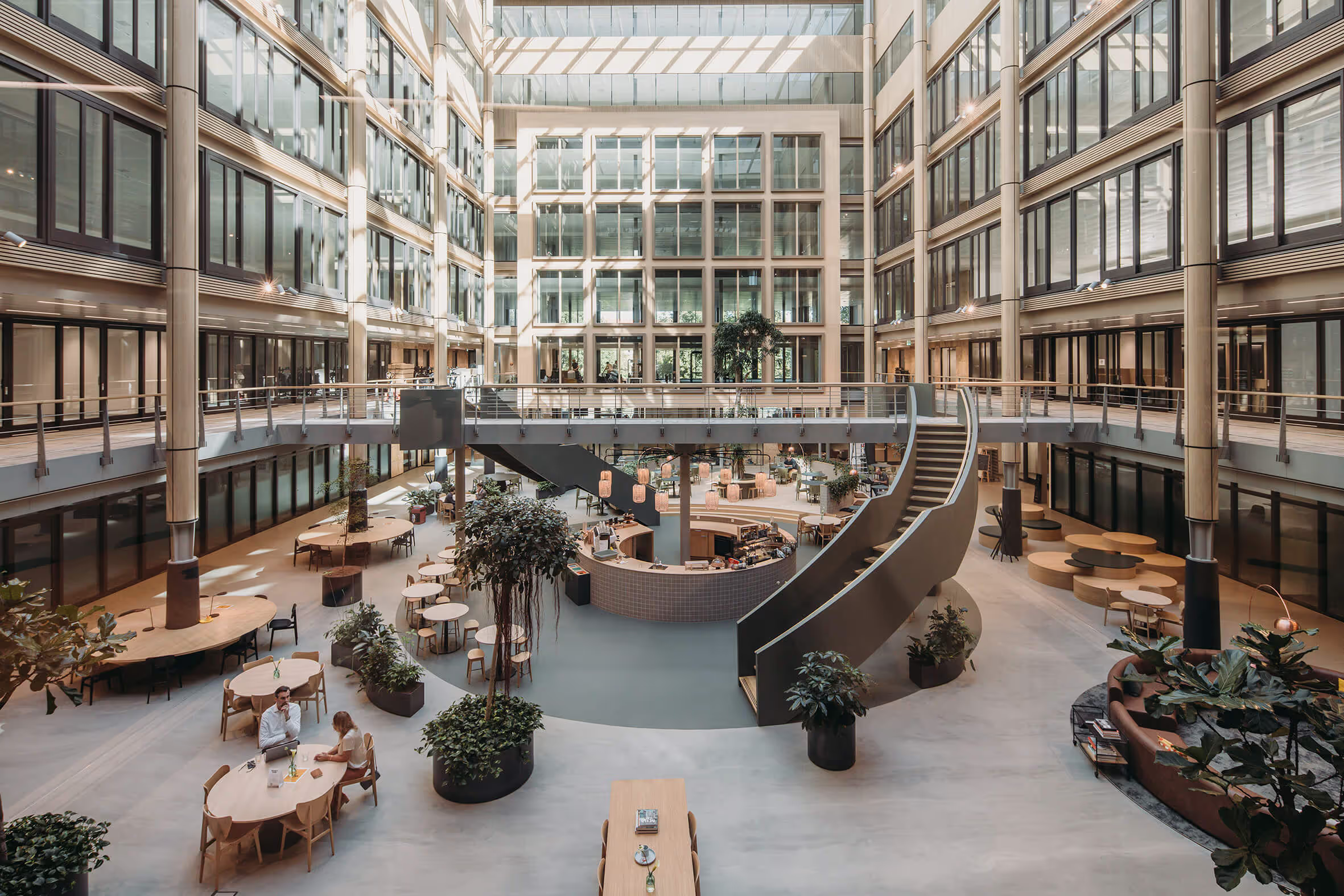
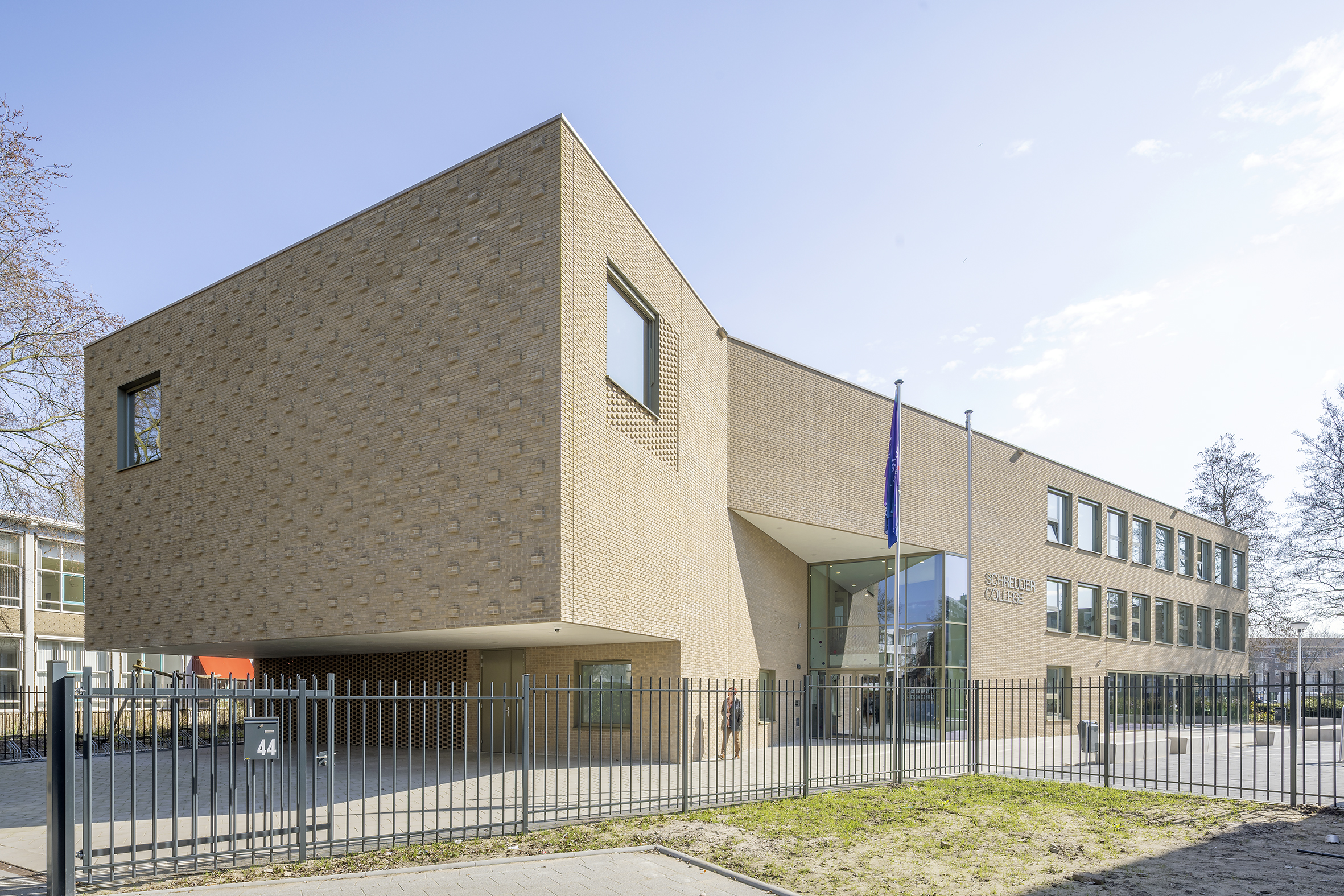
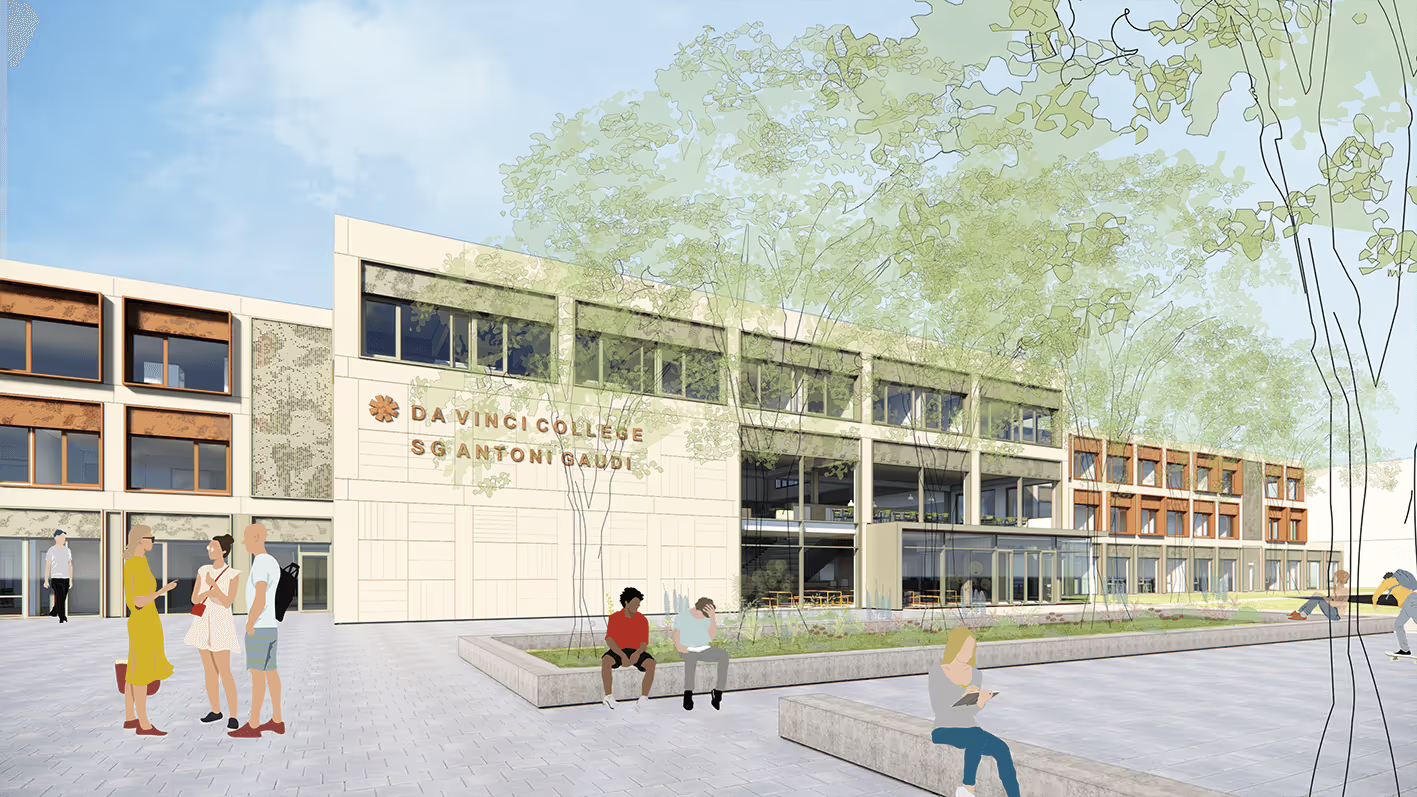
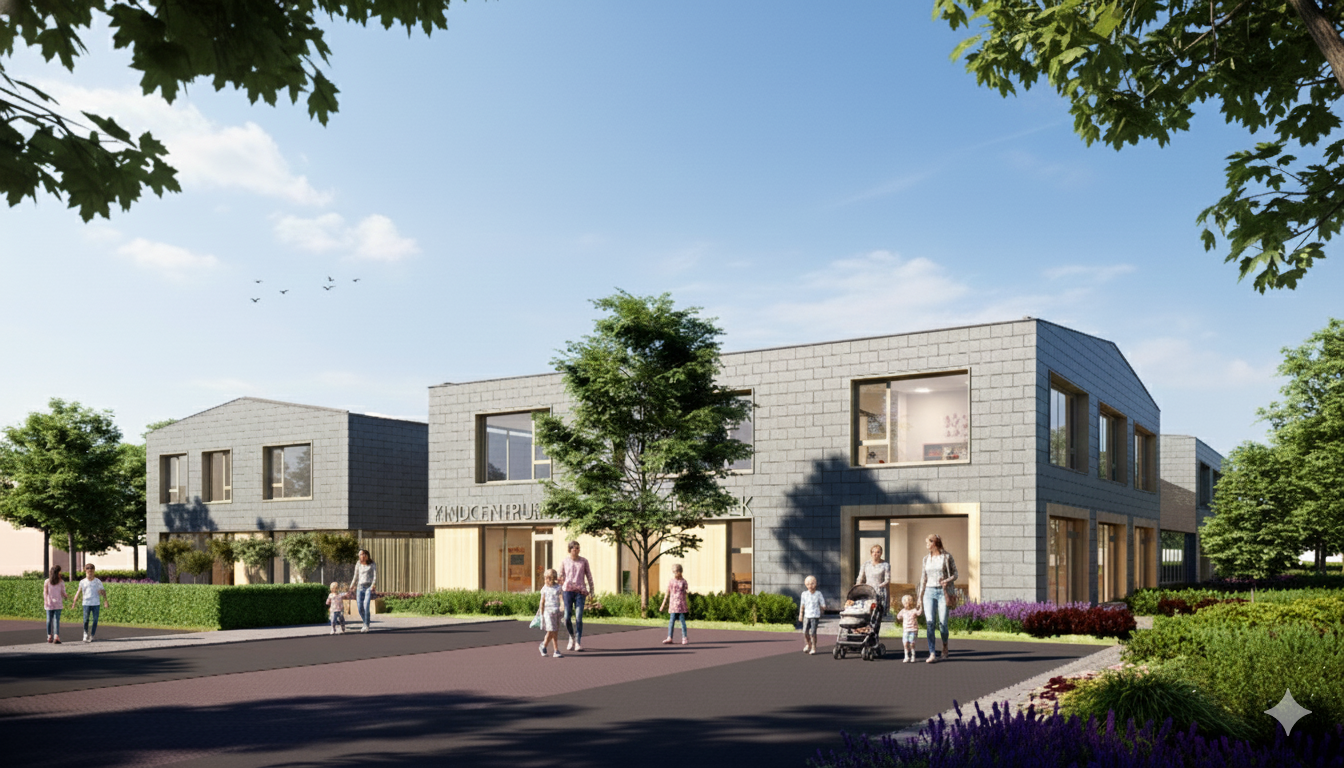
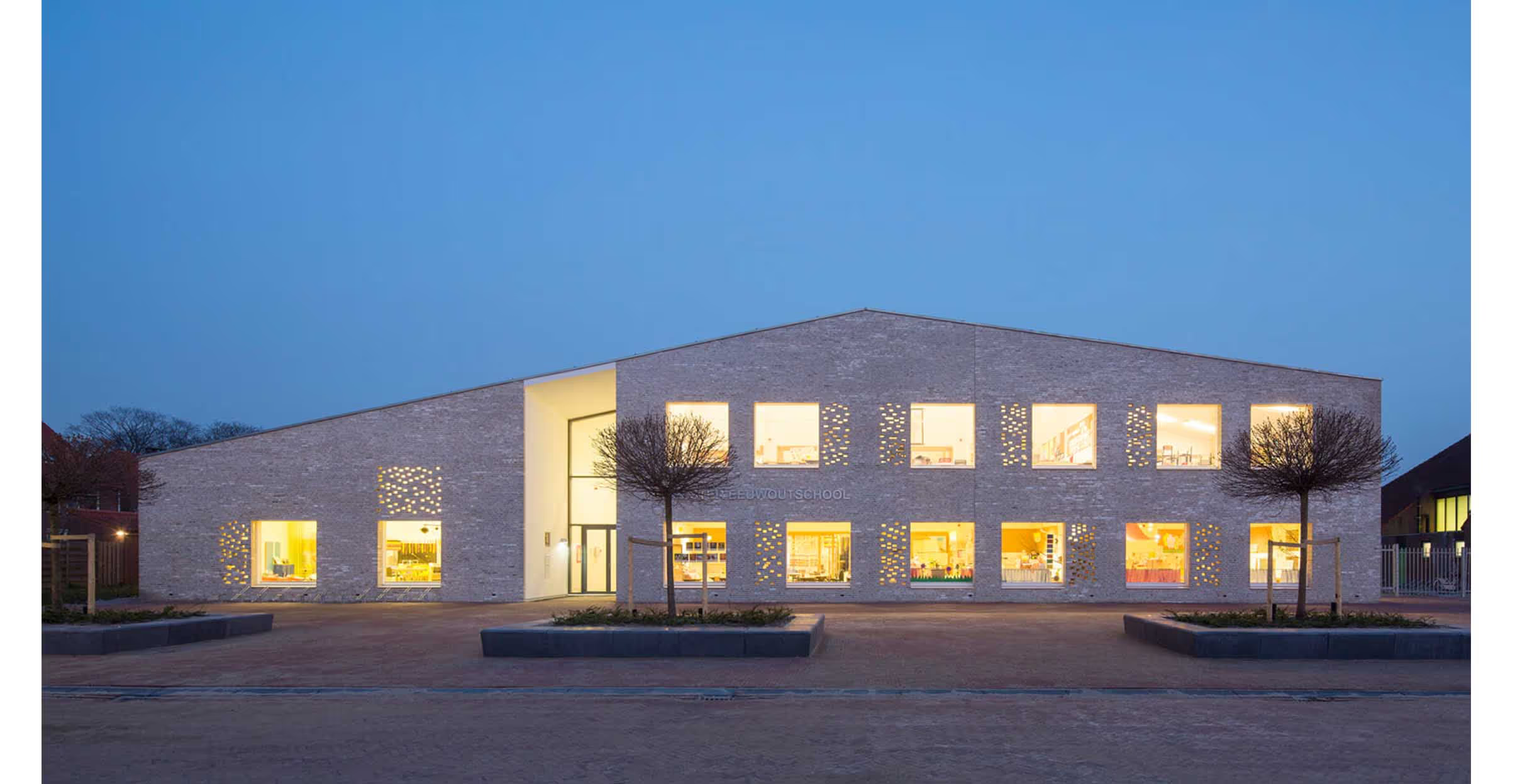
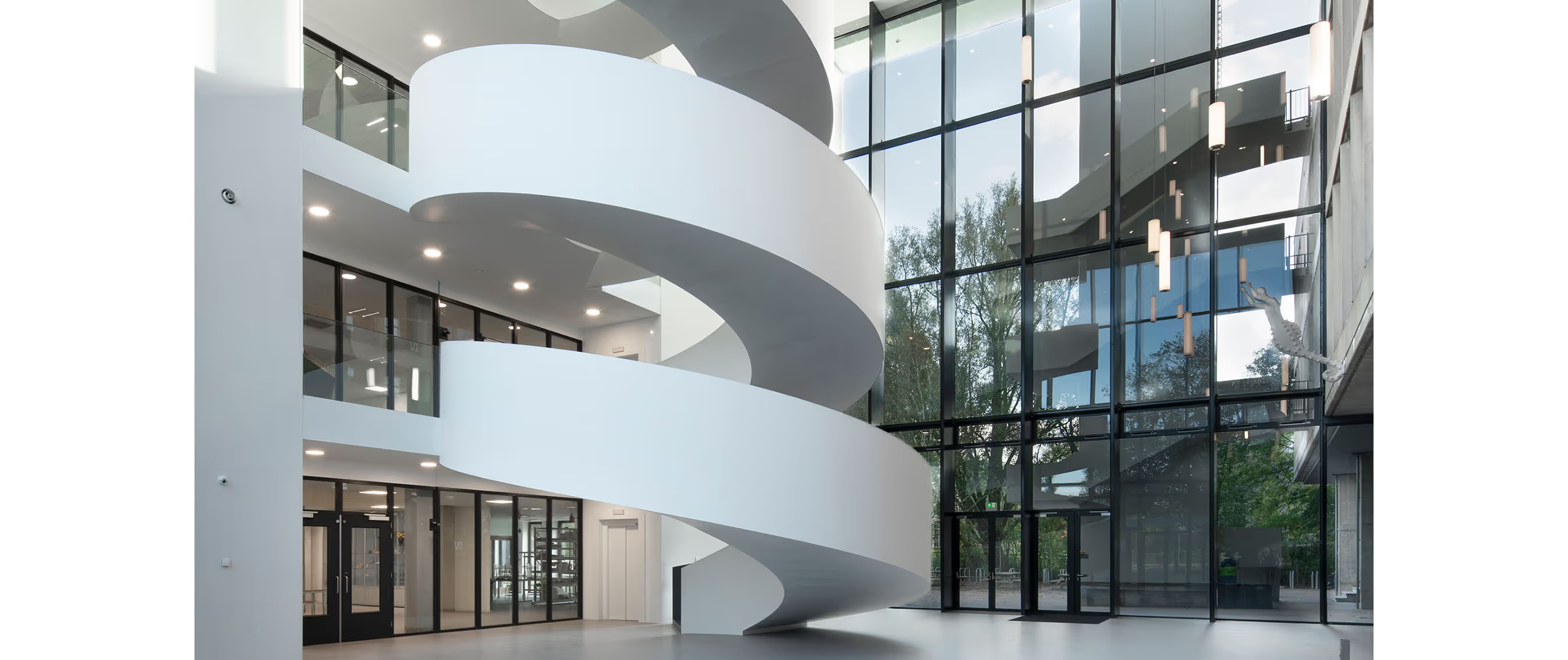
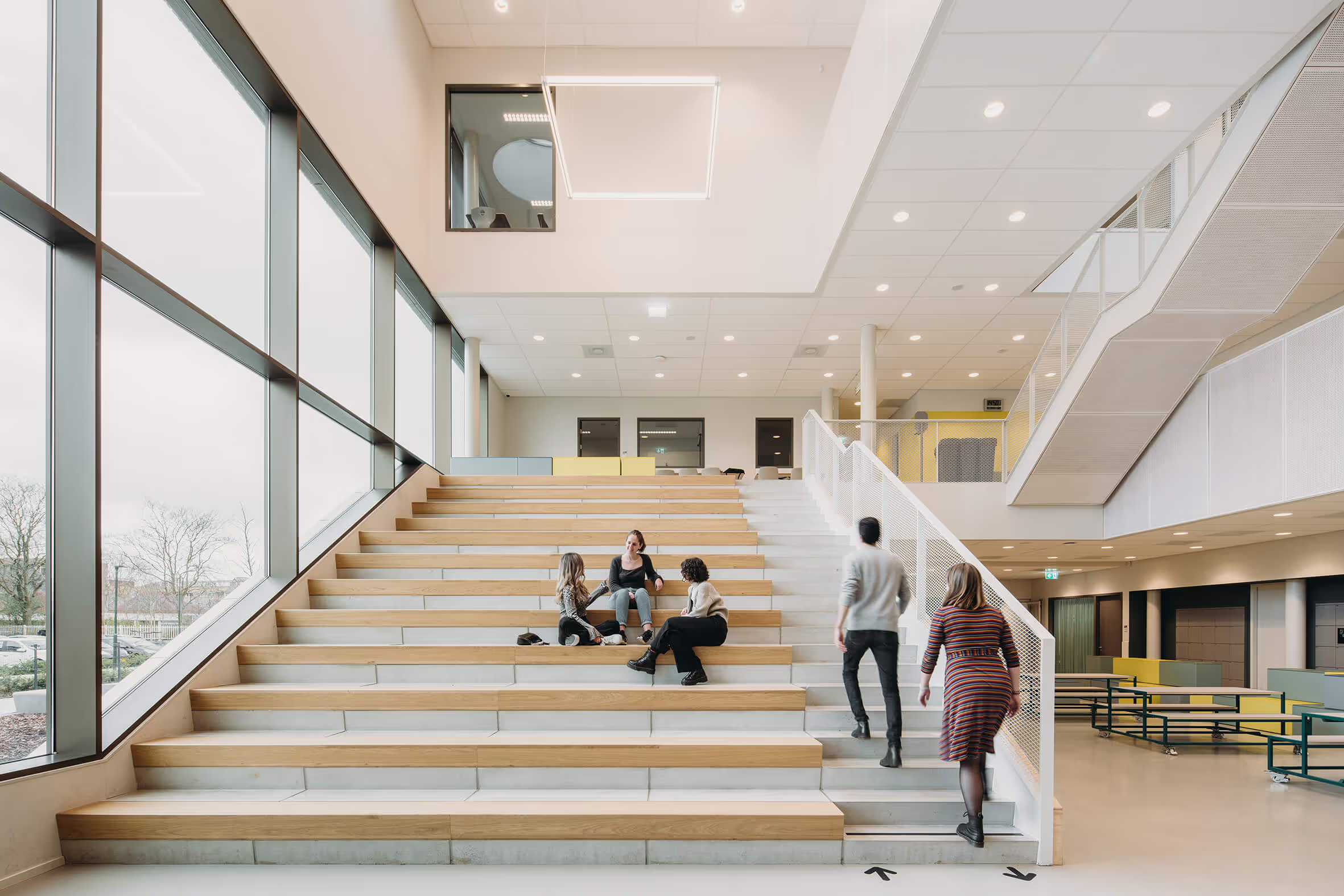
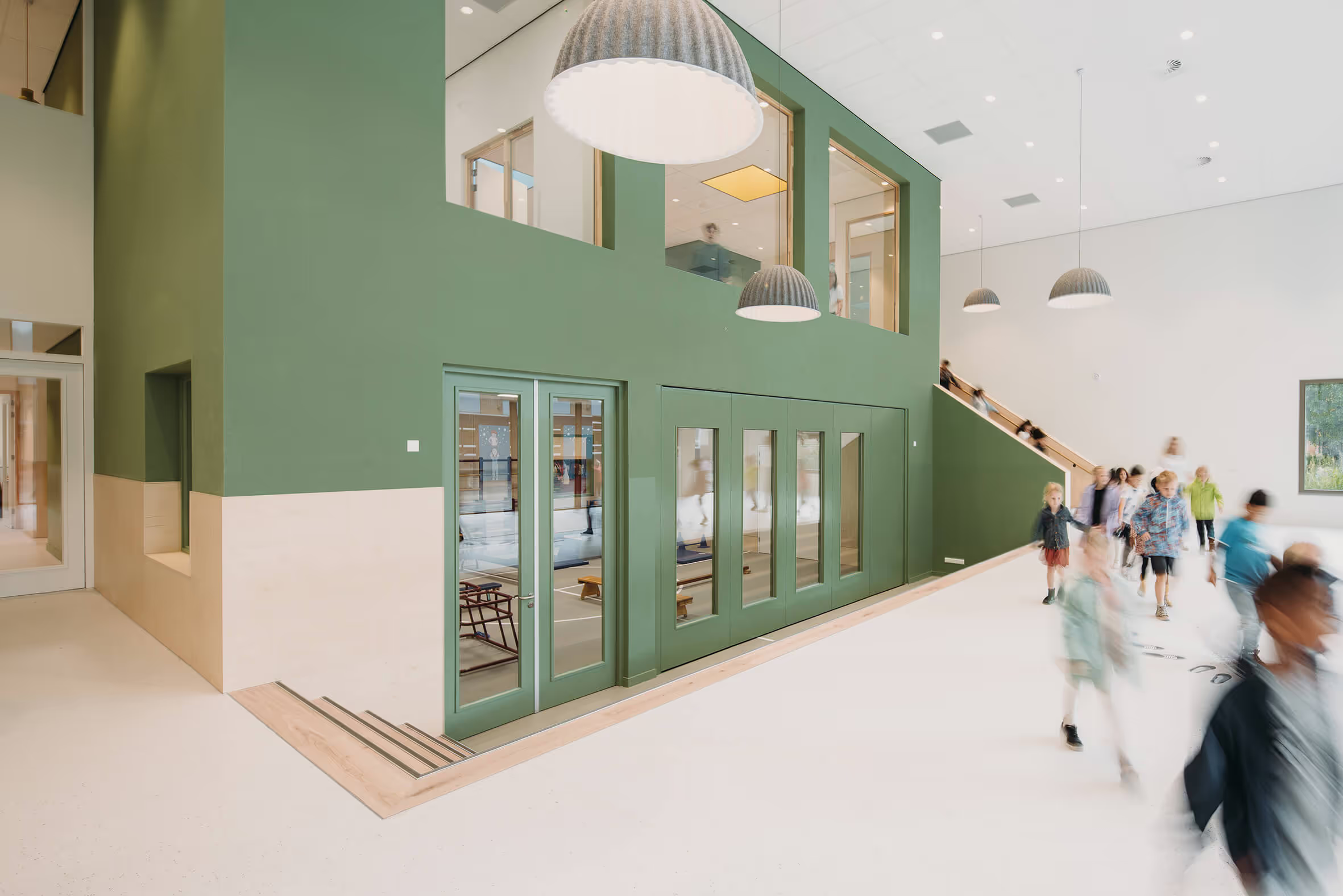
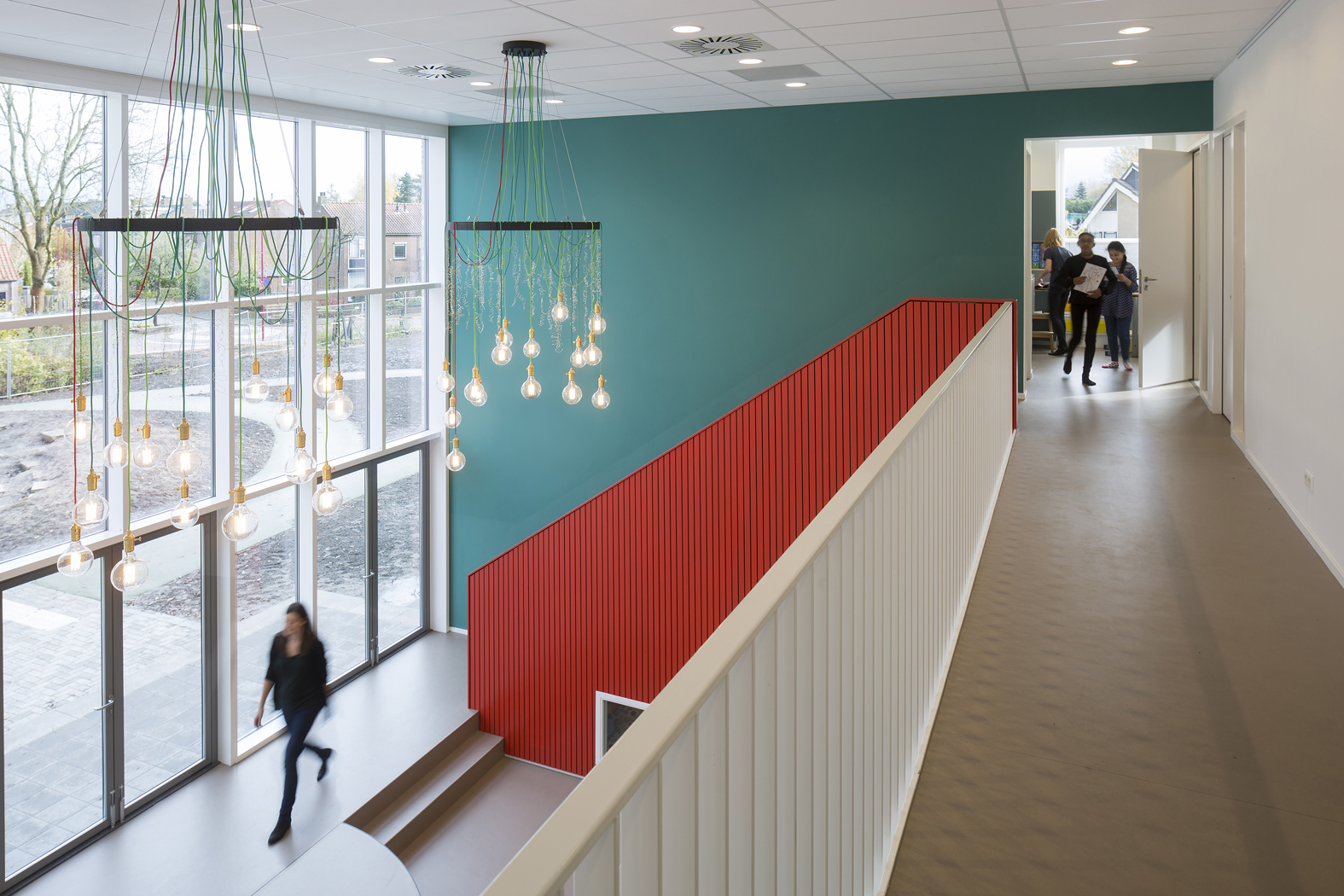
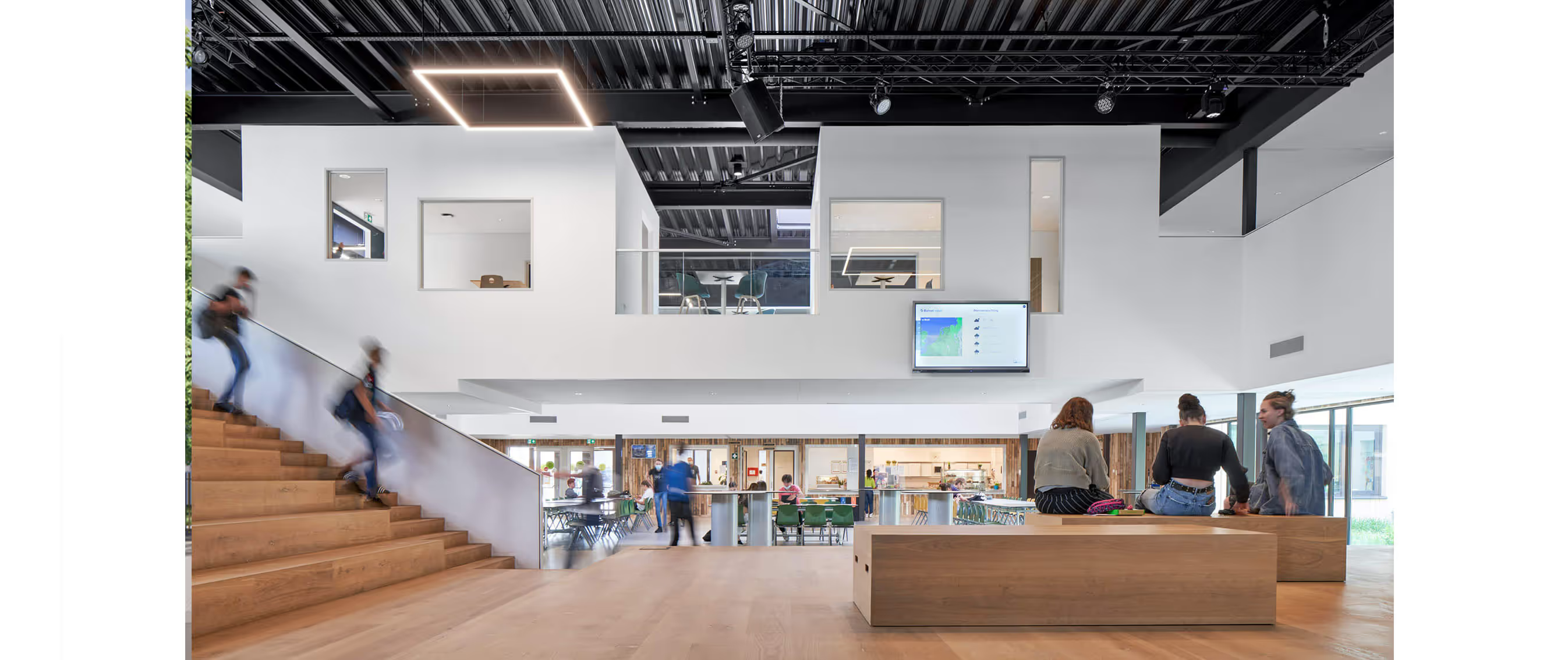
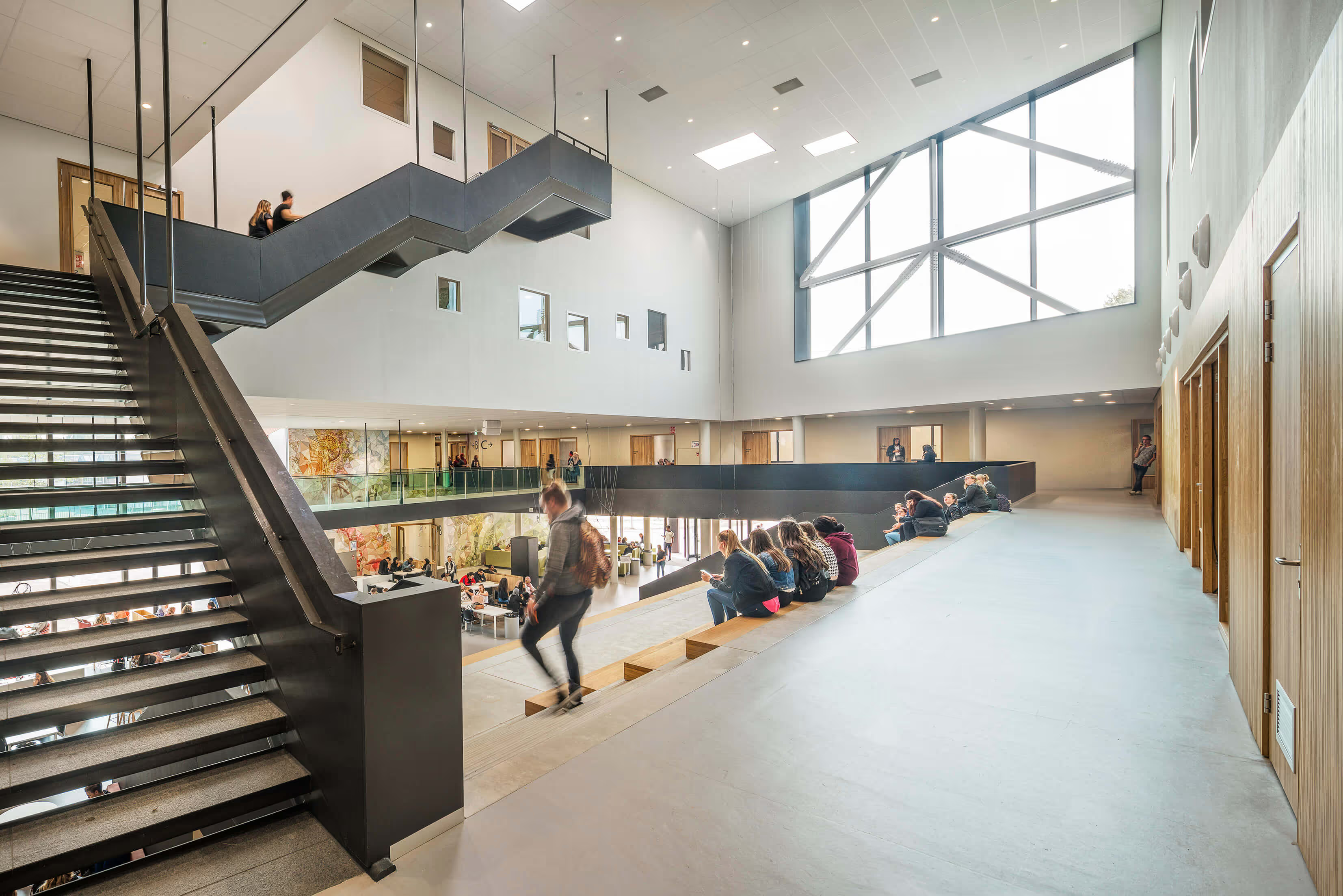
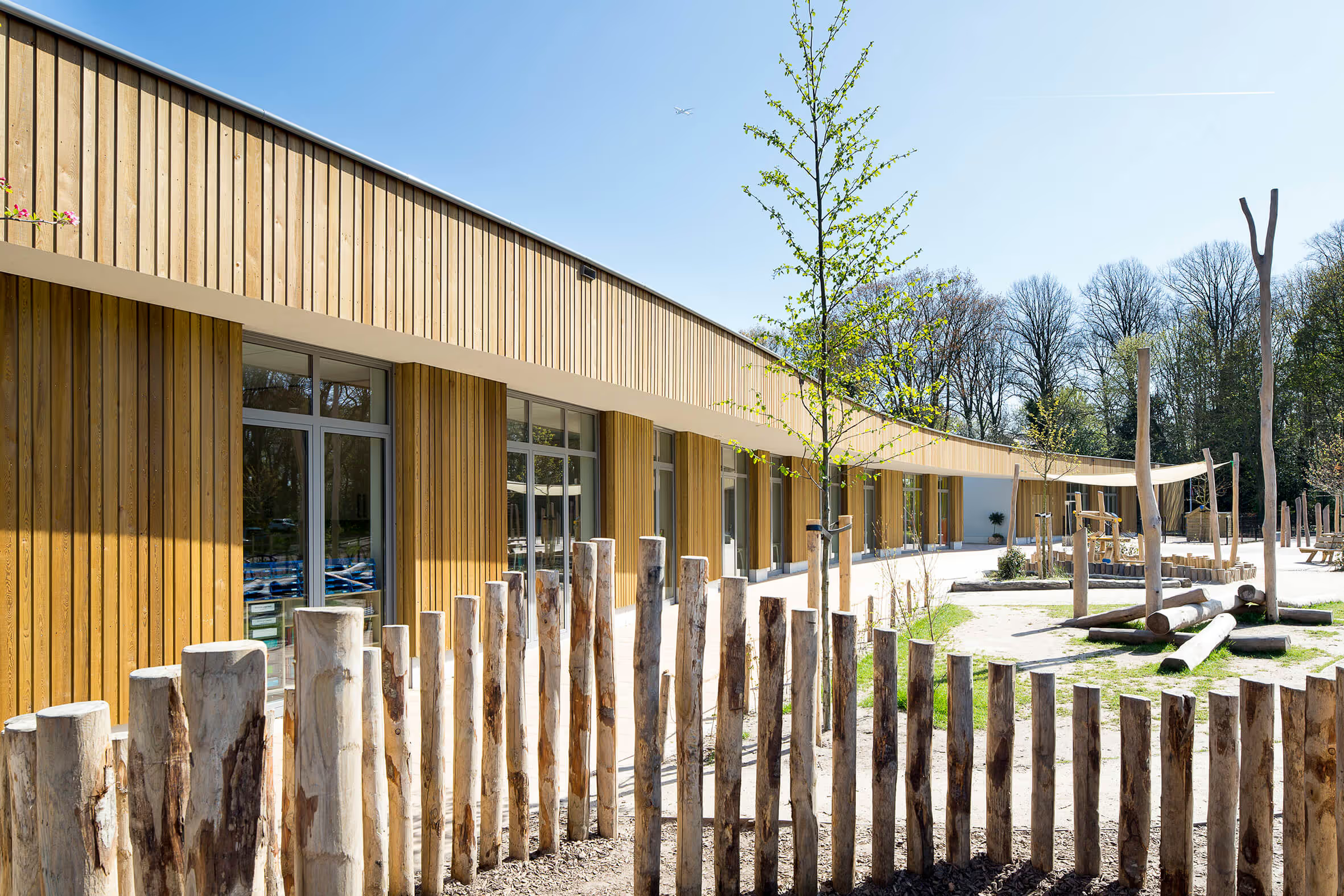
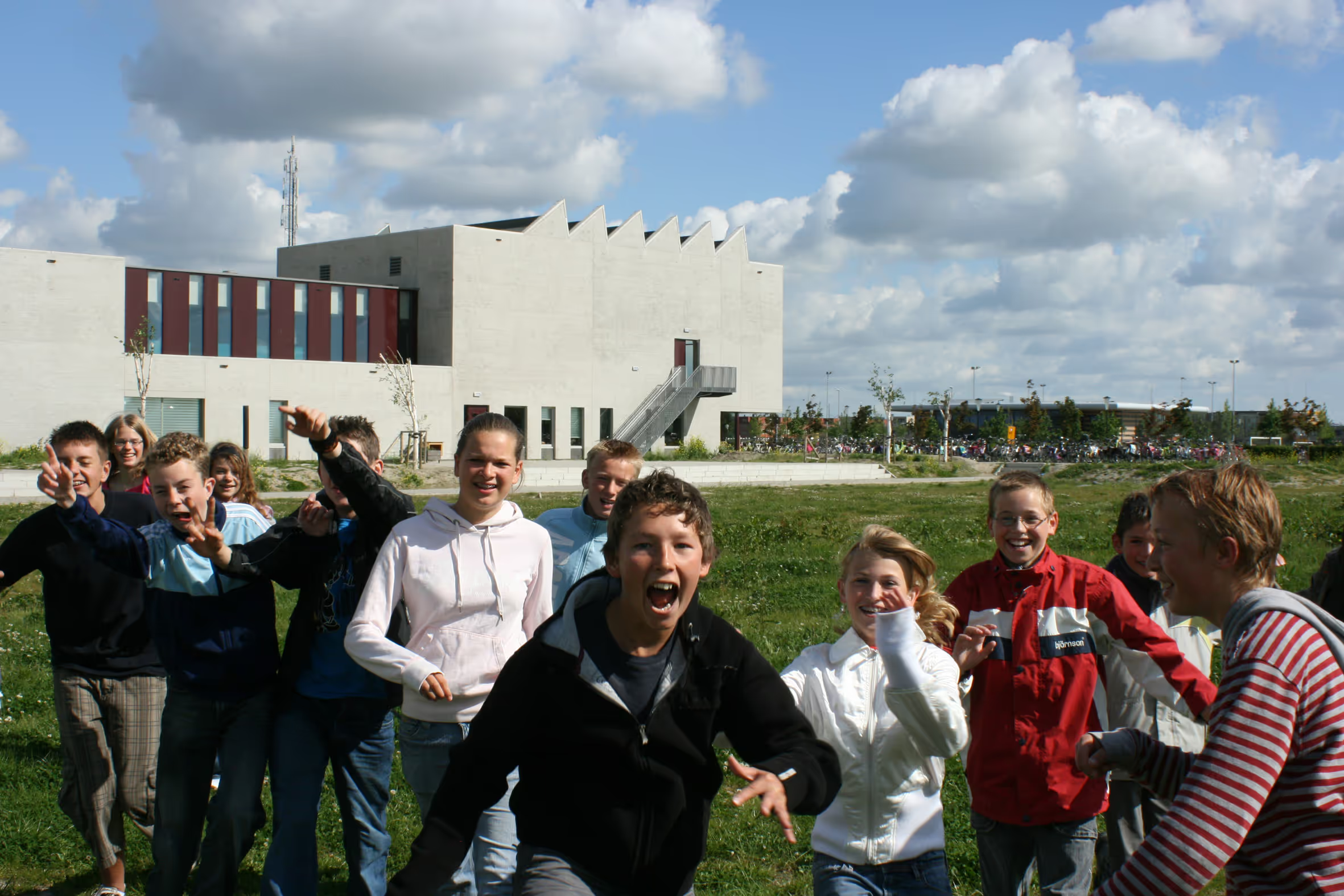
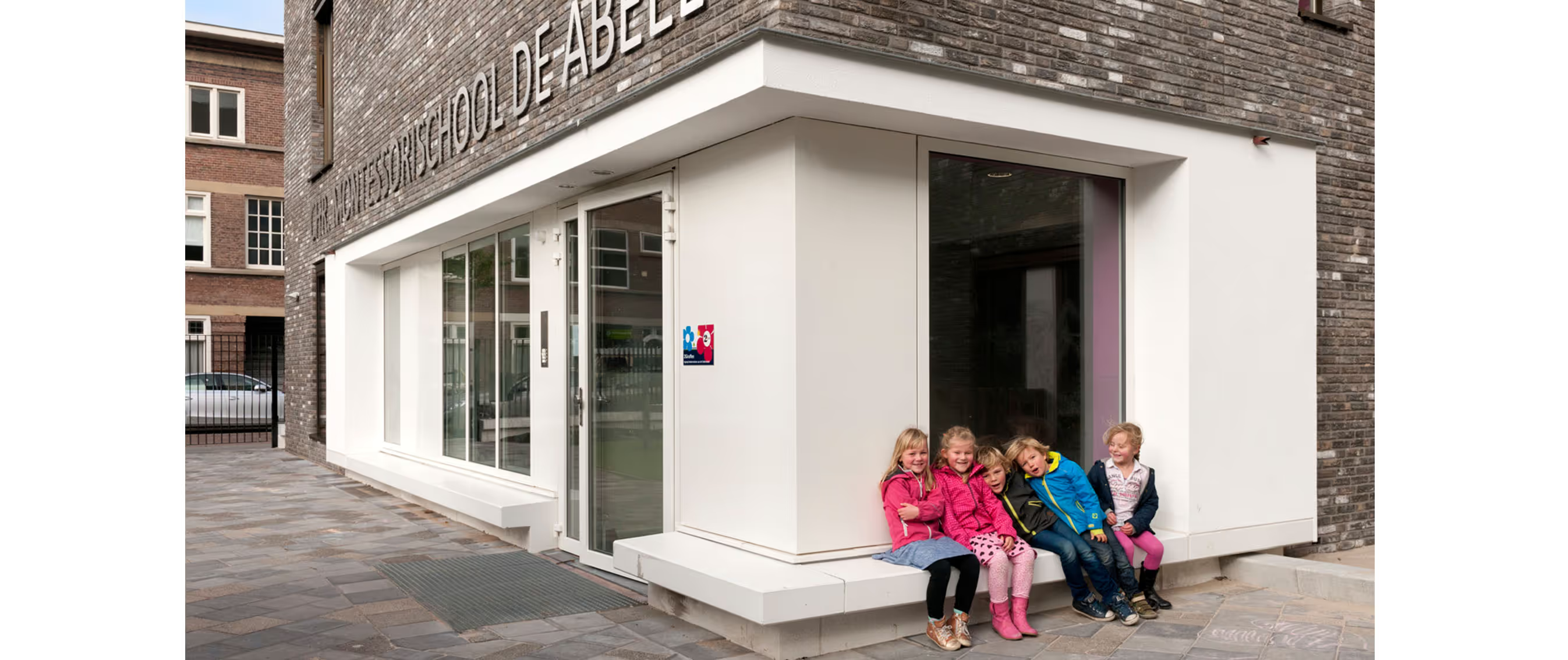
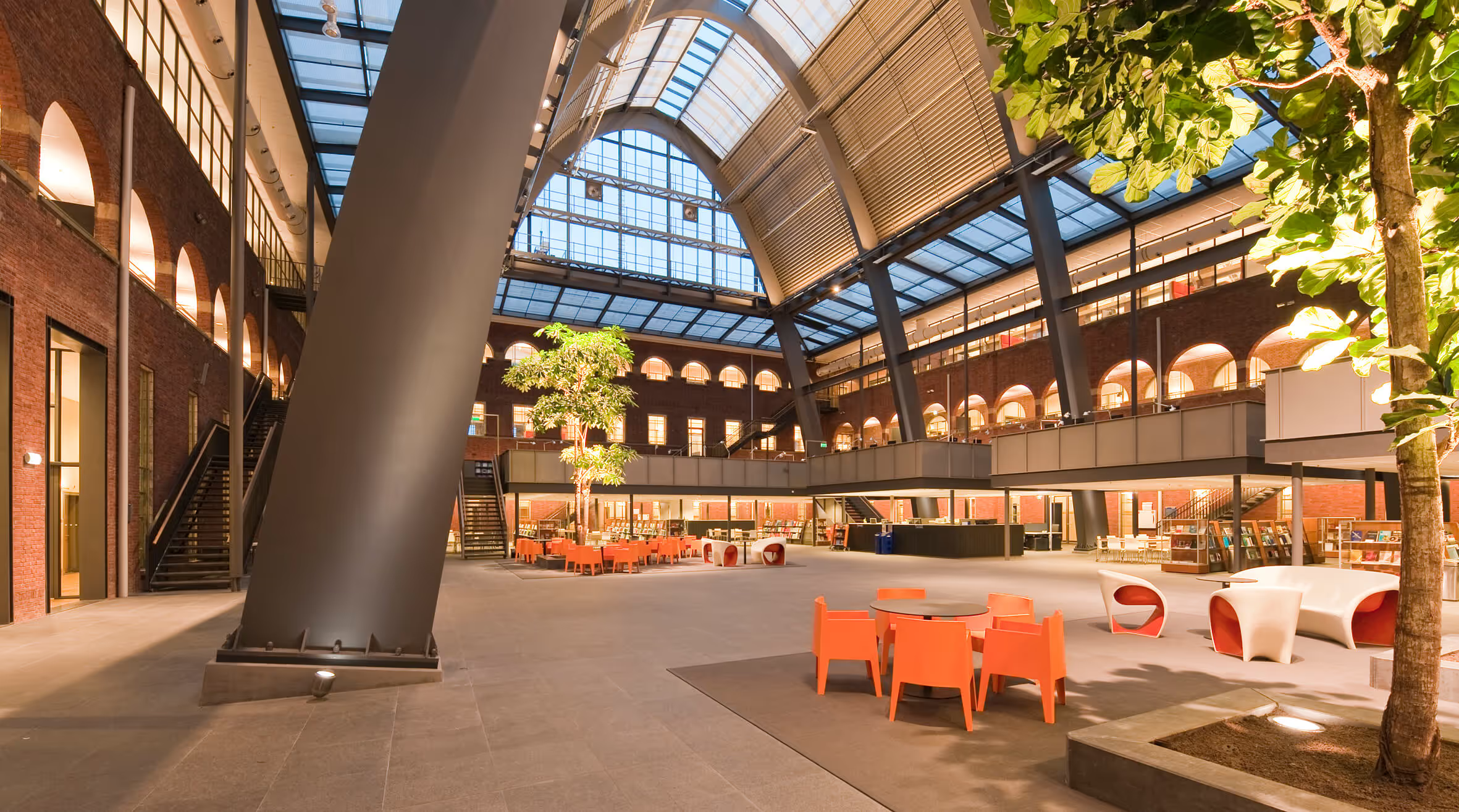
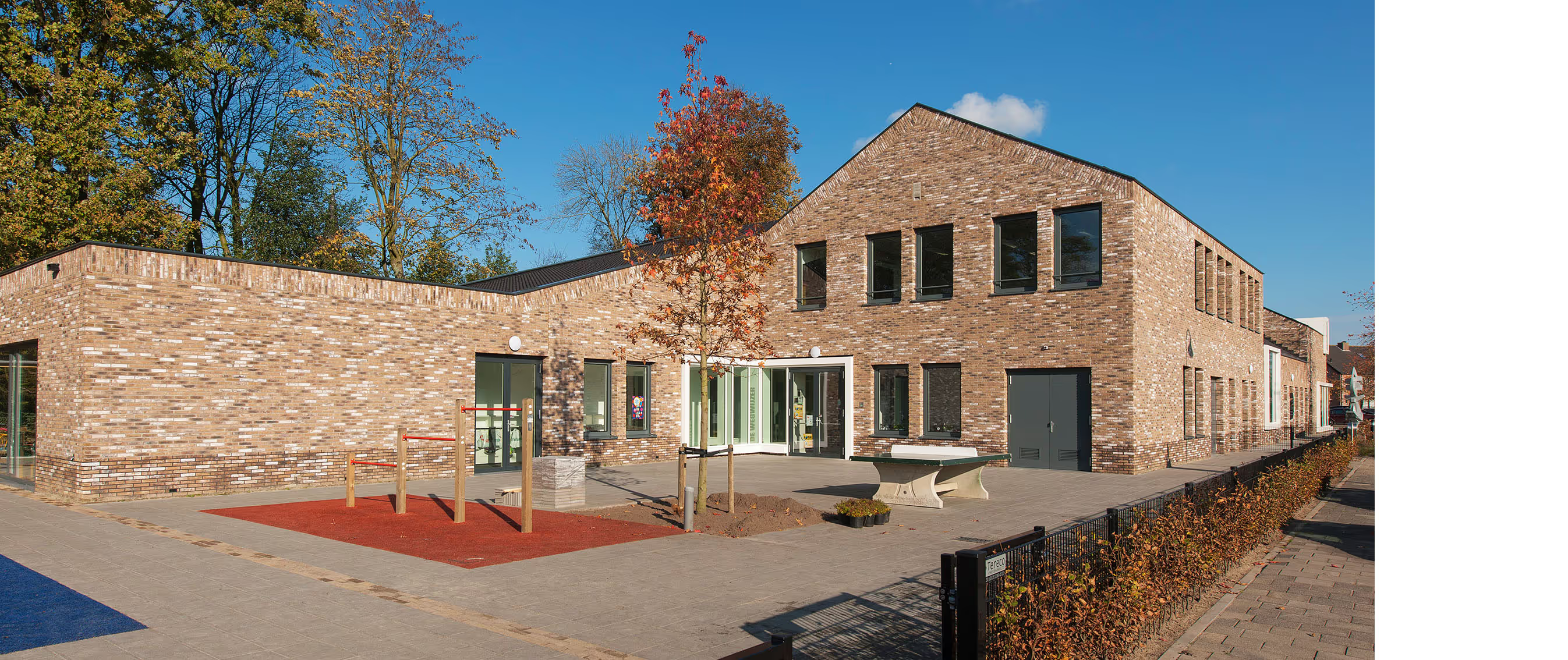
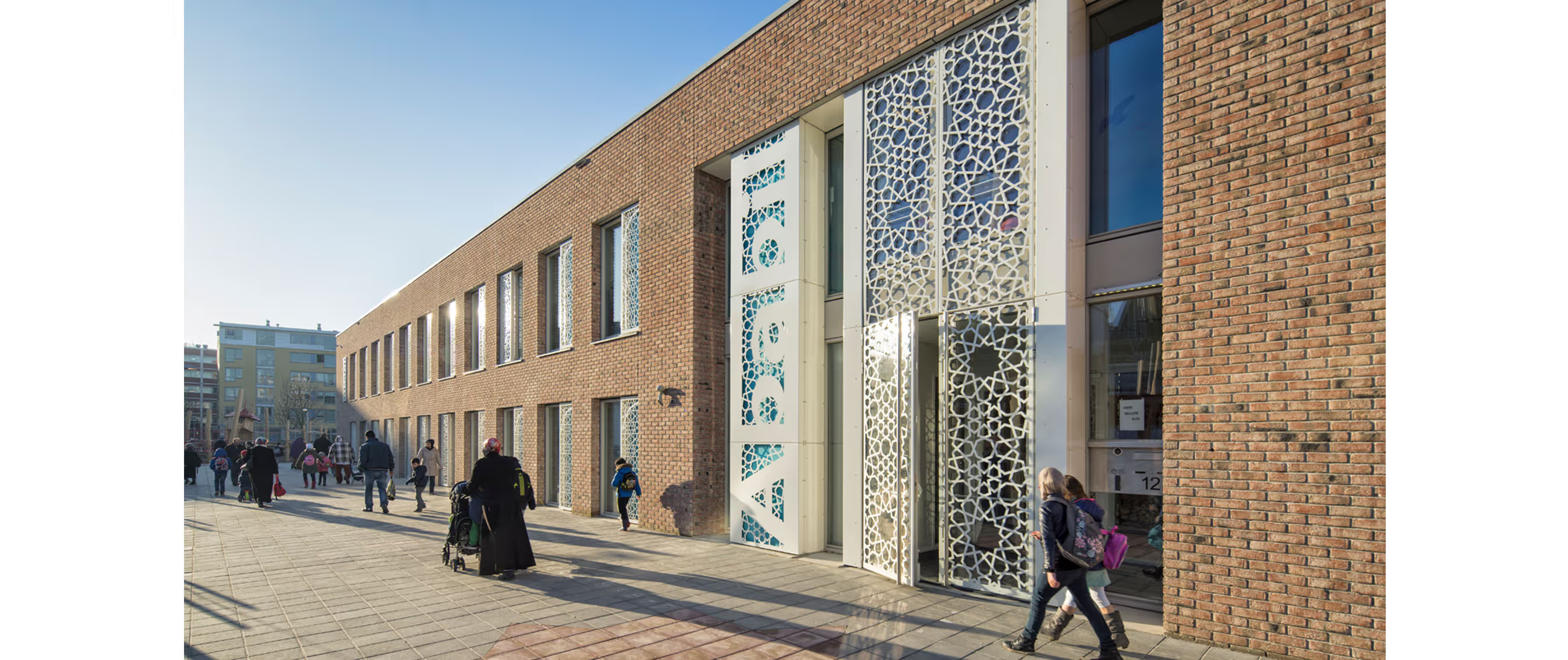
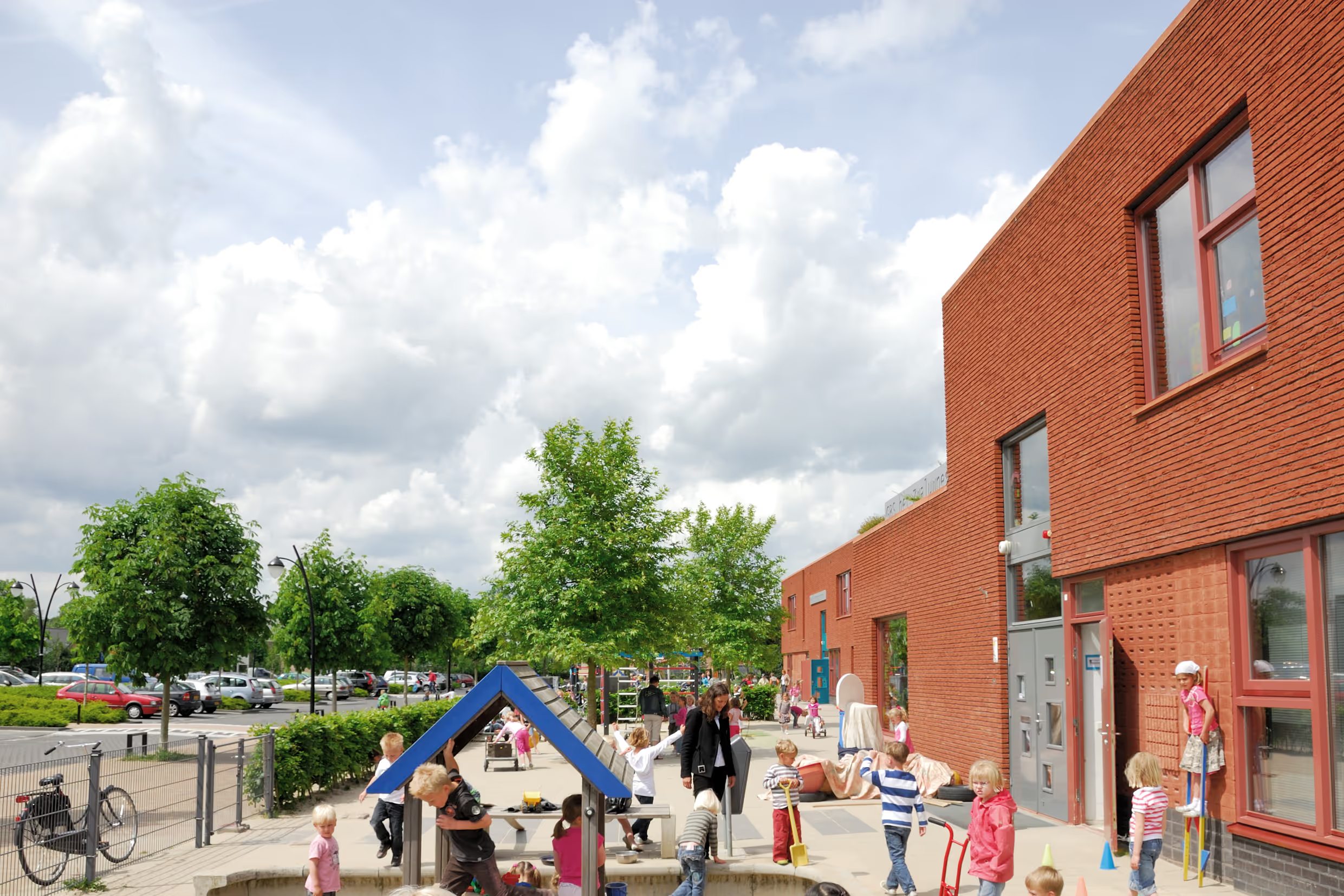
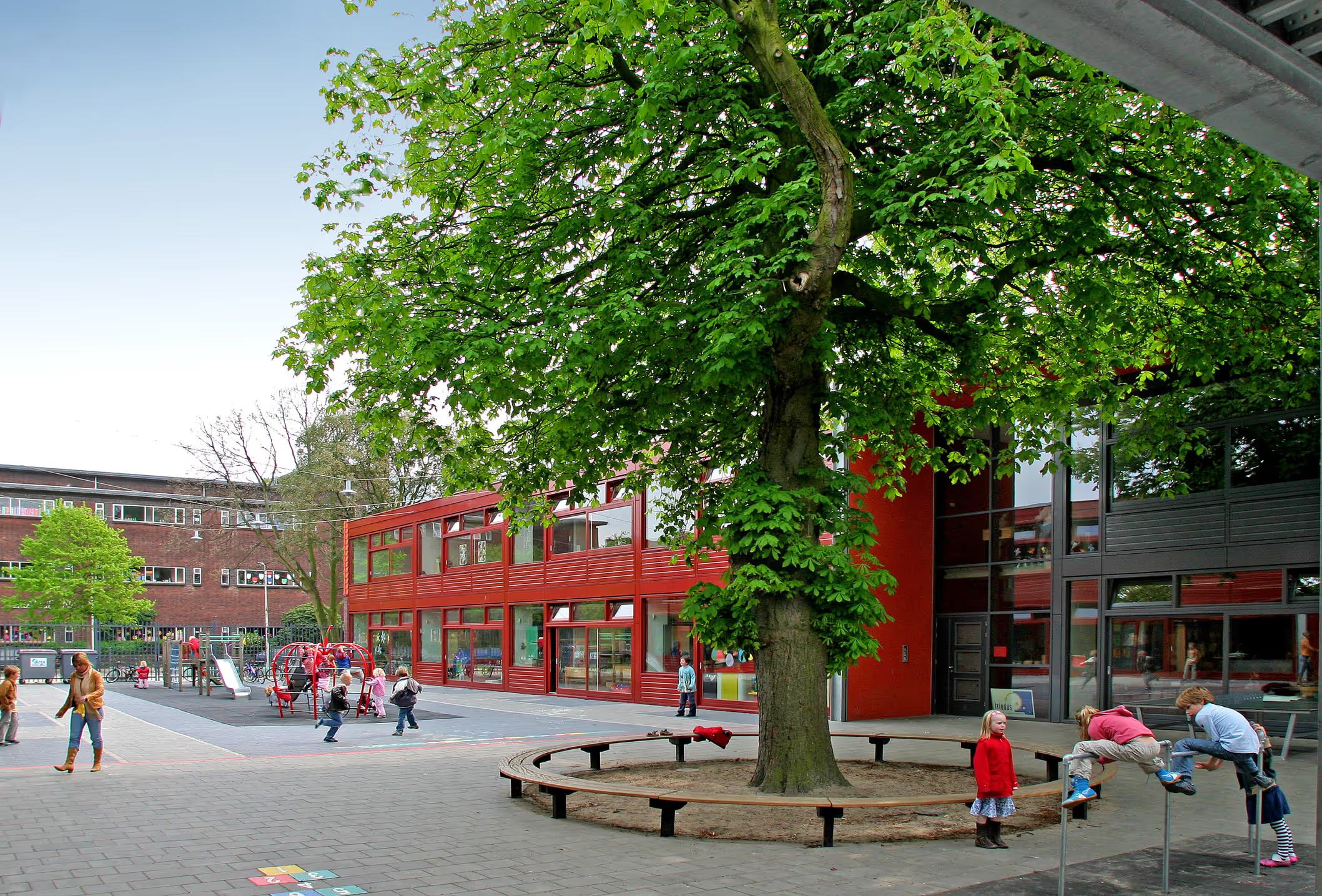
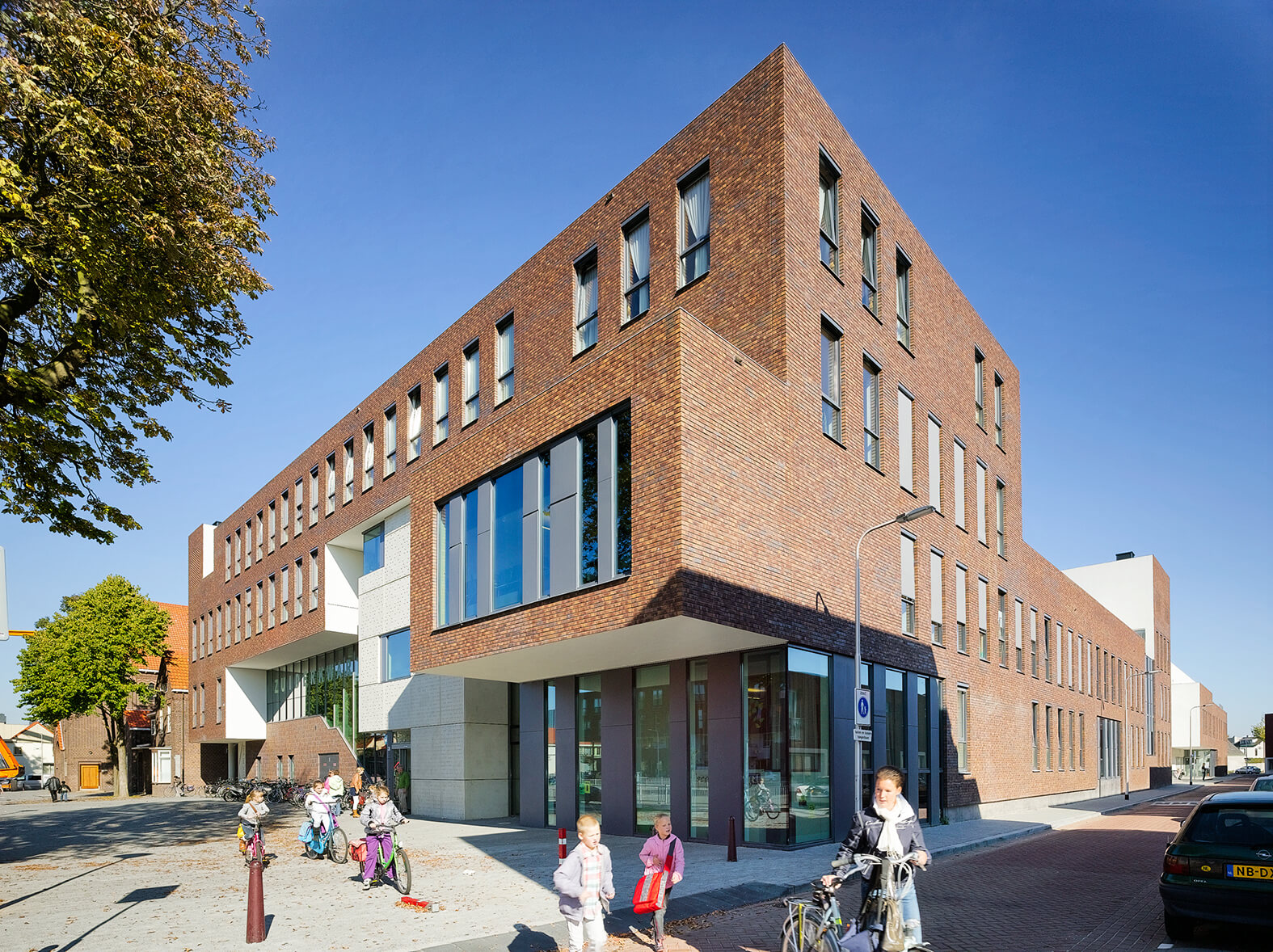
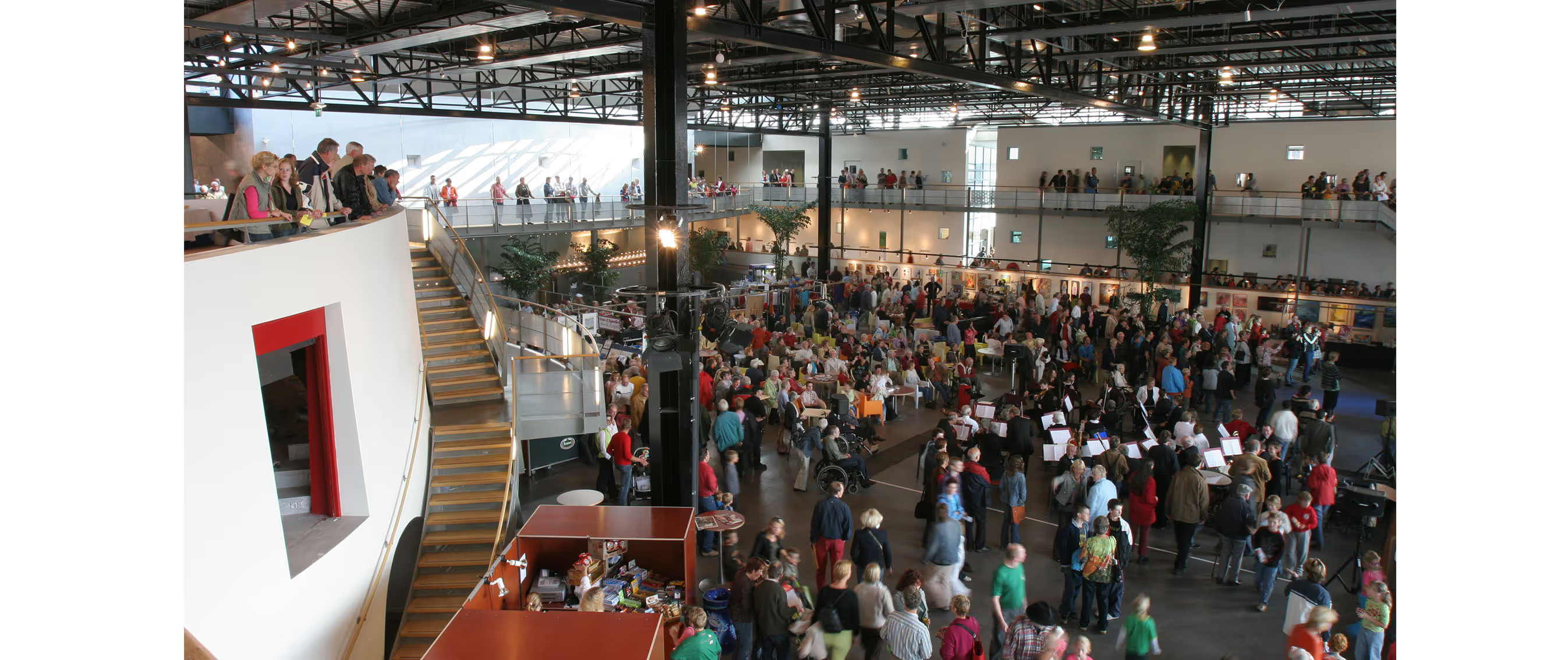
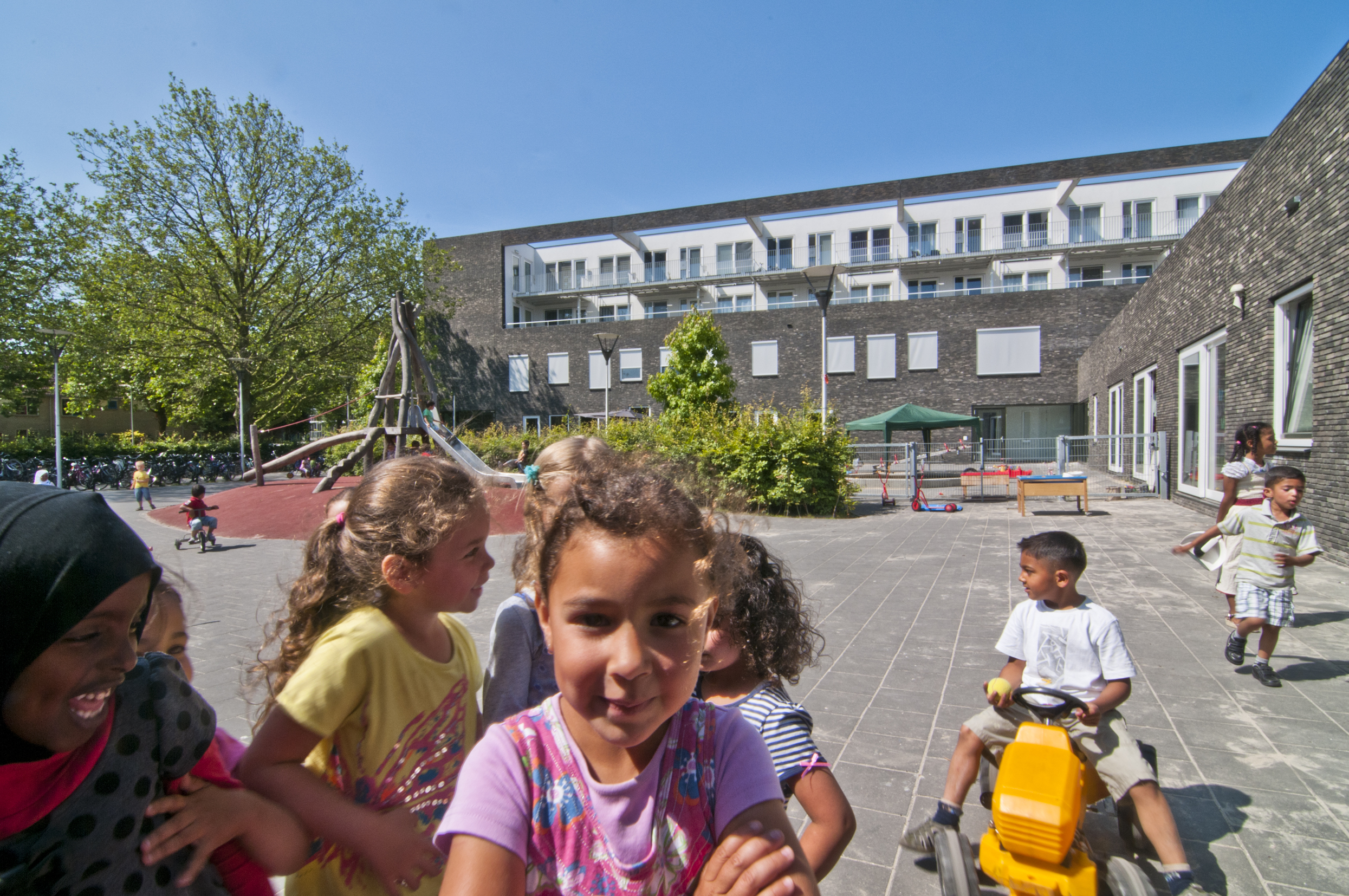
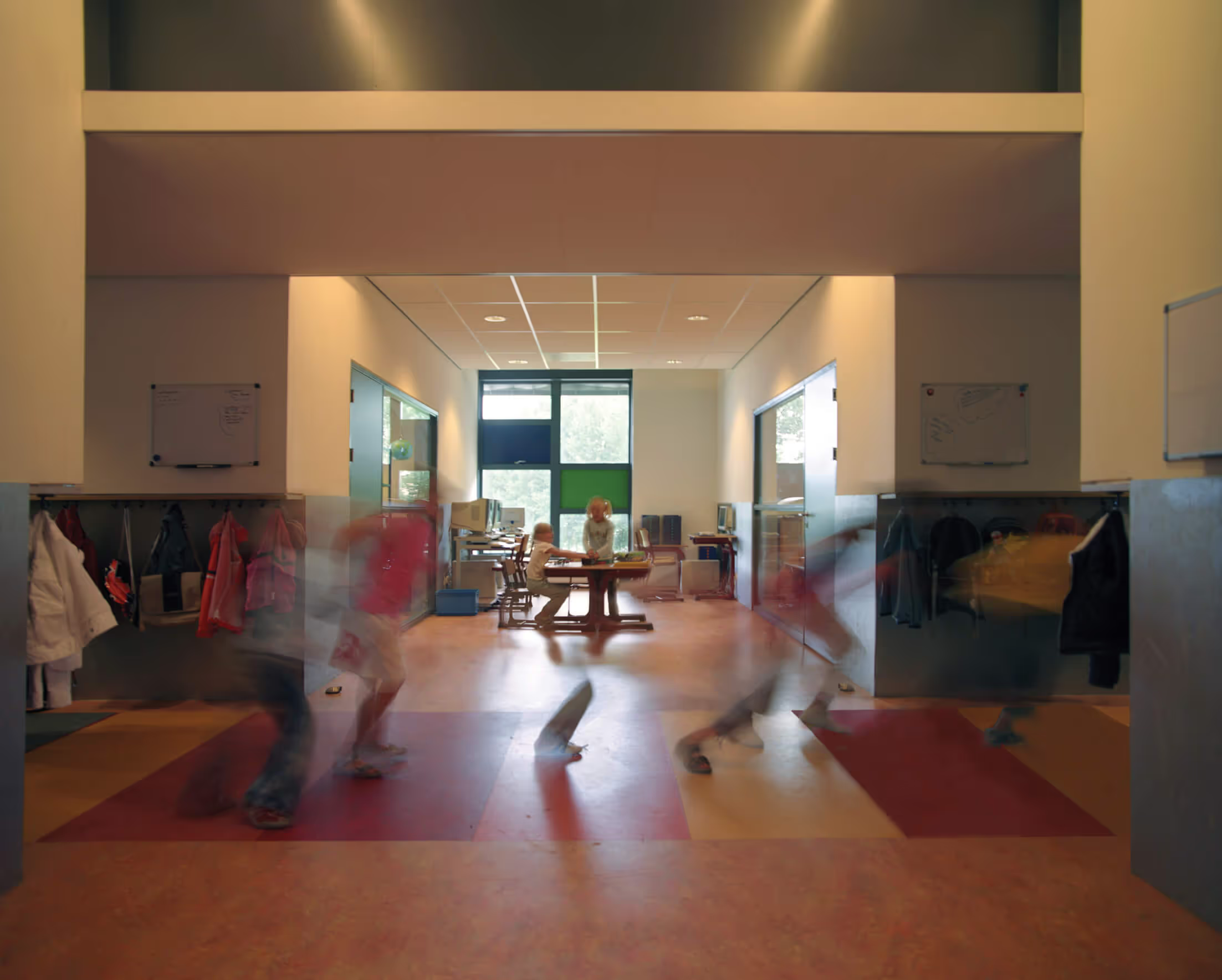
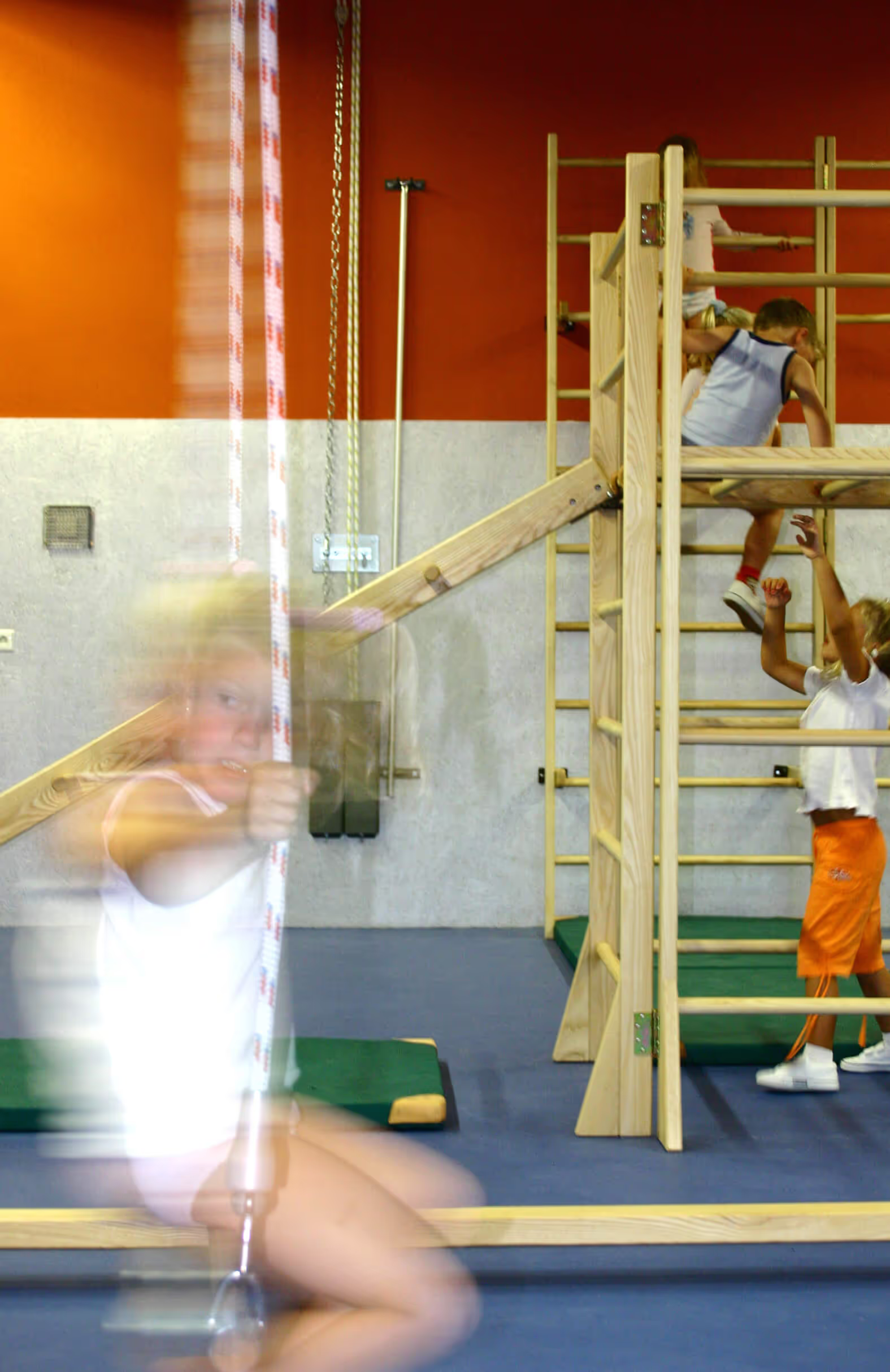
The Community School is now common, but in 2001 this was still a relatively new concept in education. The starting point in this design was to give both schools their own heart and to share spaces where possible. The schools each have their own central hall, which reflects the specific identity of each school: a high space with a wide central staircase; this hall is connected to the auditorium. Linking the auditorium with the hall not only creates an exciting spatial composition, but also a multifunctional place for crafts, stays, theme parties, school theater, Santa Claus, etc.
Education clusters for the future
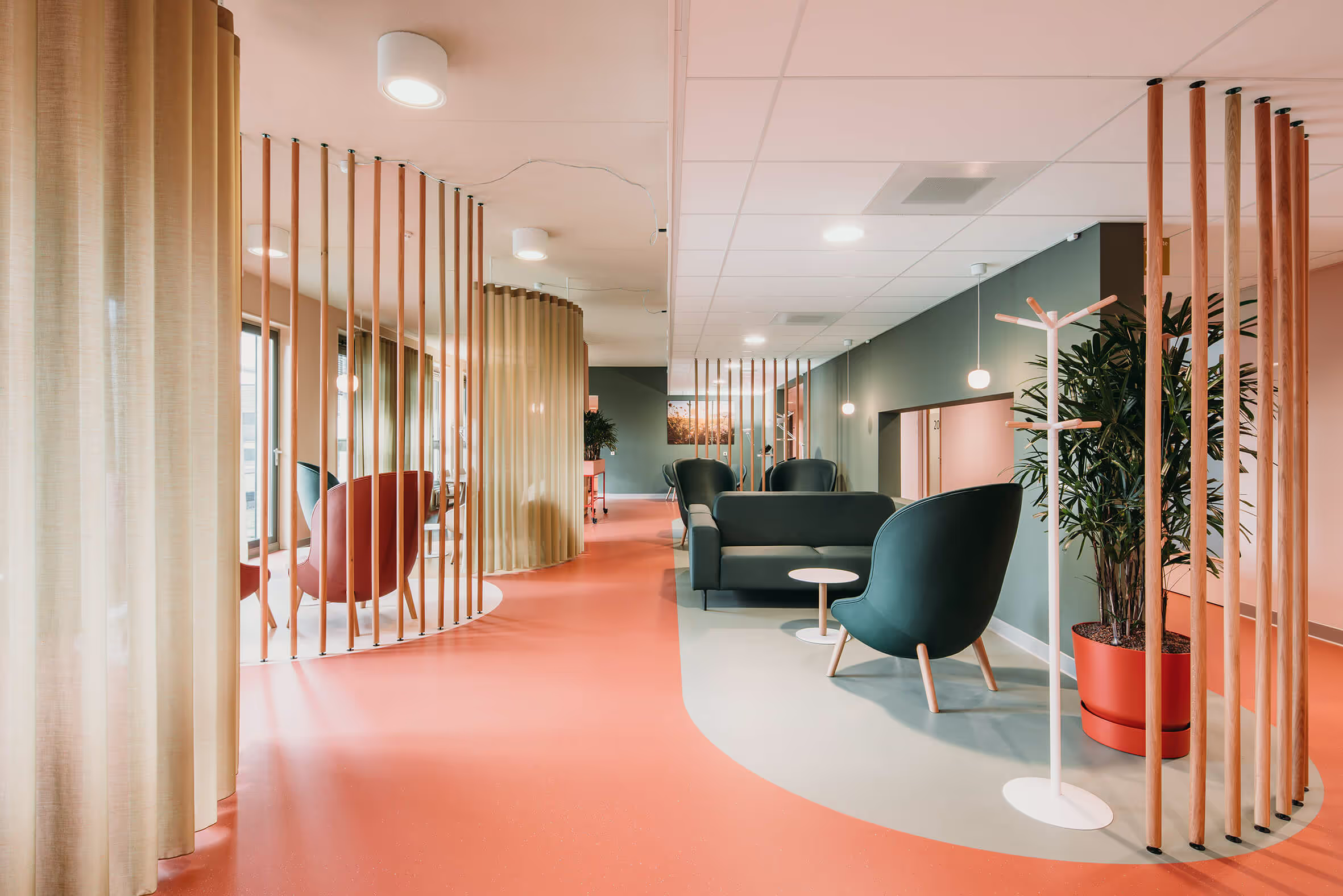
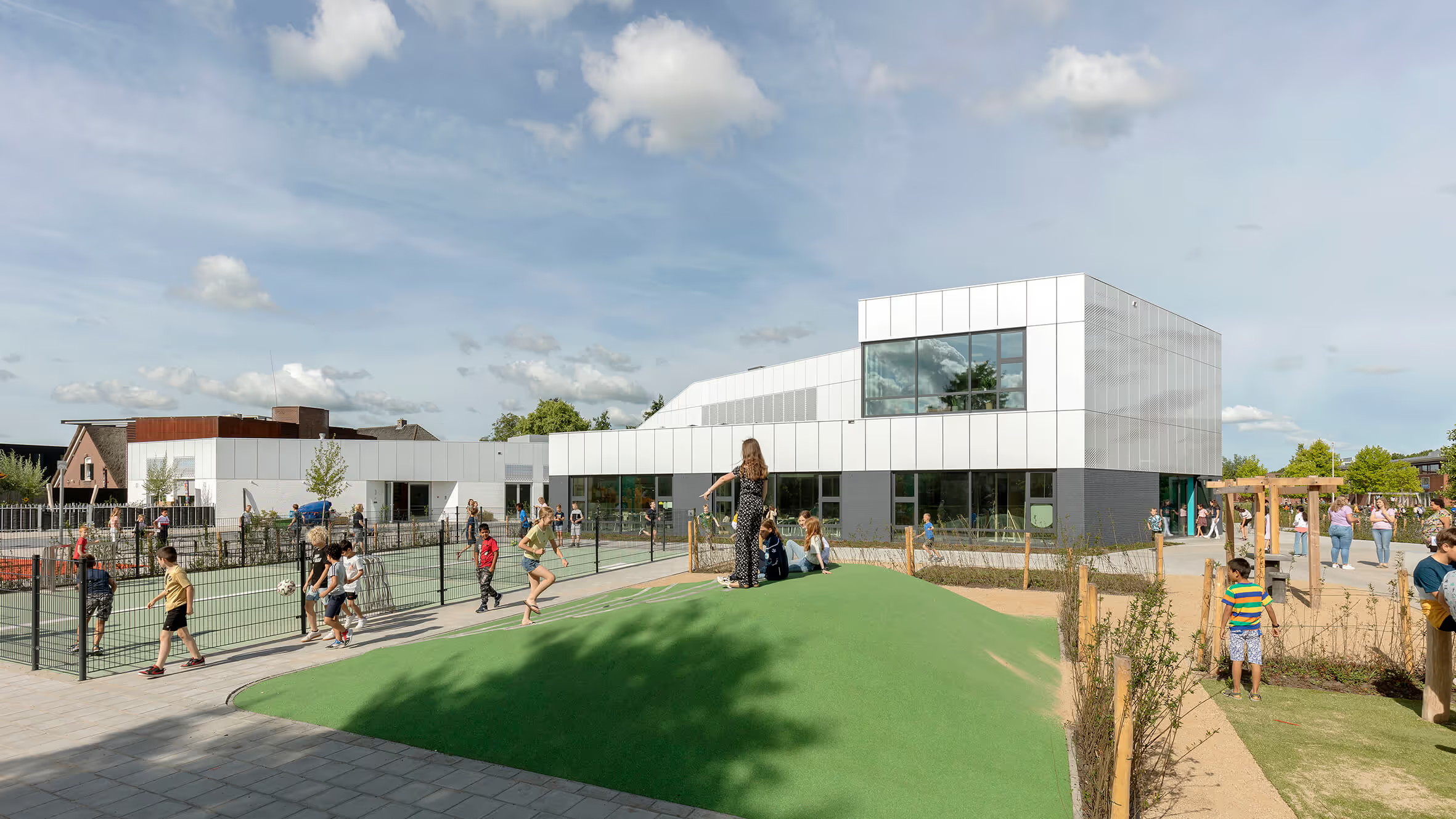
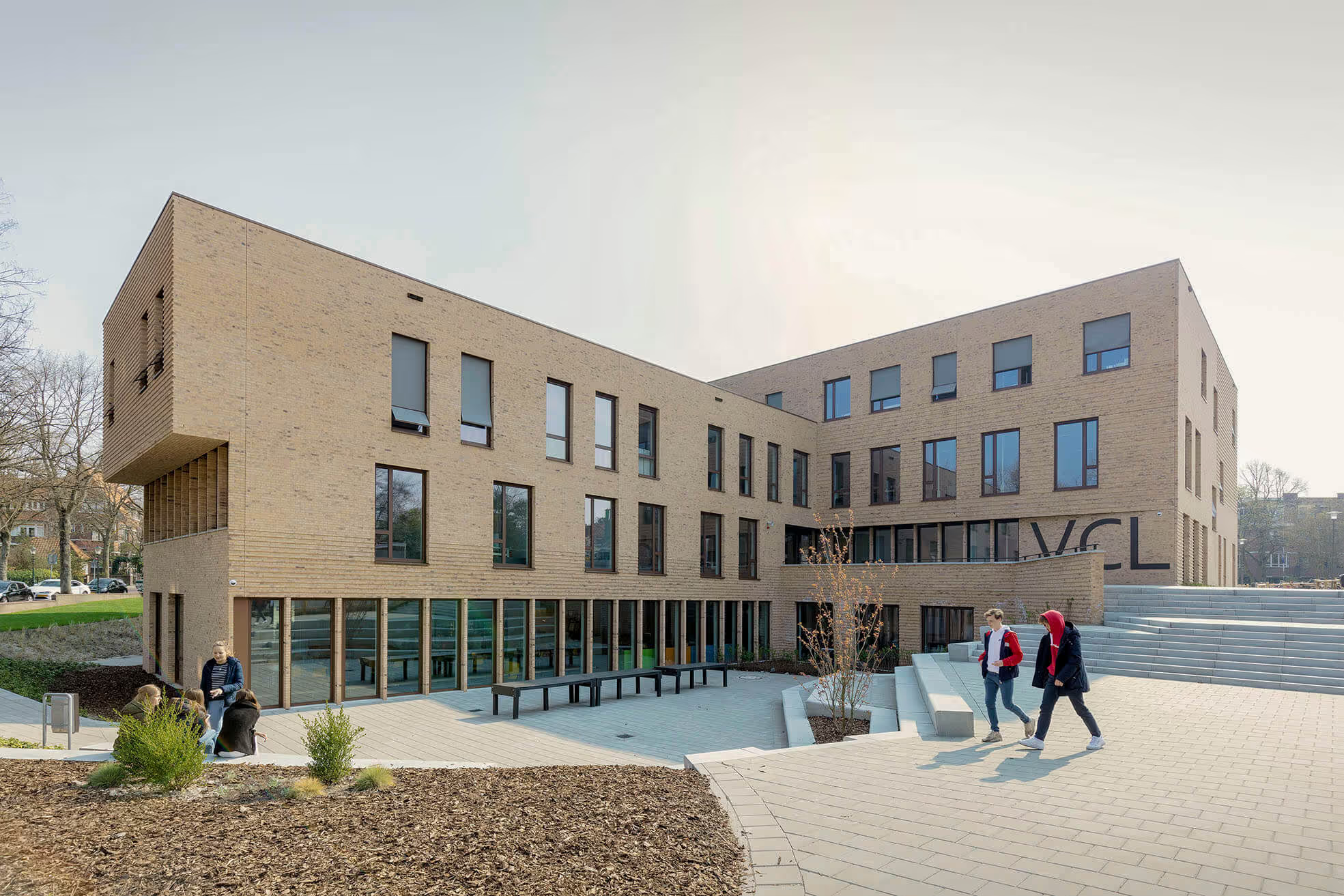
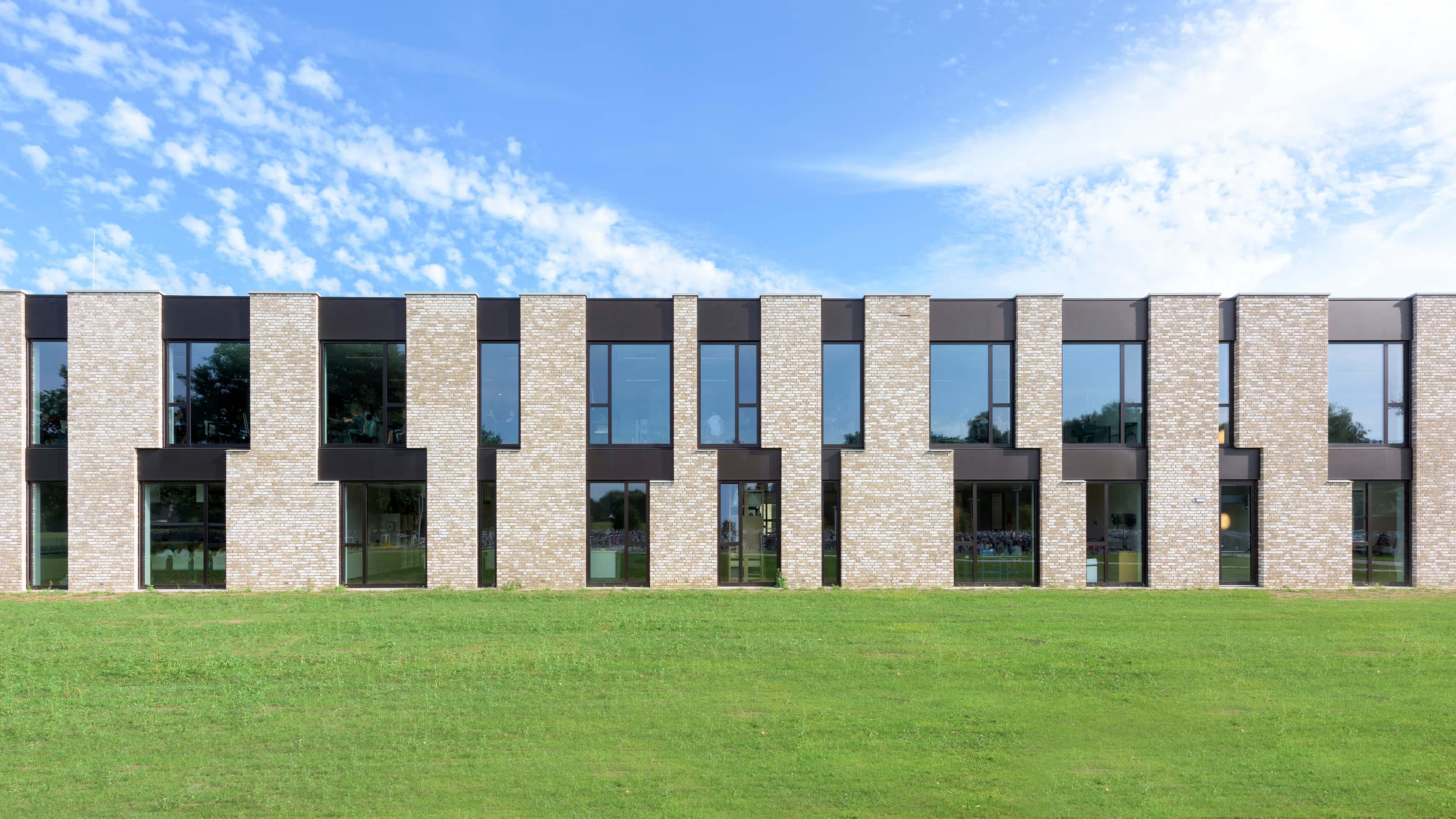
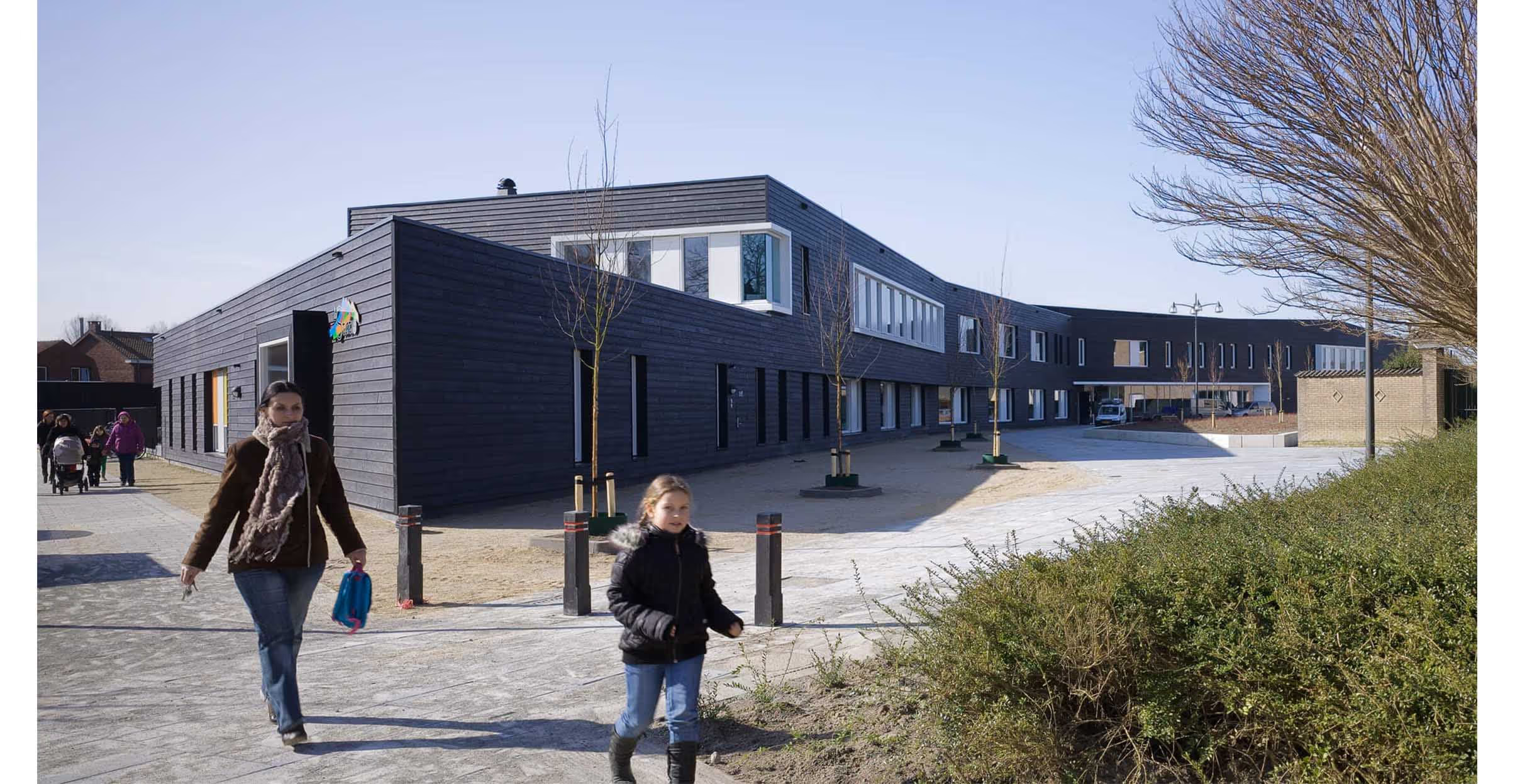
The educational clusters are located around this central hall. Each cluster has a central space, as an outlet from the classrooms, where you can play and work independently. With this space, you can respond flexibly to current and future needs in education. Each cluster has a separate entrance so that the flow of children can be divided into smaller groups, so that even the smallest children can feel at ease. On the northeast side of the school, there is a square where the largest children can play.


Different types of homes
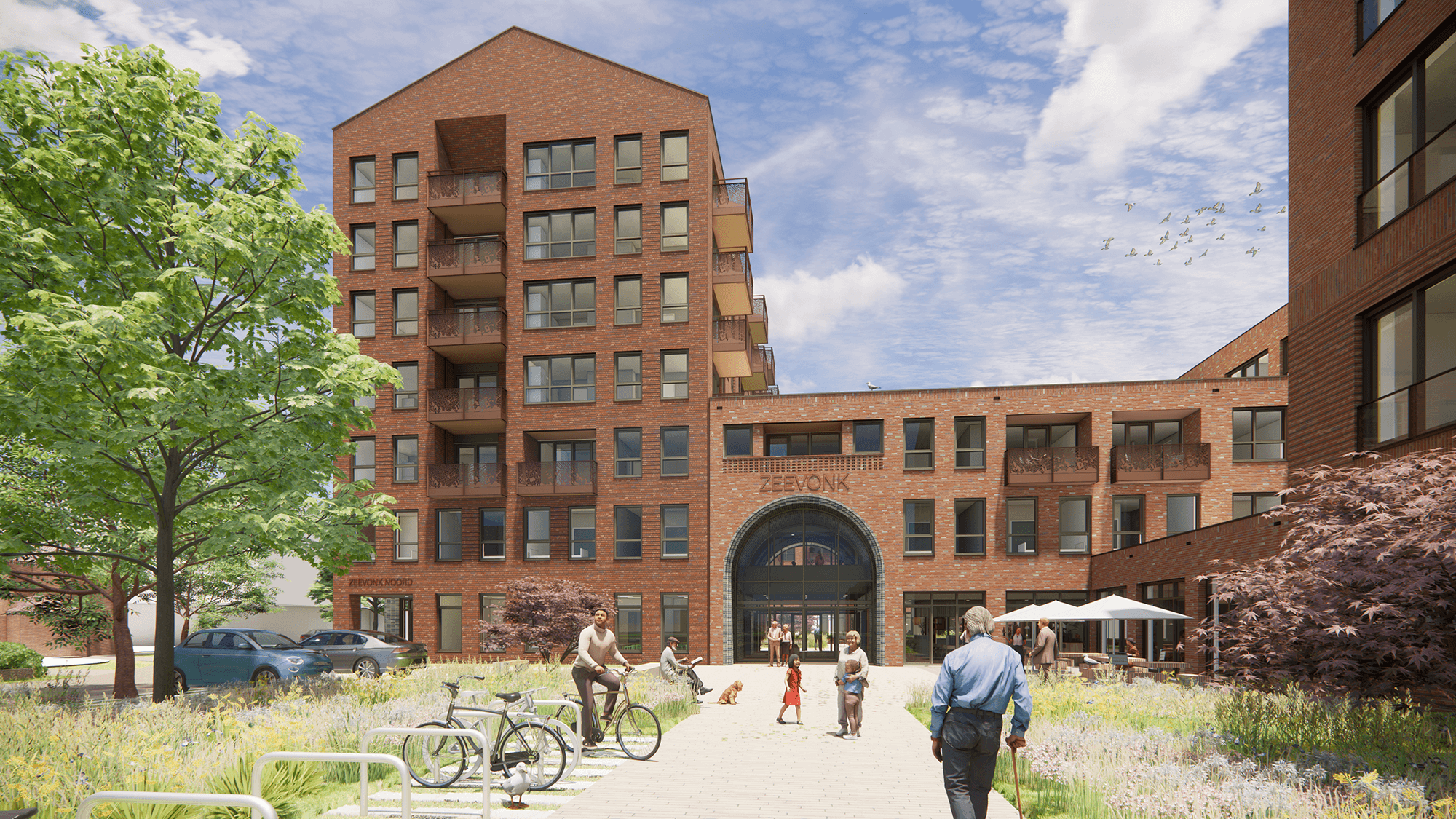
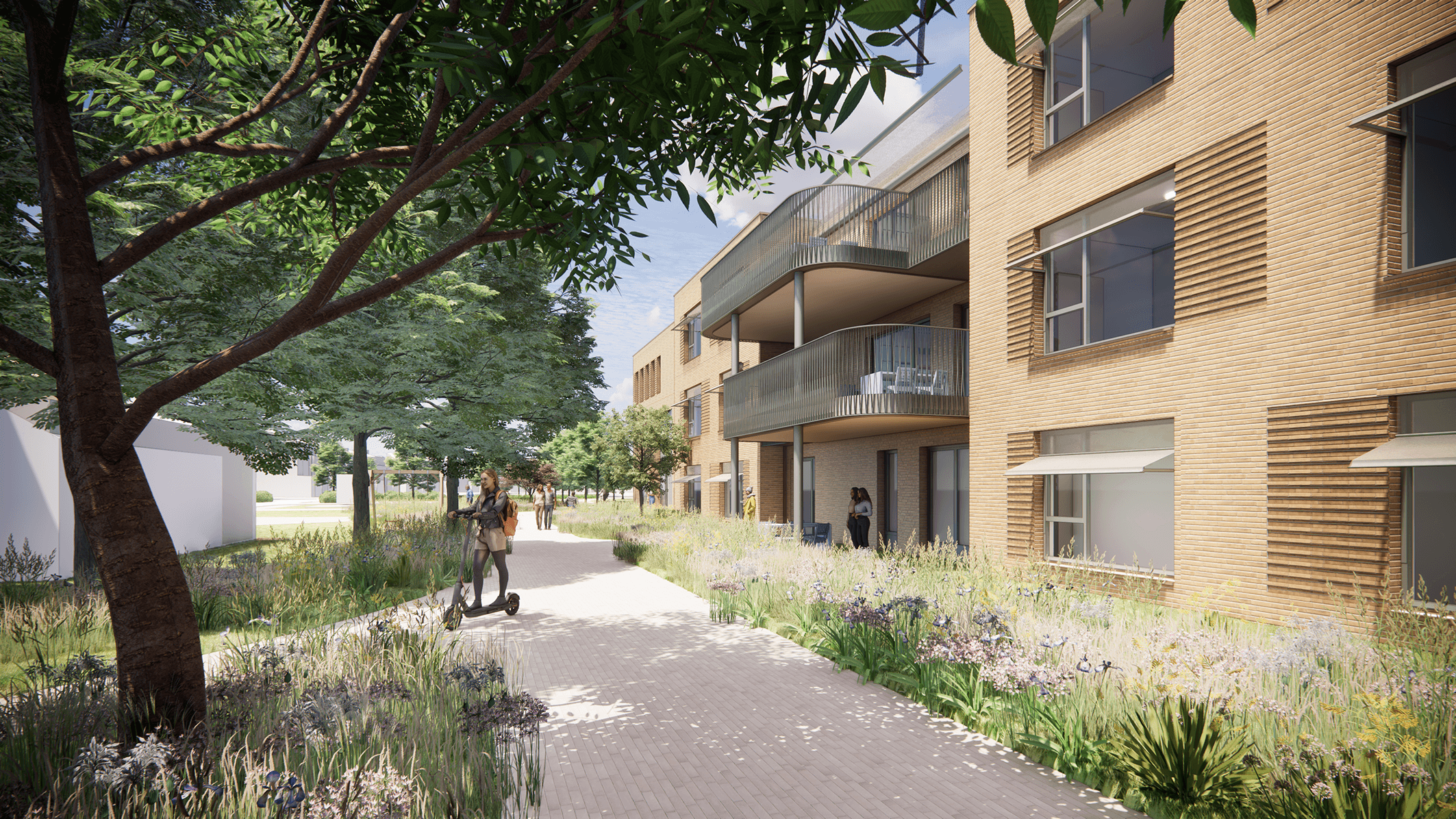
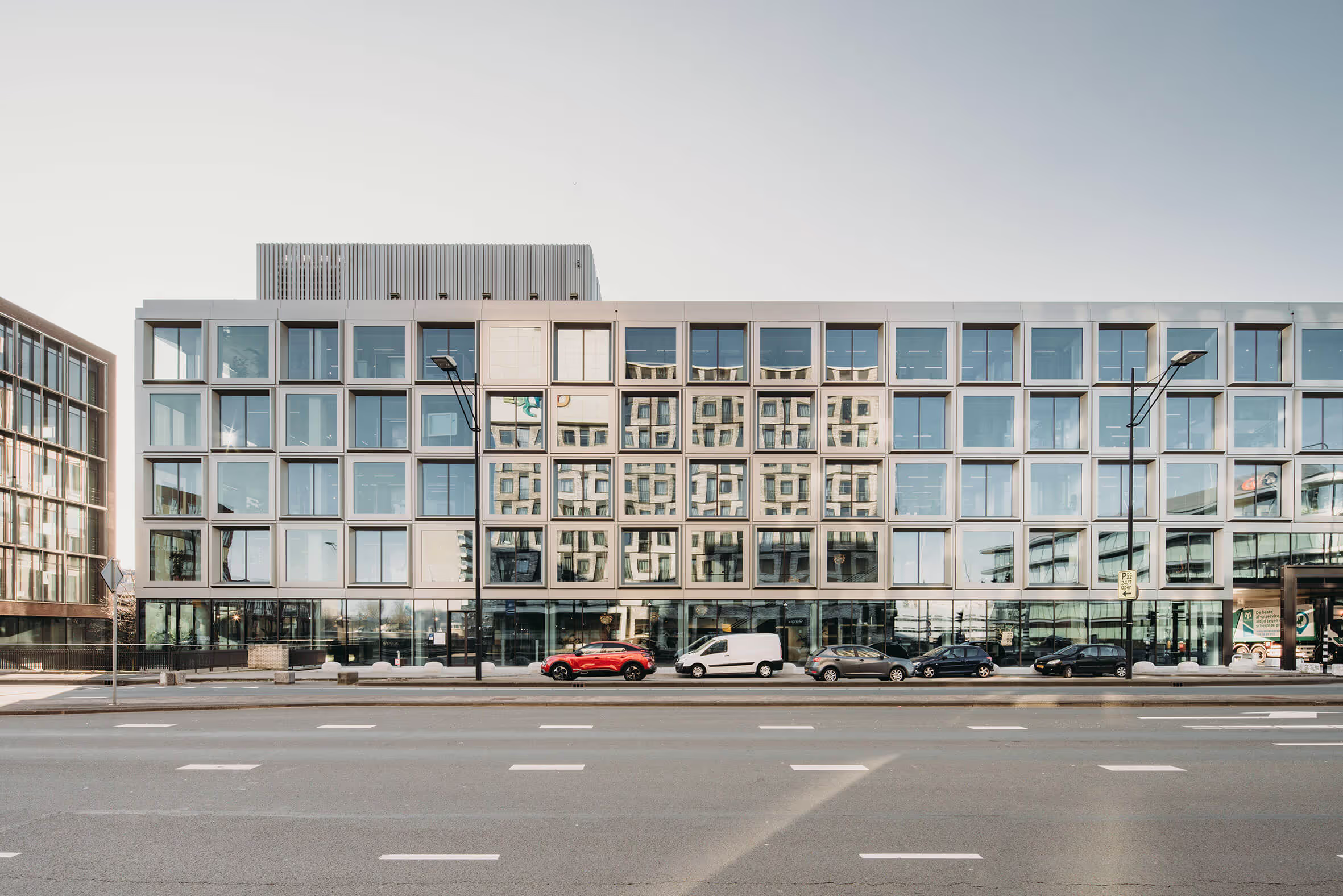
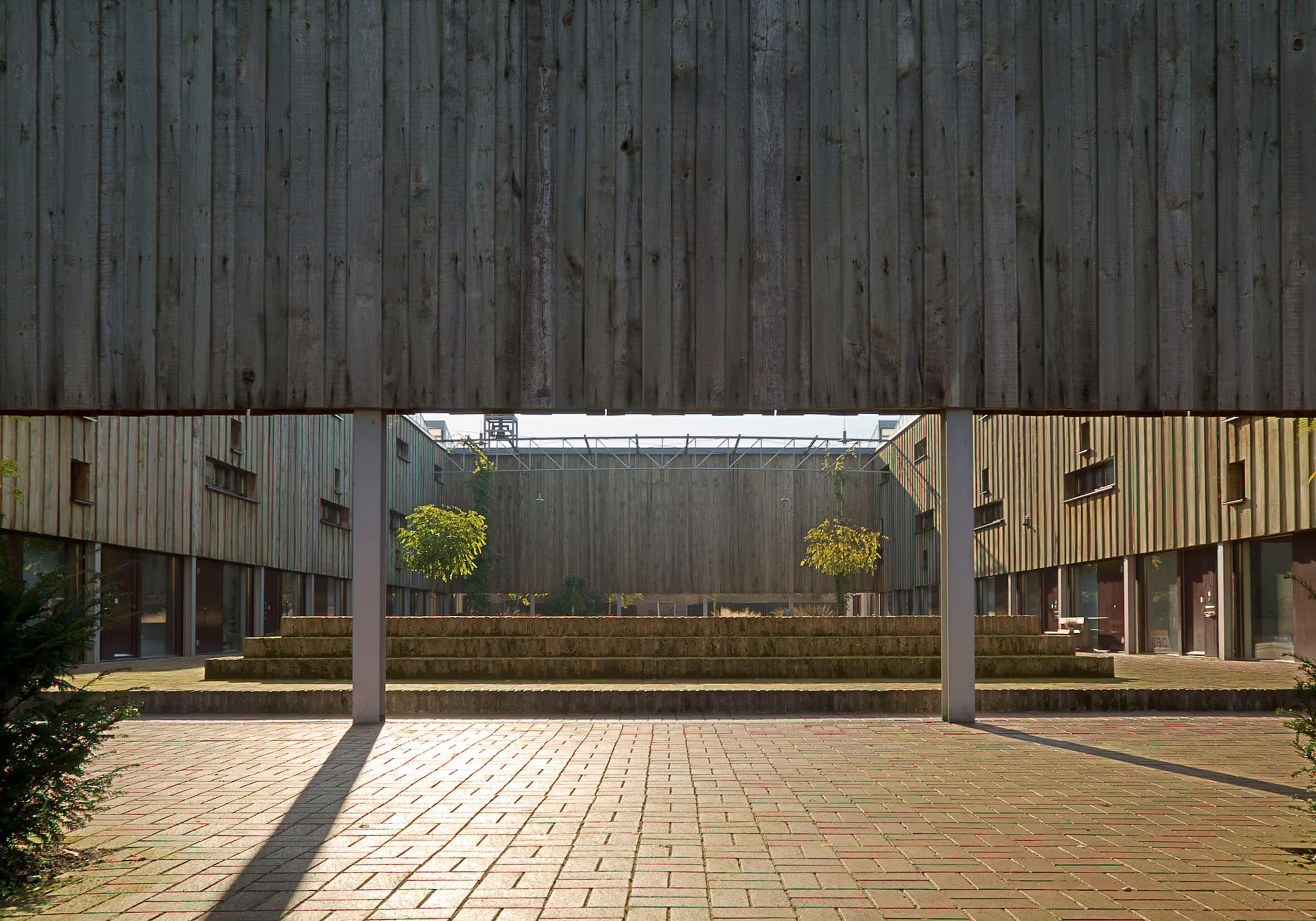
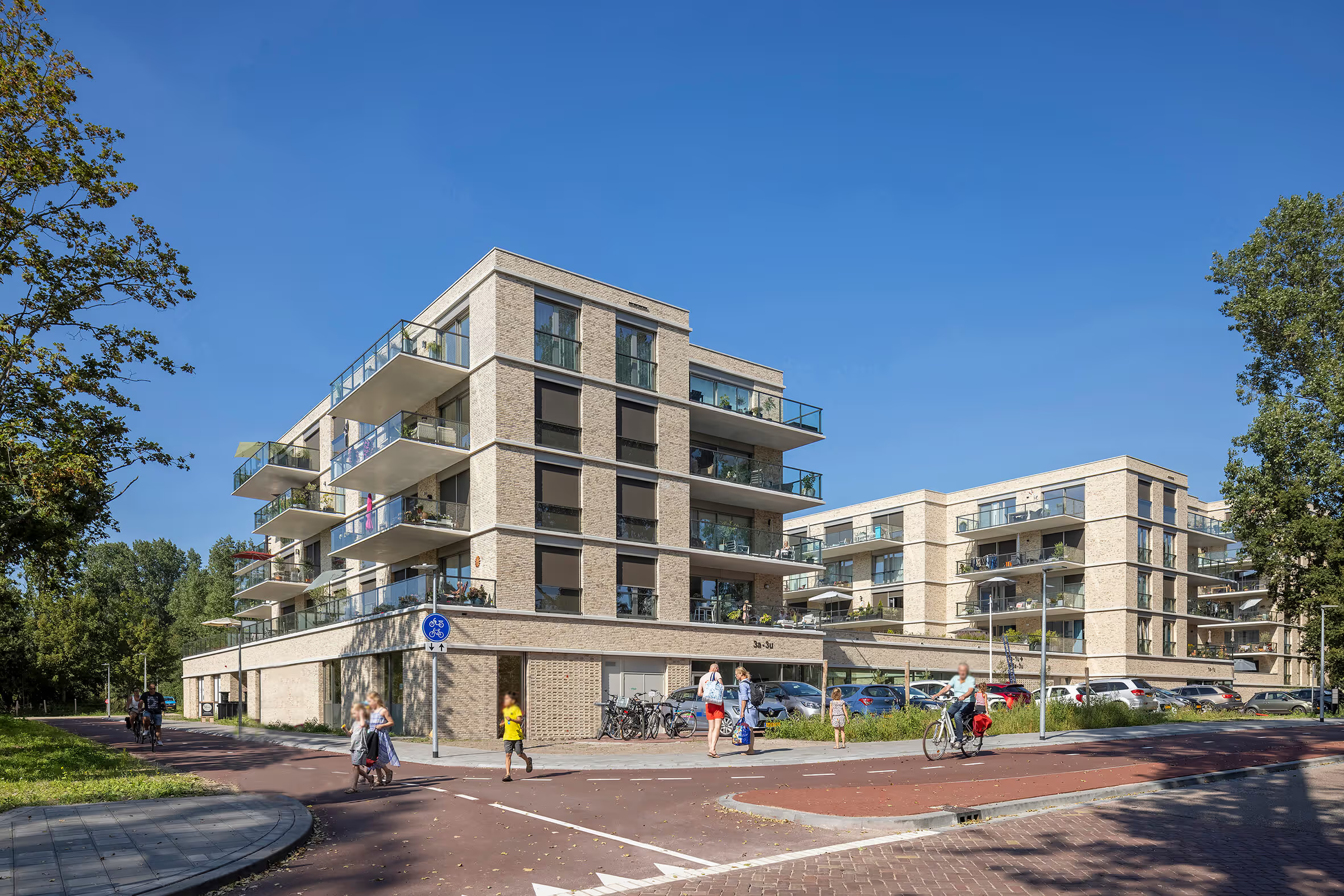
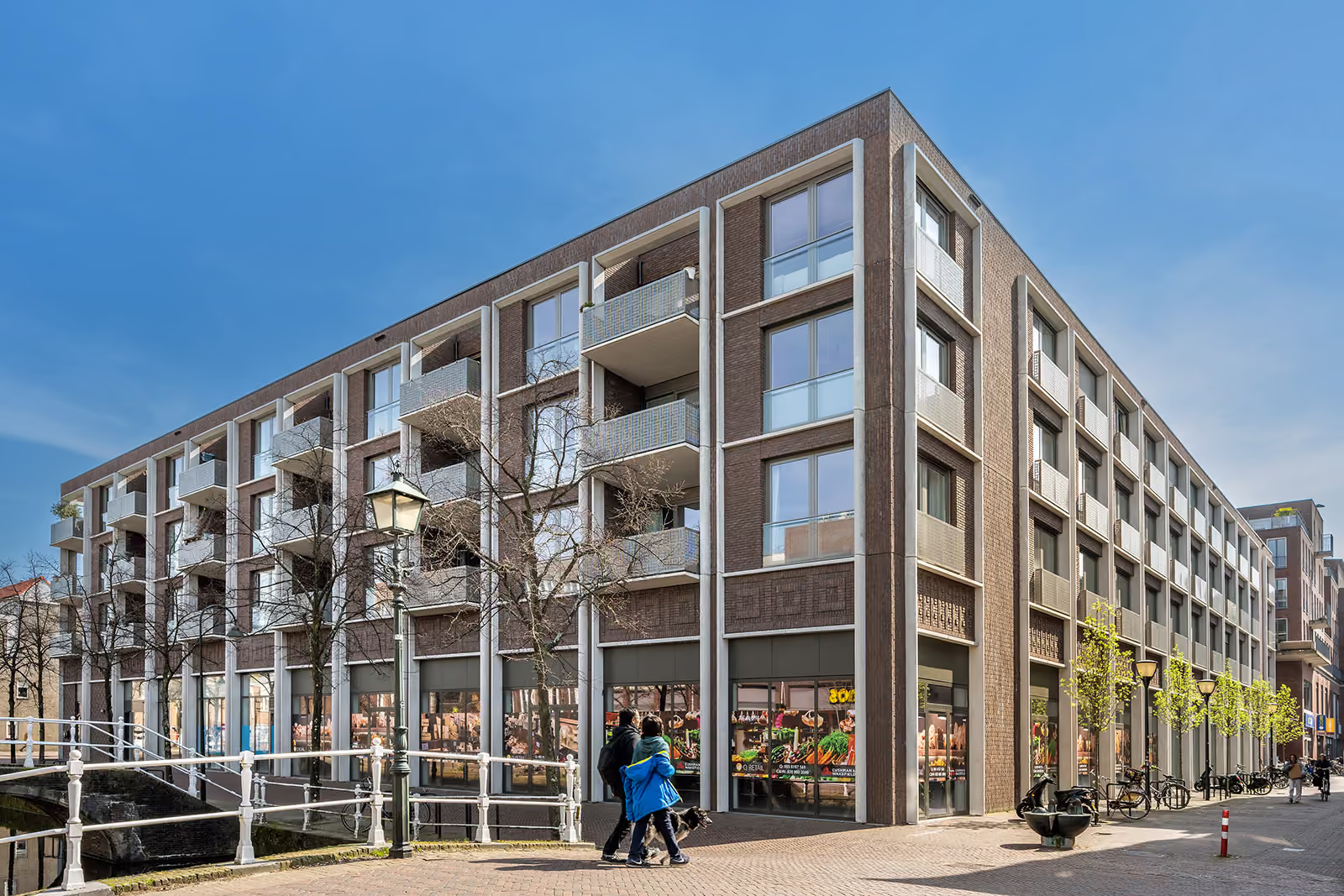
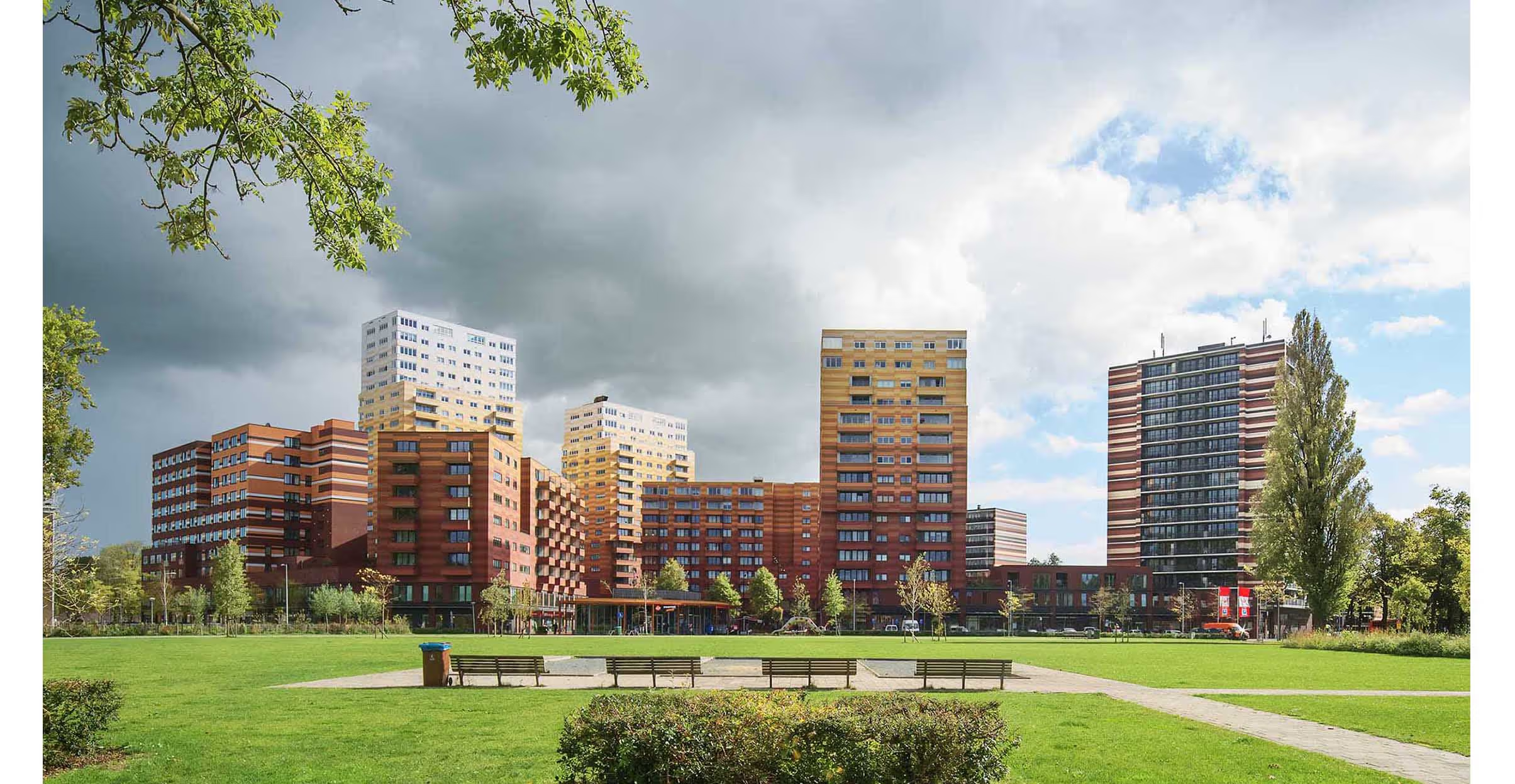
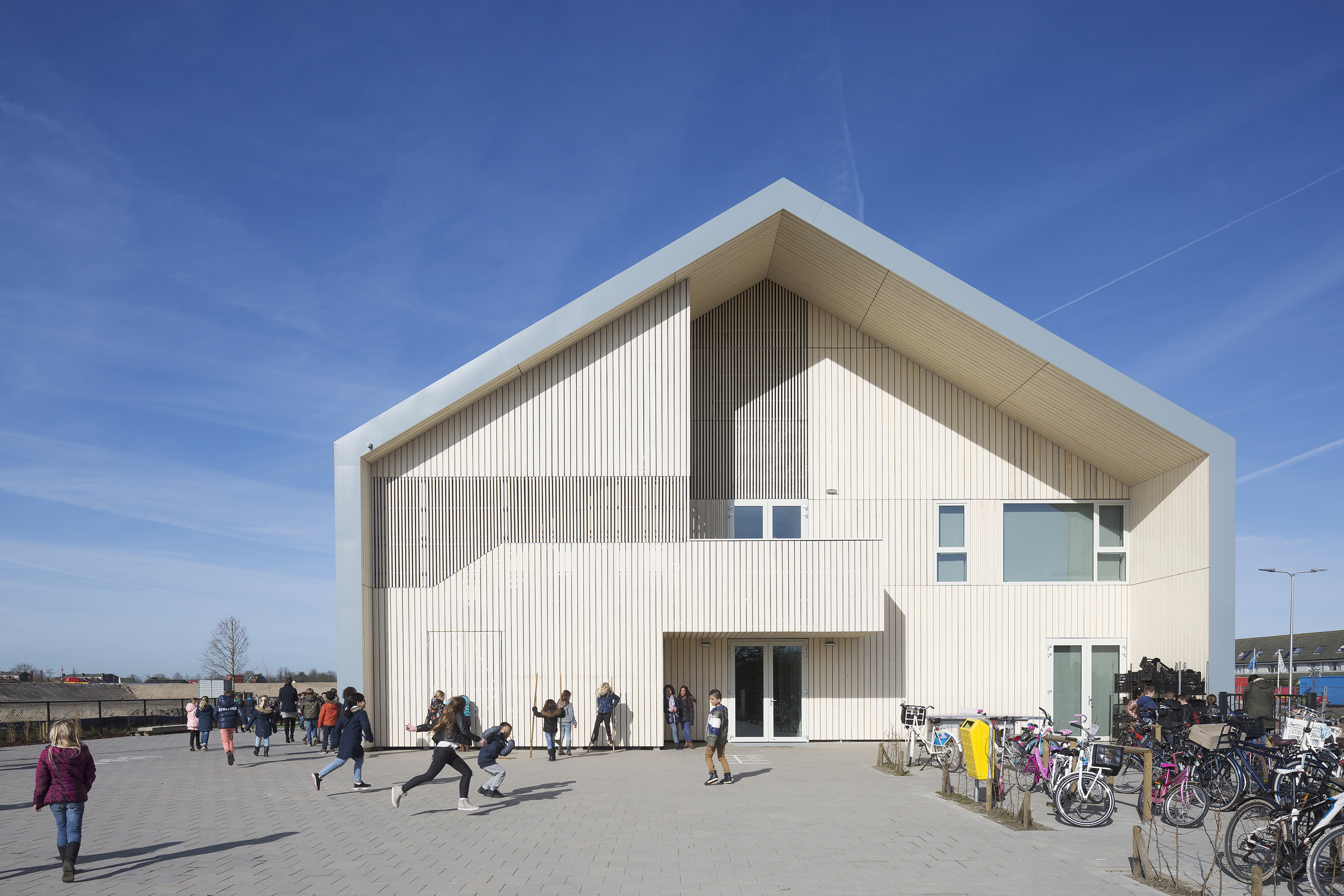
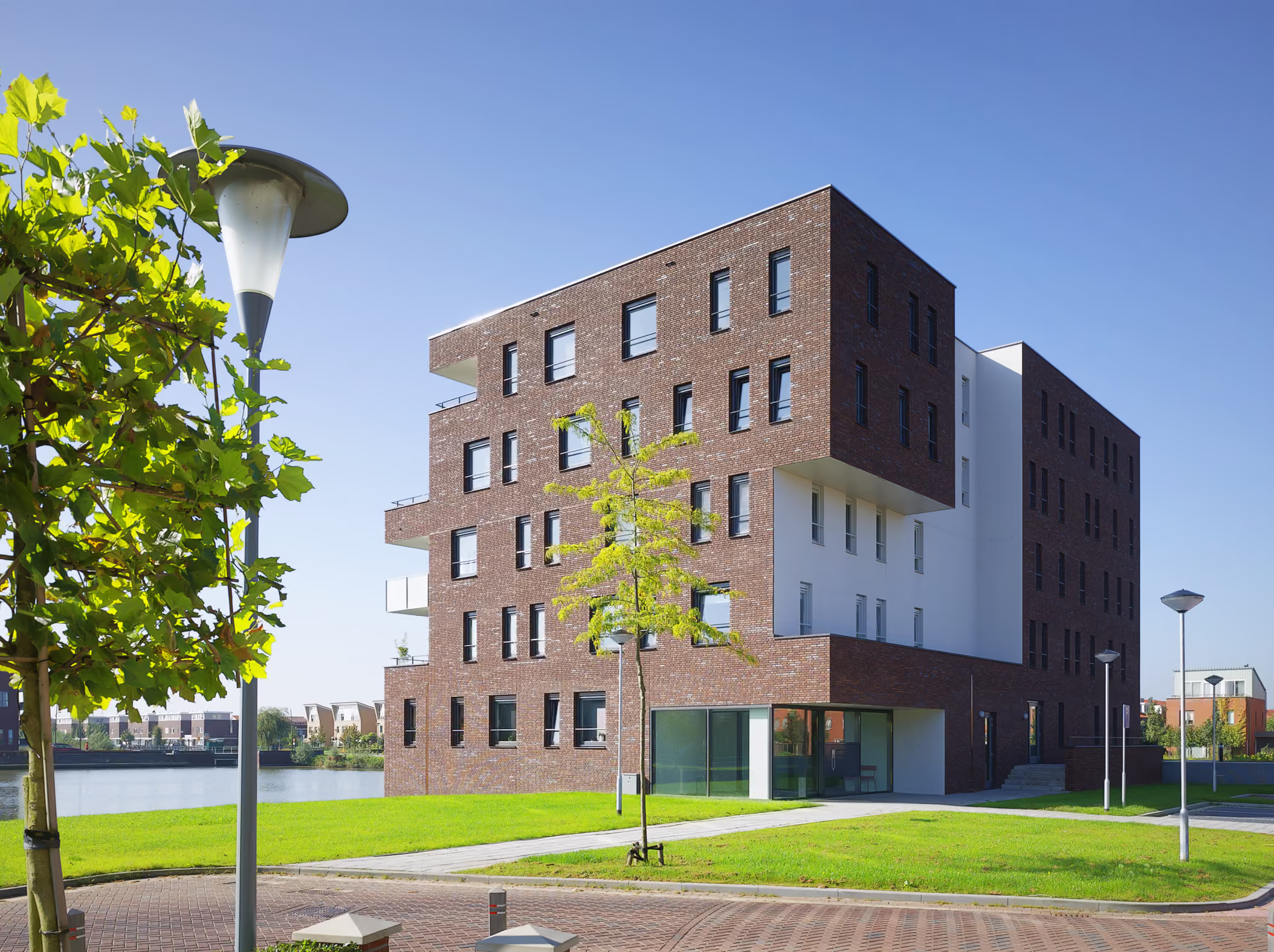
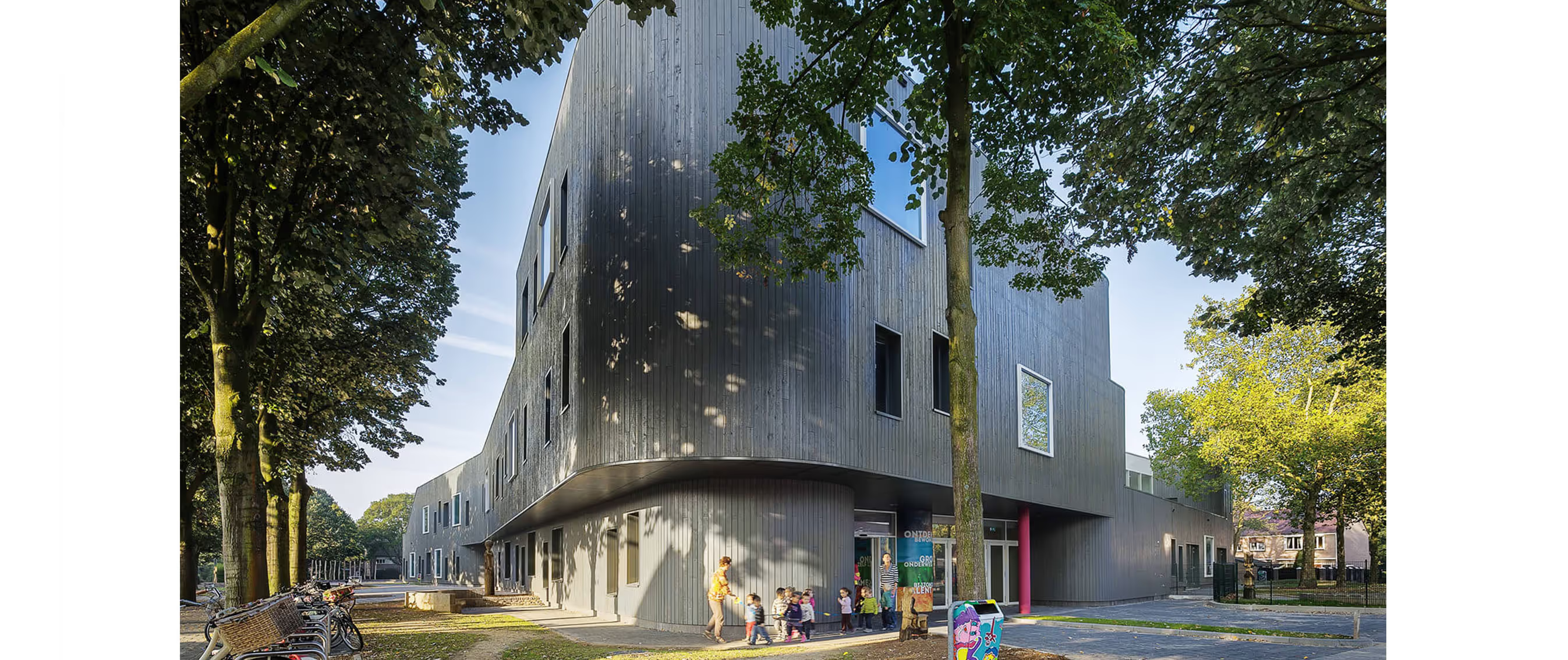
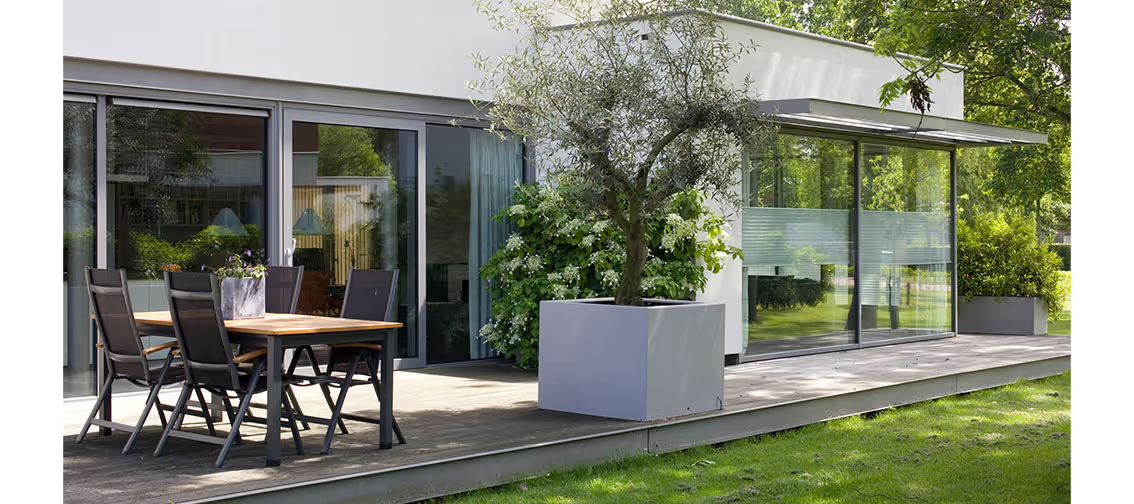
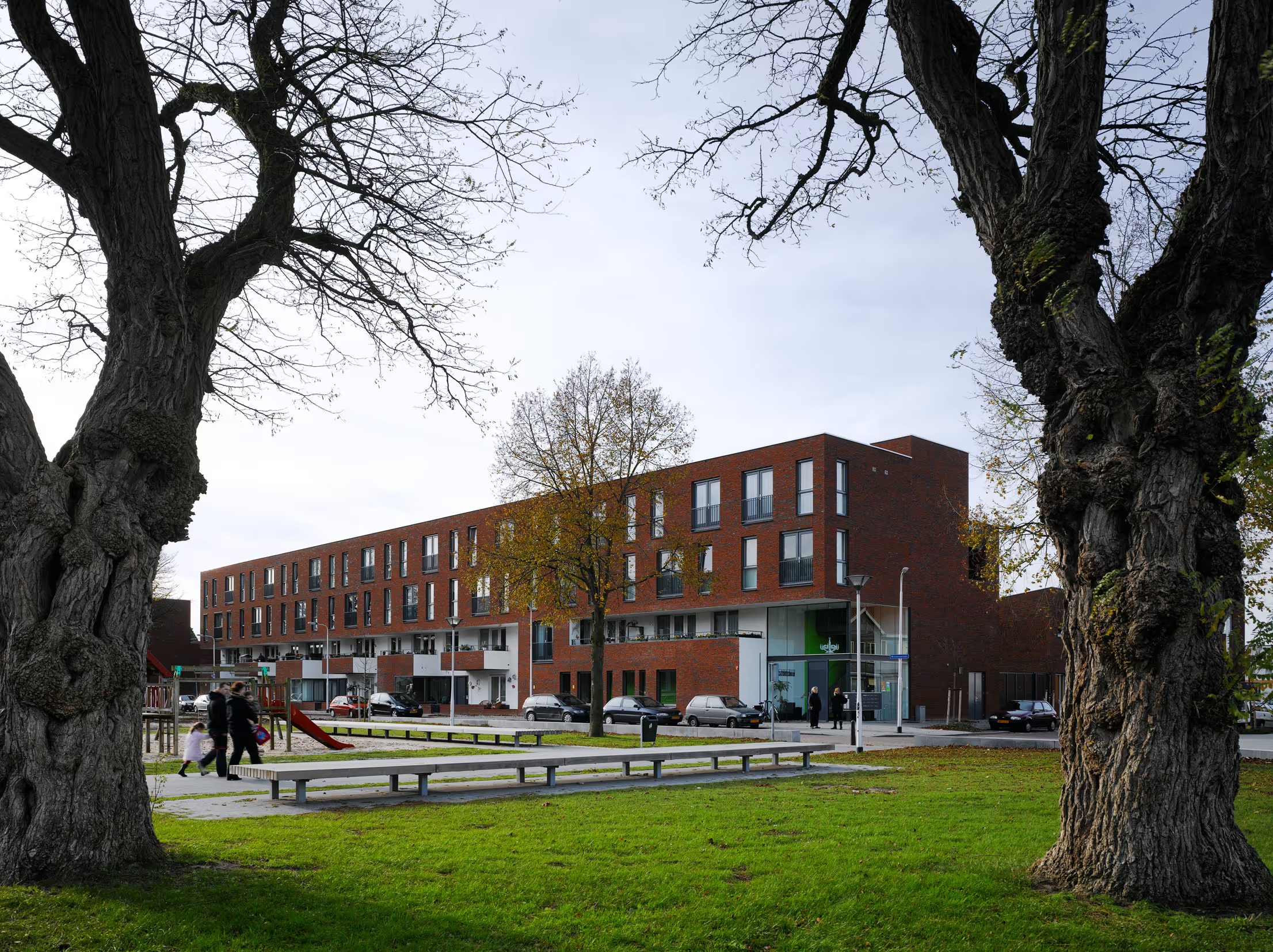
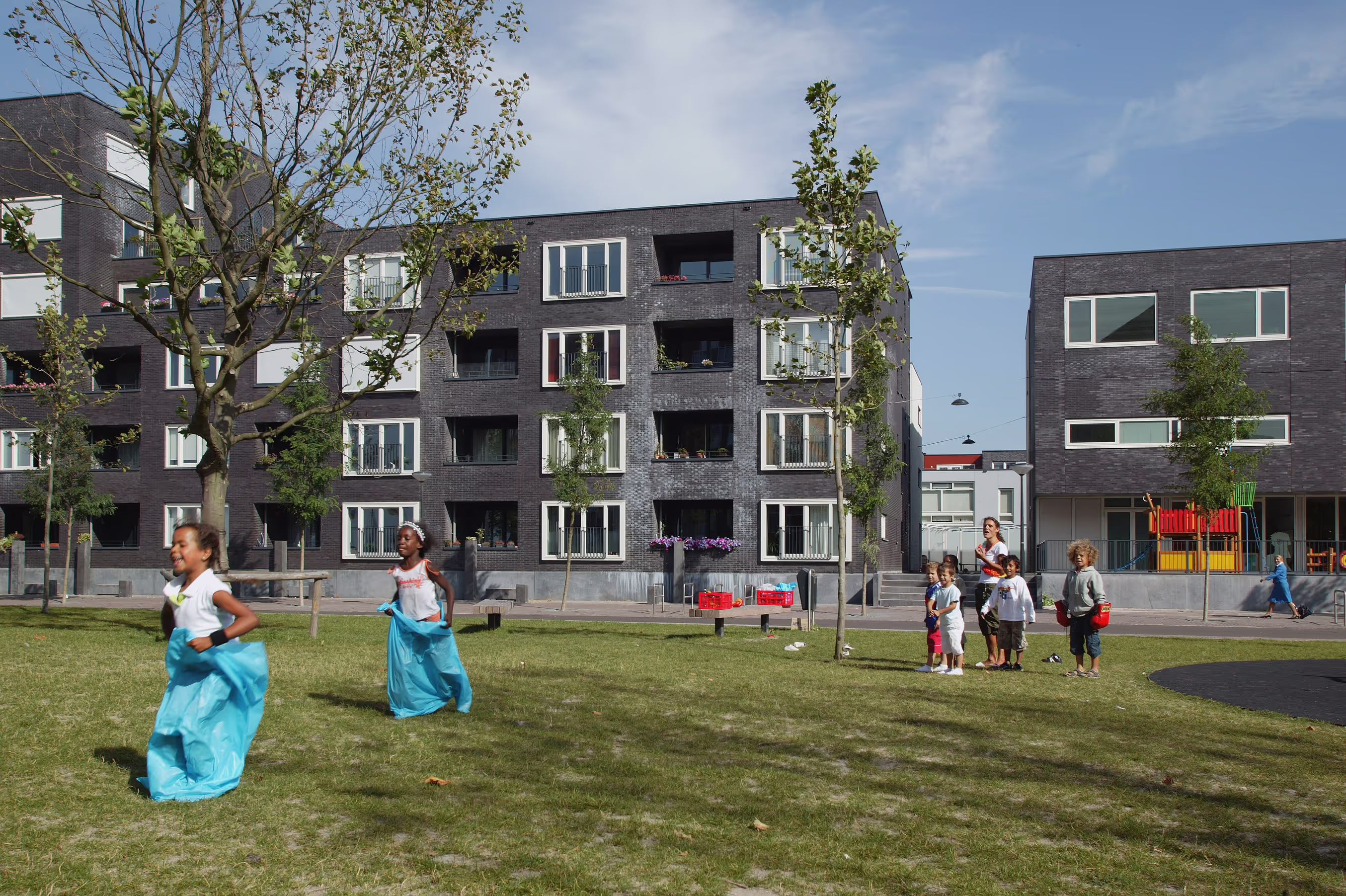
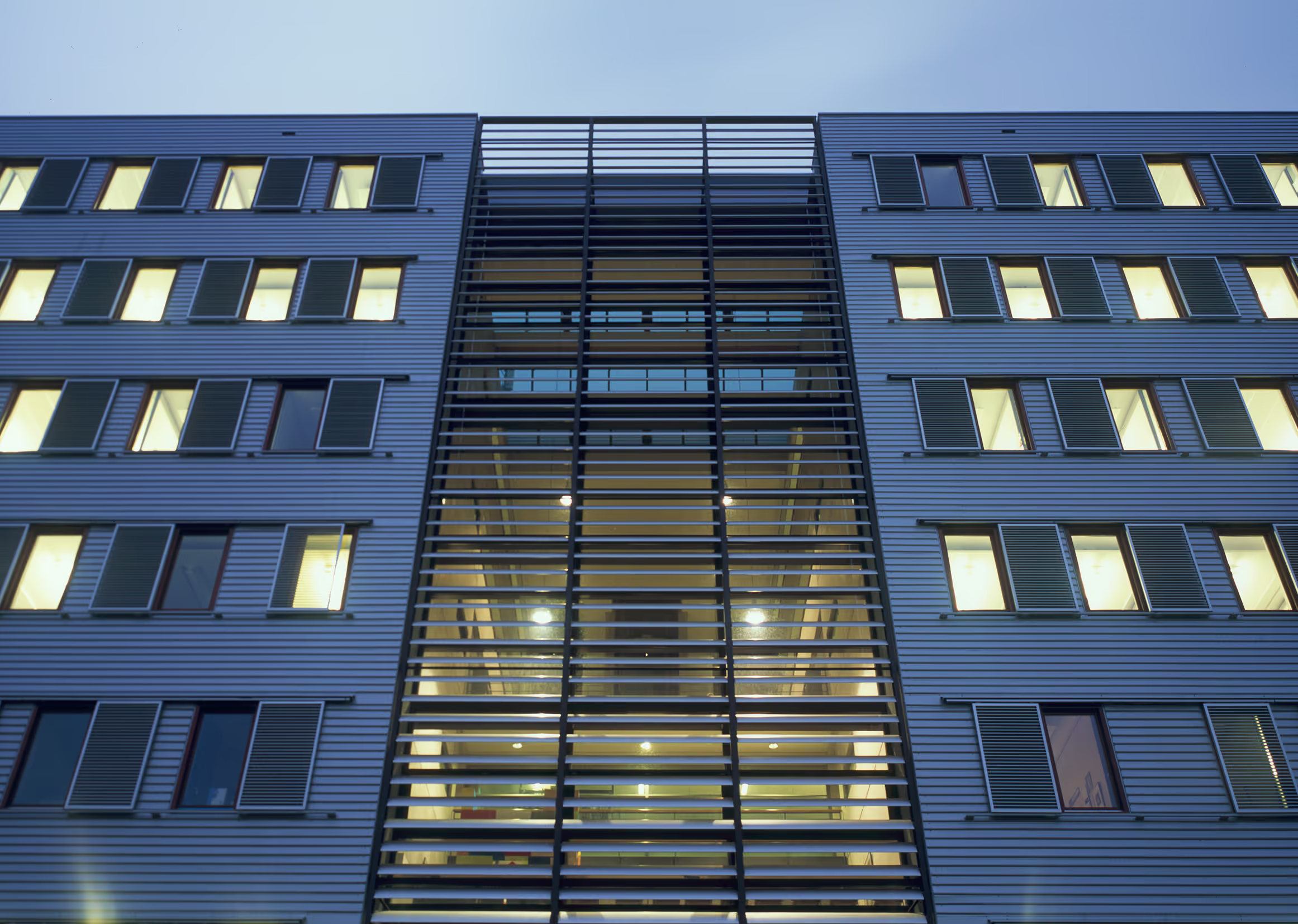
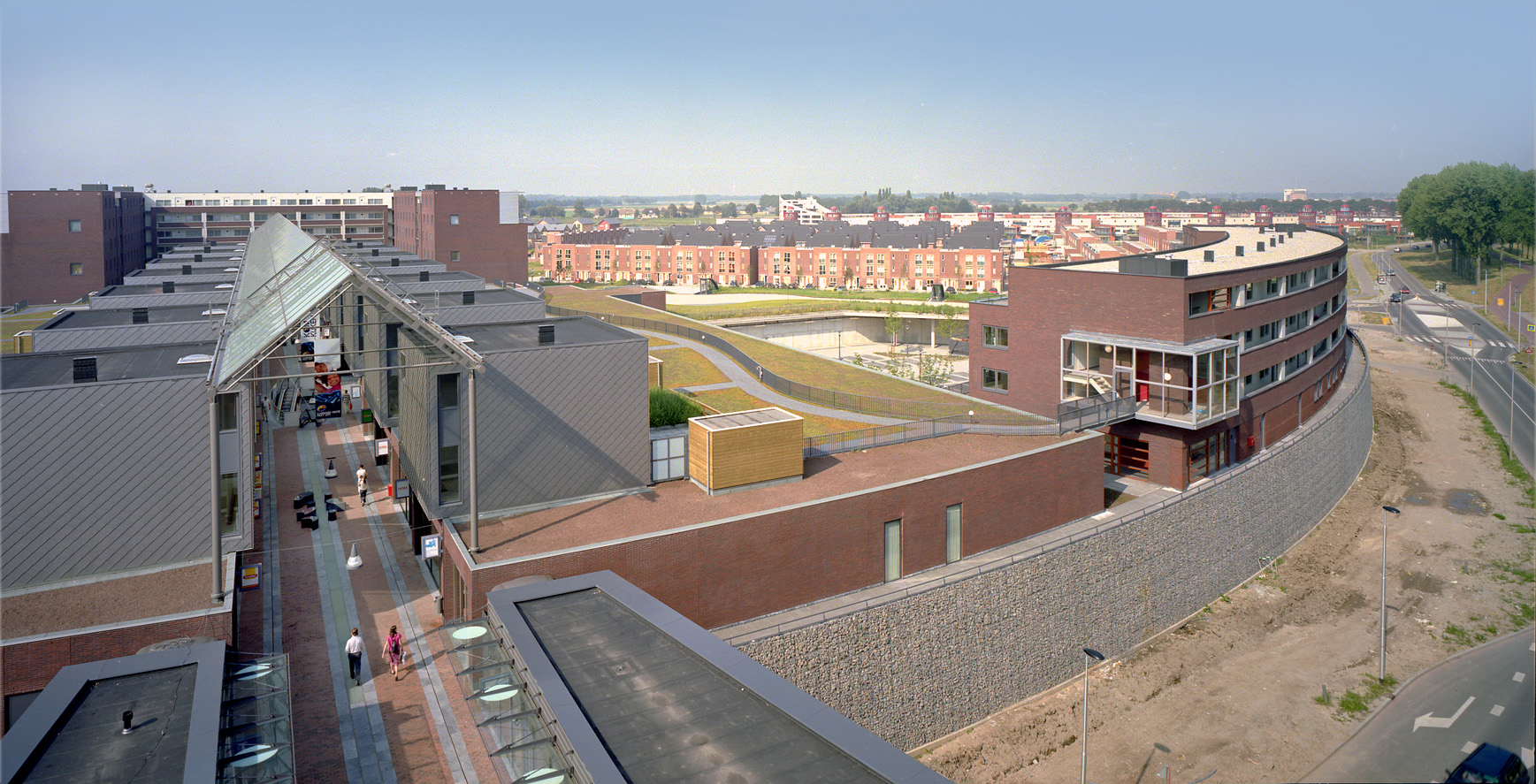
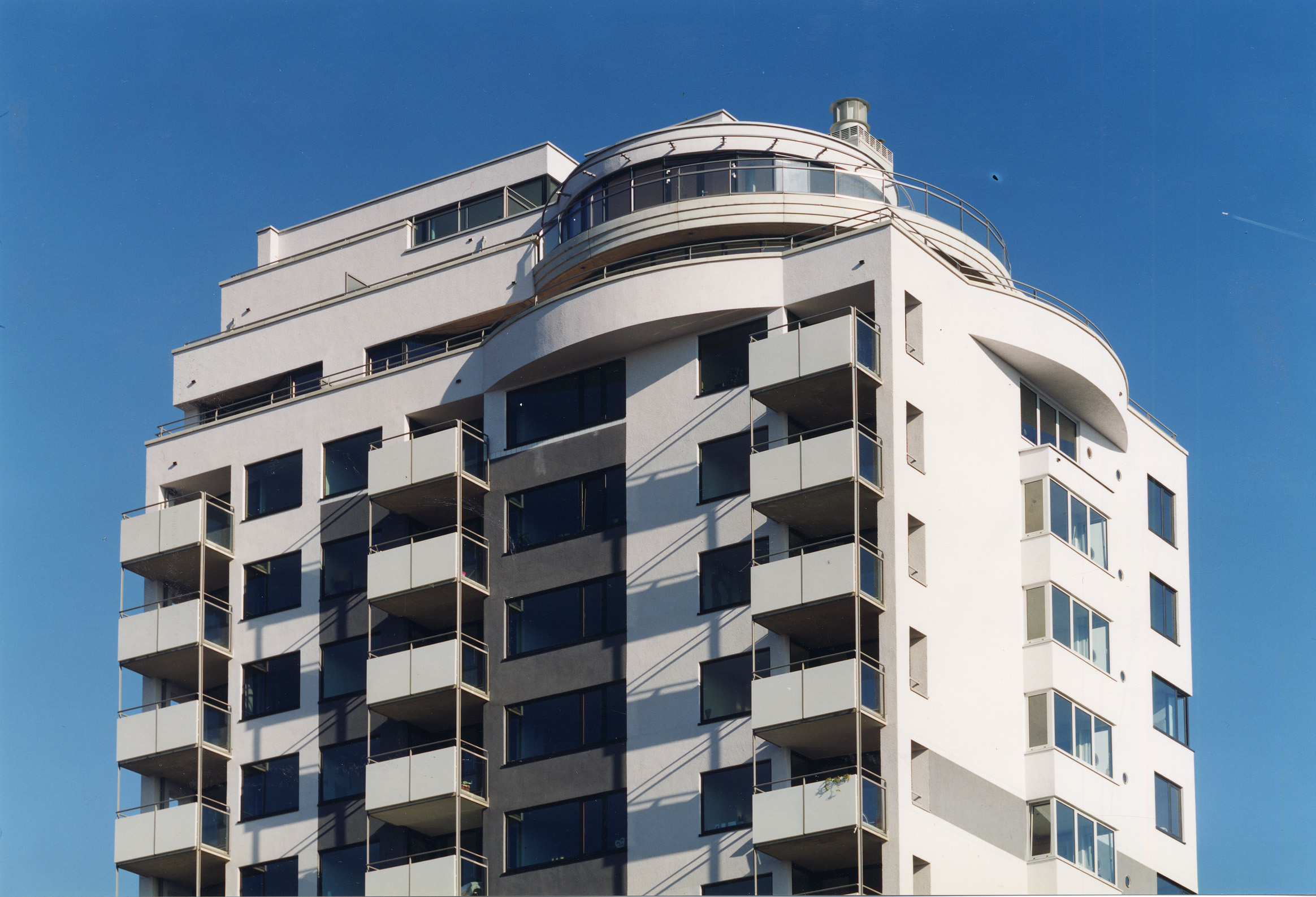
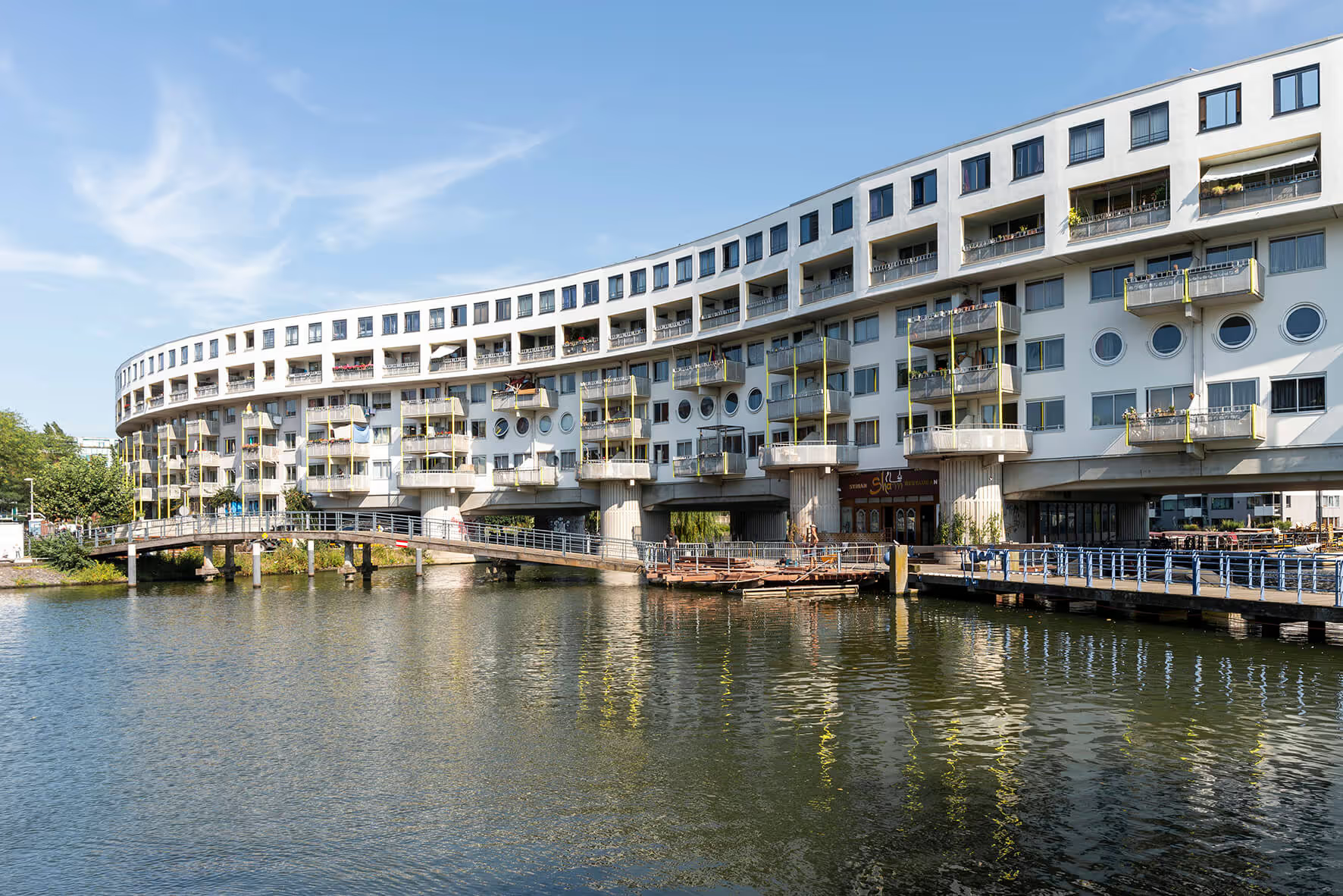
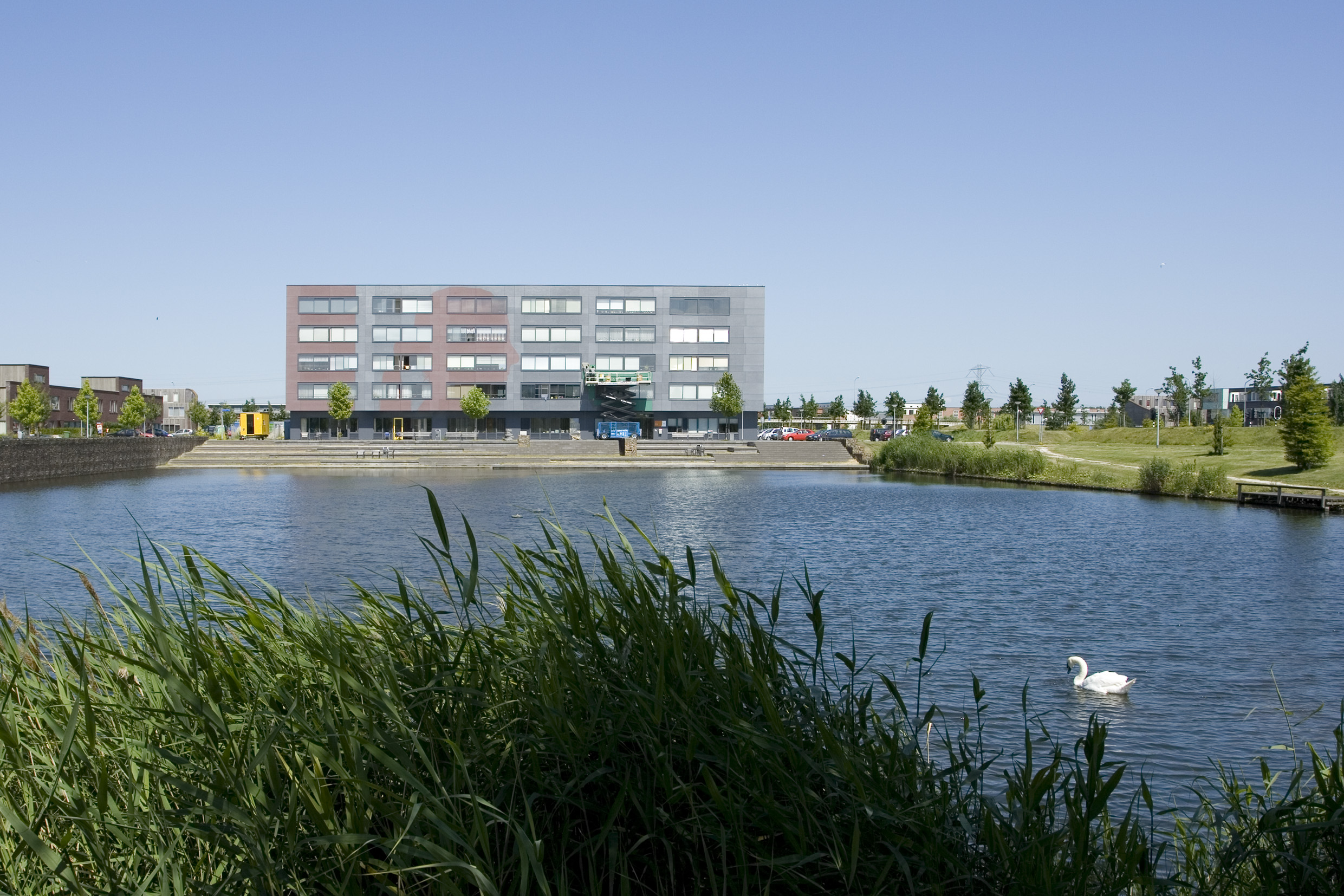
In addition to the Community School, the complex consists of 47 houses around and above the school. For example, there are large maisonettes with roof terraces; these houses are accessible via wide wooden runners across the school roof. There are city houses on the waterfront, accessible from a car-free street. The tower acts as a landmark and has two apartments per layer that - partly through large balconies - are oriented to the panoramic view.
Dual use of space
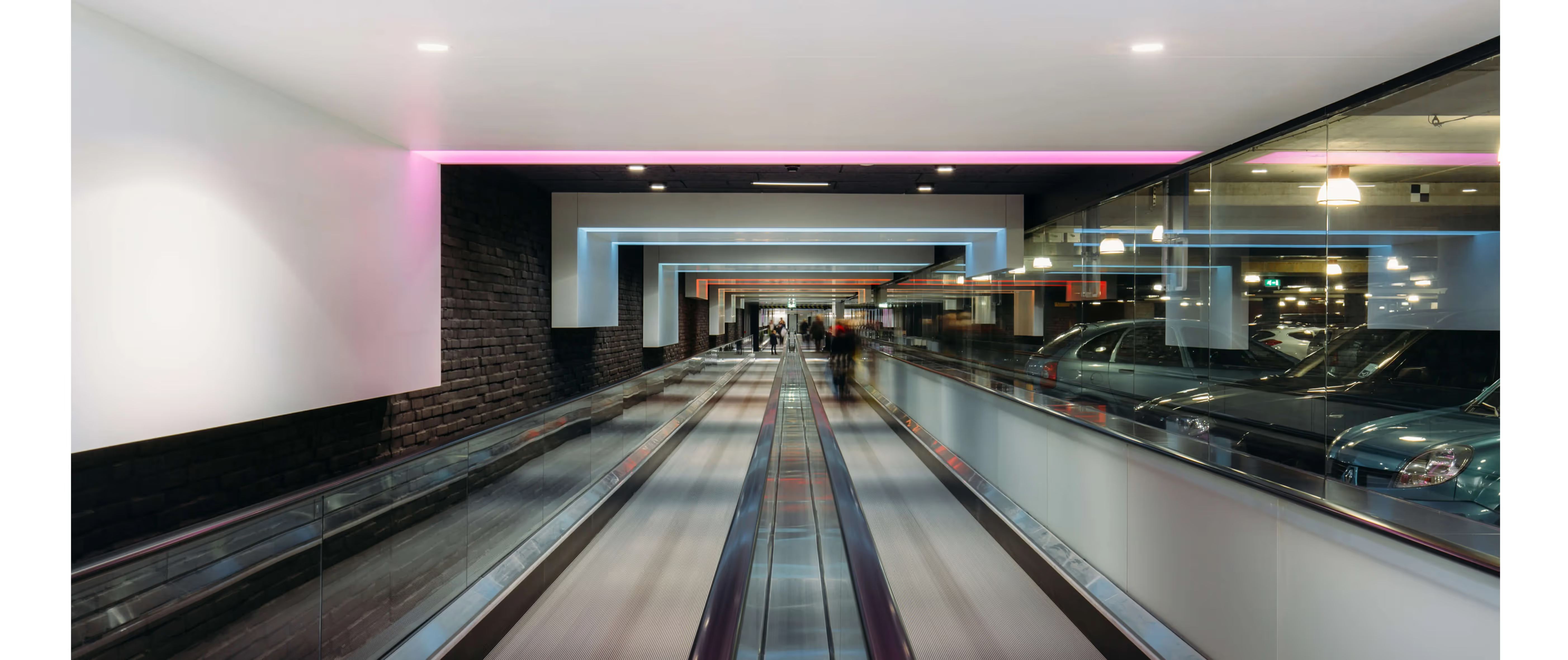
By placing the houses on and next to the school, the land is used twice and social safety and liveliness are increased. In addition, it is important to note that children can produce a lot of noise. The houses are therefore designed in such a way that residents suffer as little as possible. Parking is covered, between the two residential blocks; you can play on top of the garages.