Expansion and renovation of the Embassy of Canada
Expansion and renovation of the Embassy of Canada
Expansion and renovation of the Embassy of Canada
Coherent renovation and new construction inspired by Palladian architecture
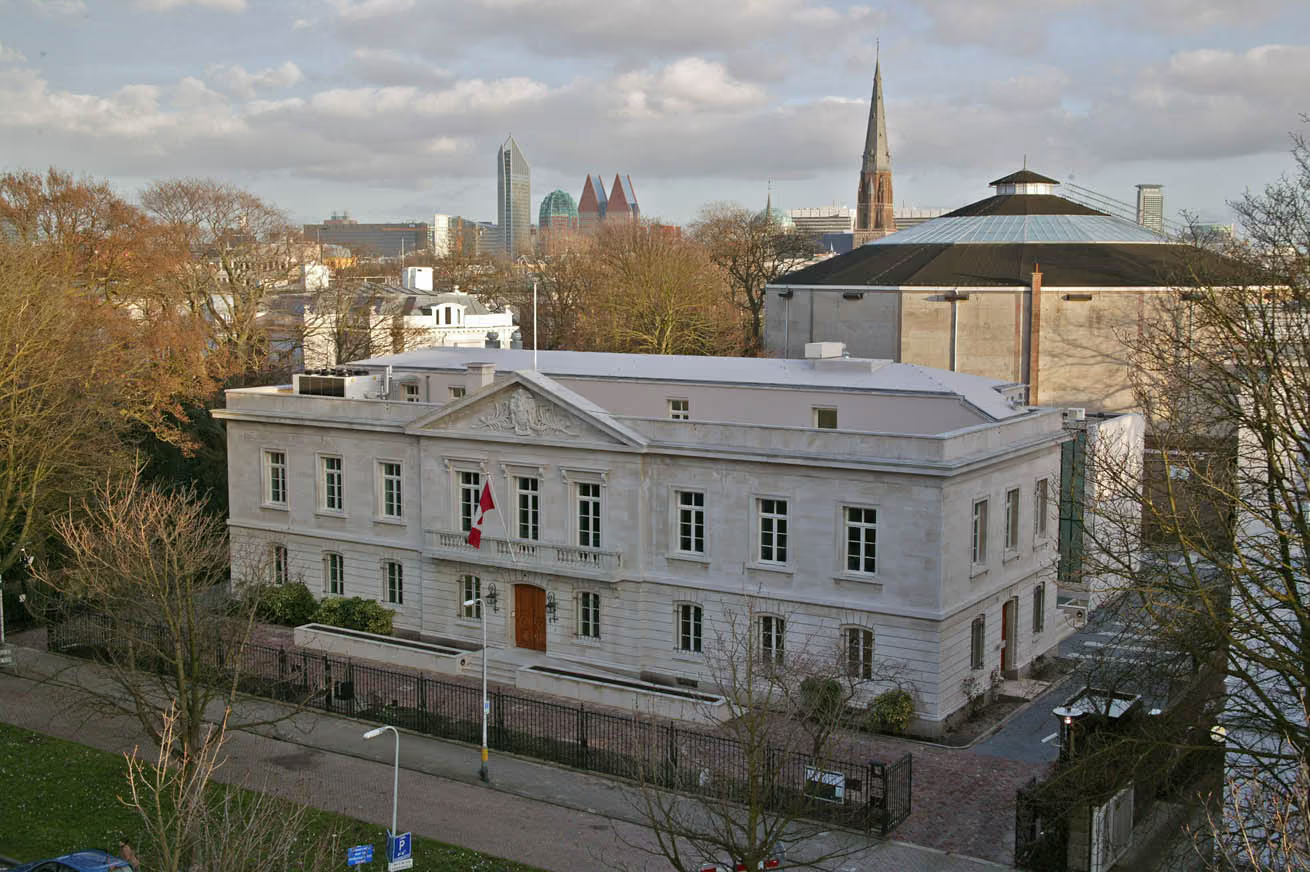
Existing building: a villa in the green, stately Willemspark
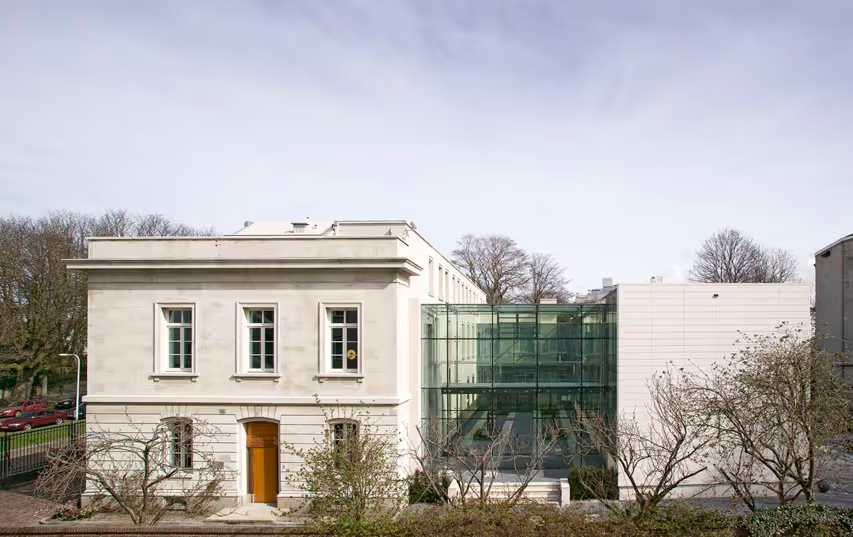
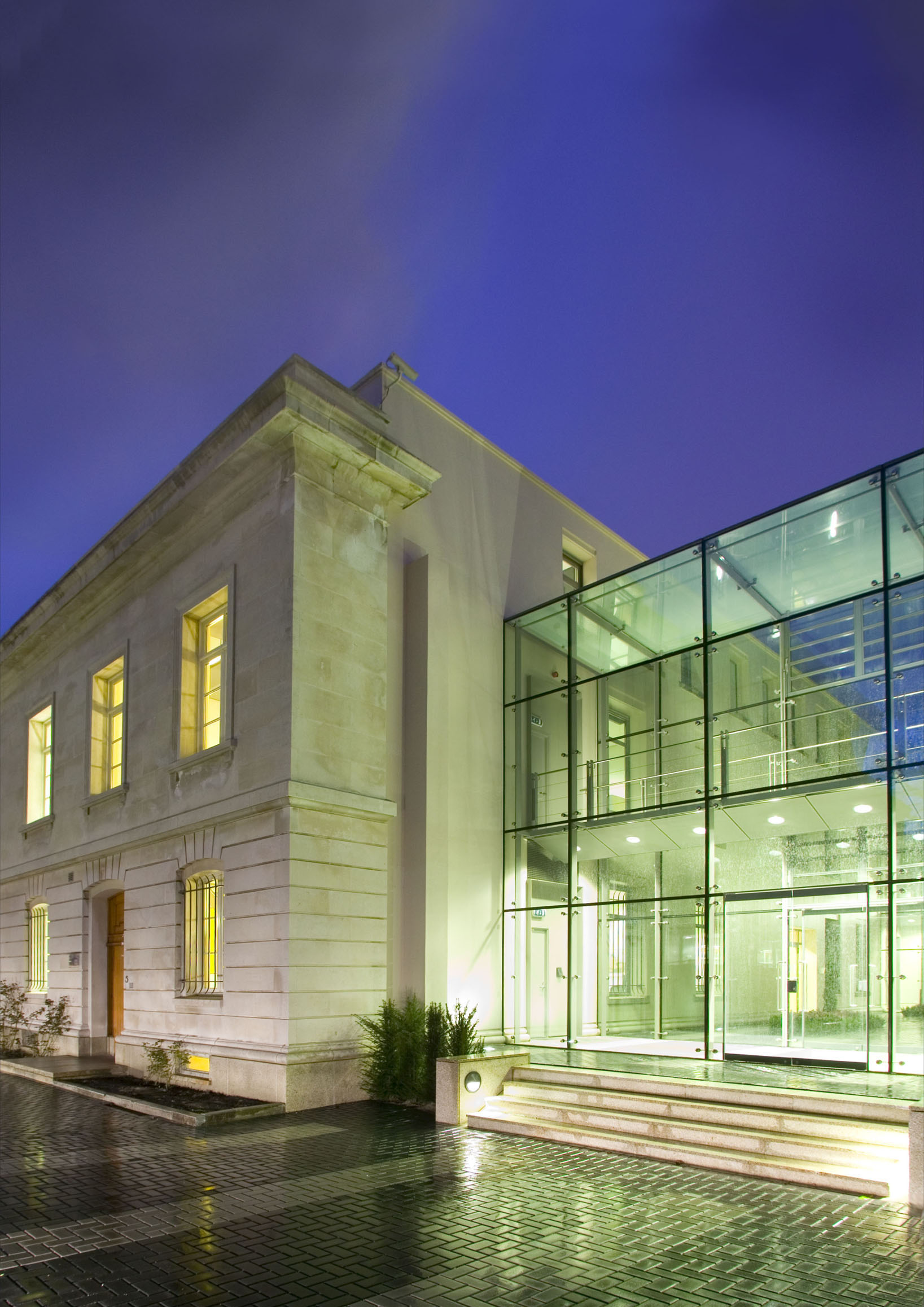
The original building is situated in a unique location in the city within The Hague's Willemspark, at Plein 1813. The neighborhood is characterized by 19th-century white villas in the Palladian style, generously set in greenery around two main axes planted with horse chestnut trees. The Canadian Embassy’s architecture also draws inspiration from Palladio’s villas. Unlike the plastered 19th-century neighboring buildings, the street-facing side of the embassy is finished in natural stone; a two-story volume clad in French limestone sits atop a granite plinth.
New construction: a modern reinterpretation of the Palladian building
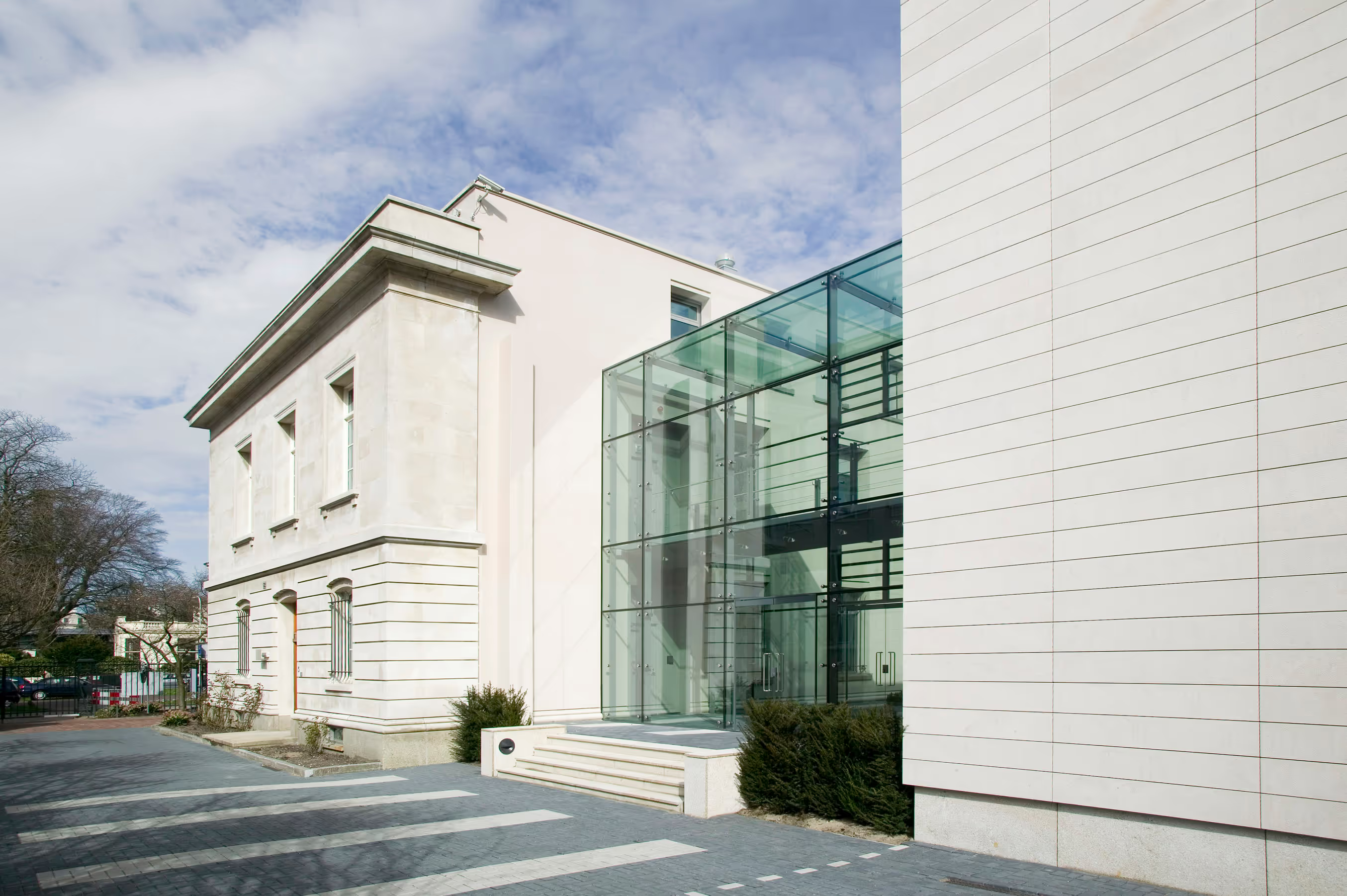
In our design for the new building, which stands independently in the backyard, we drew contemporary inspiration from the original structure—incorporating natural stone facades, a continuous plinth, and generous ceiling heights. The offices in the new building feature large glass curtain walls; a white screen-printed pattern on the glass serves as both curtains and sun shading.

Connection and renewal between old and new
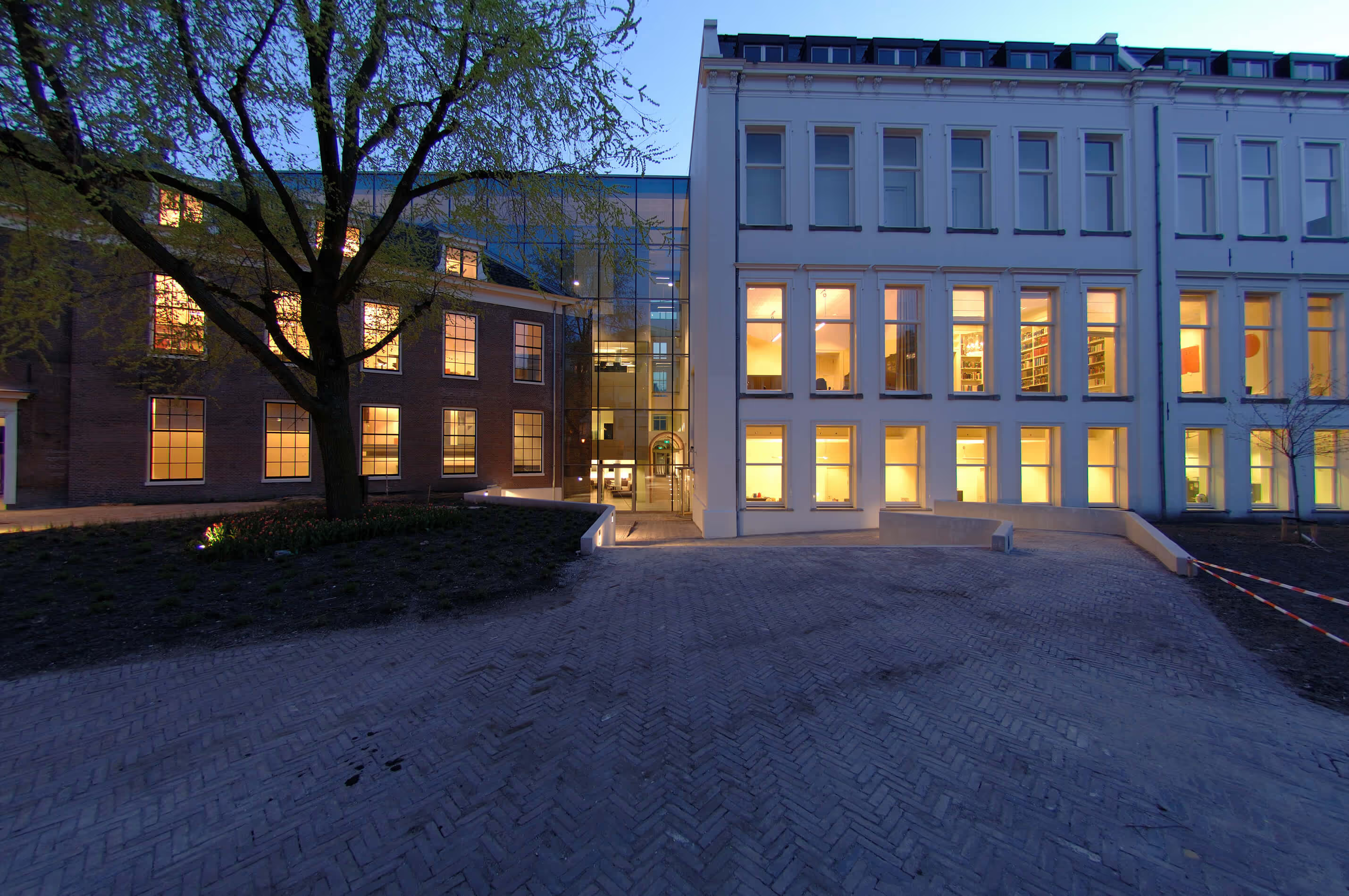
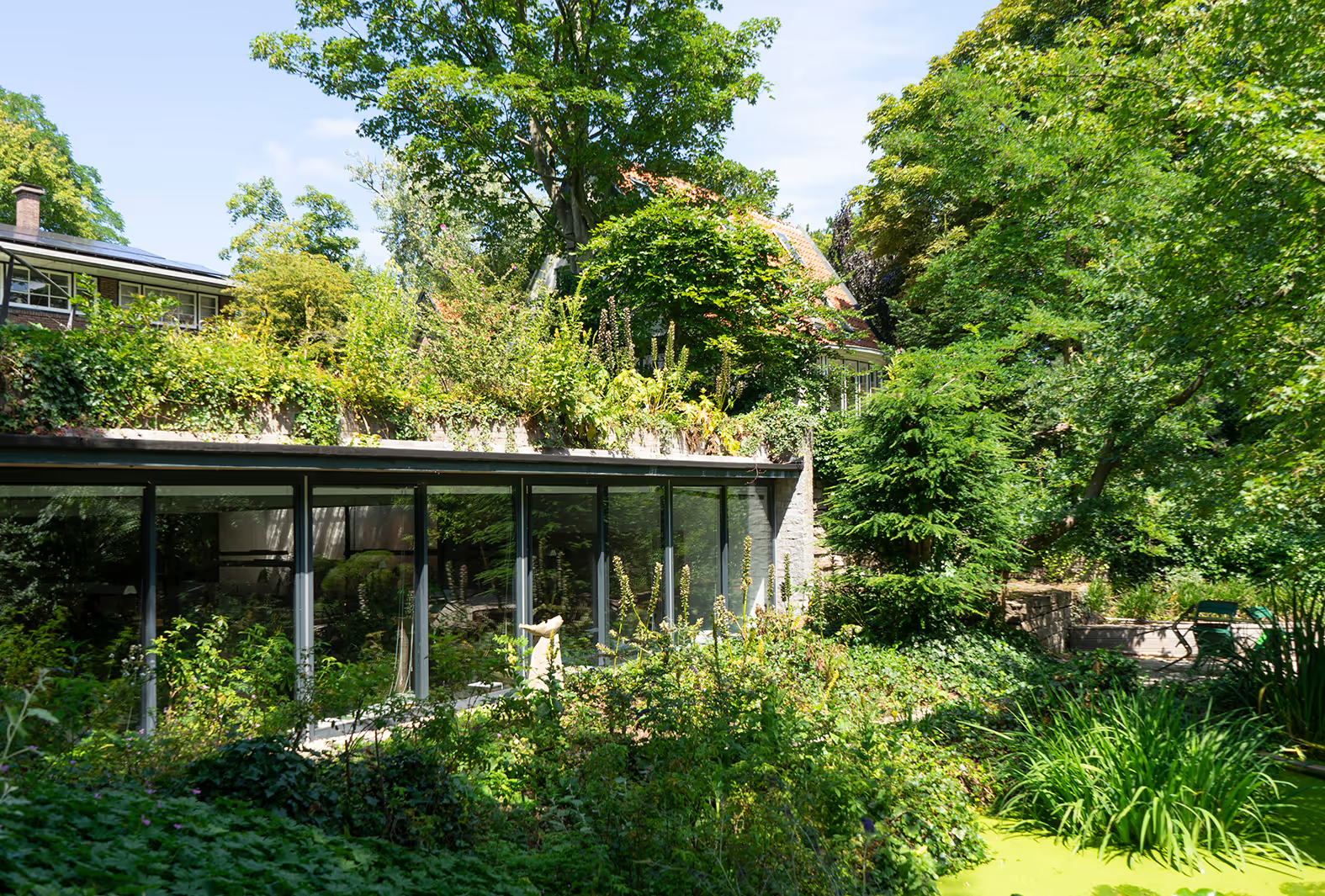
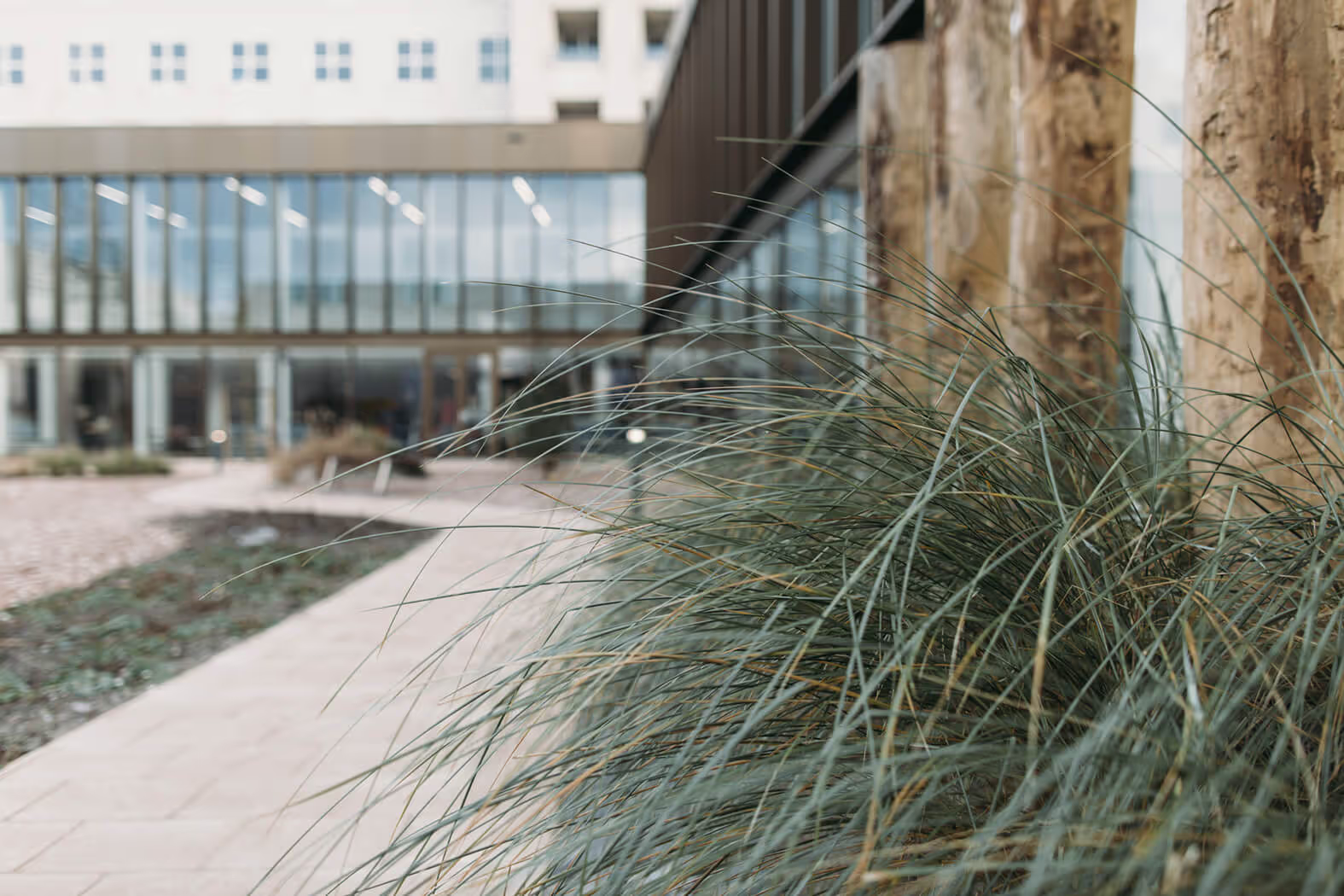
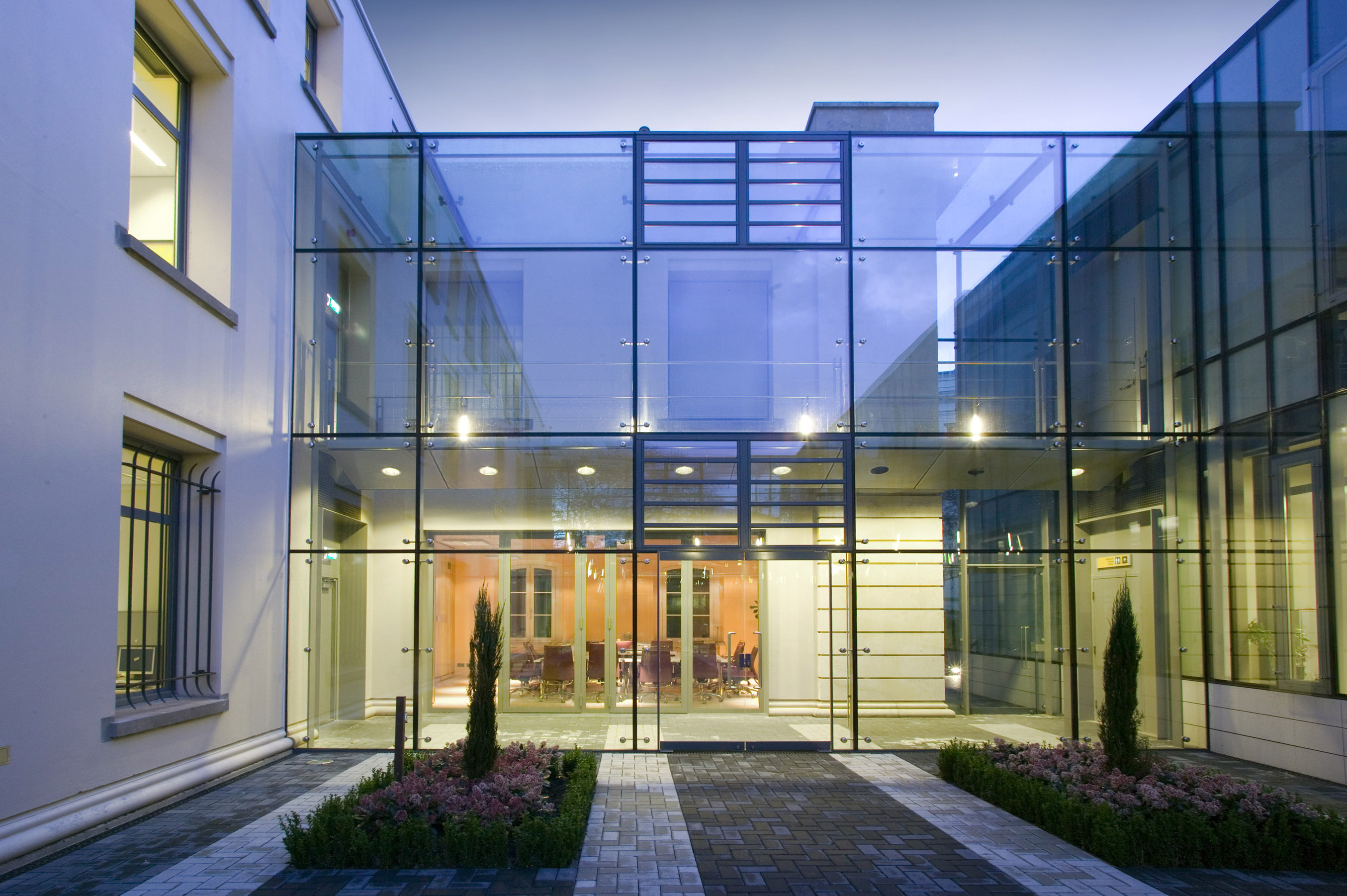
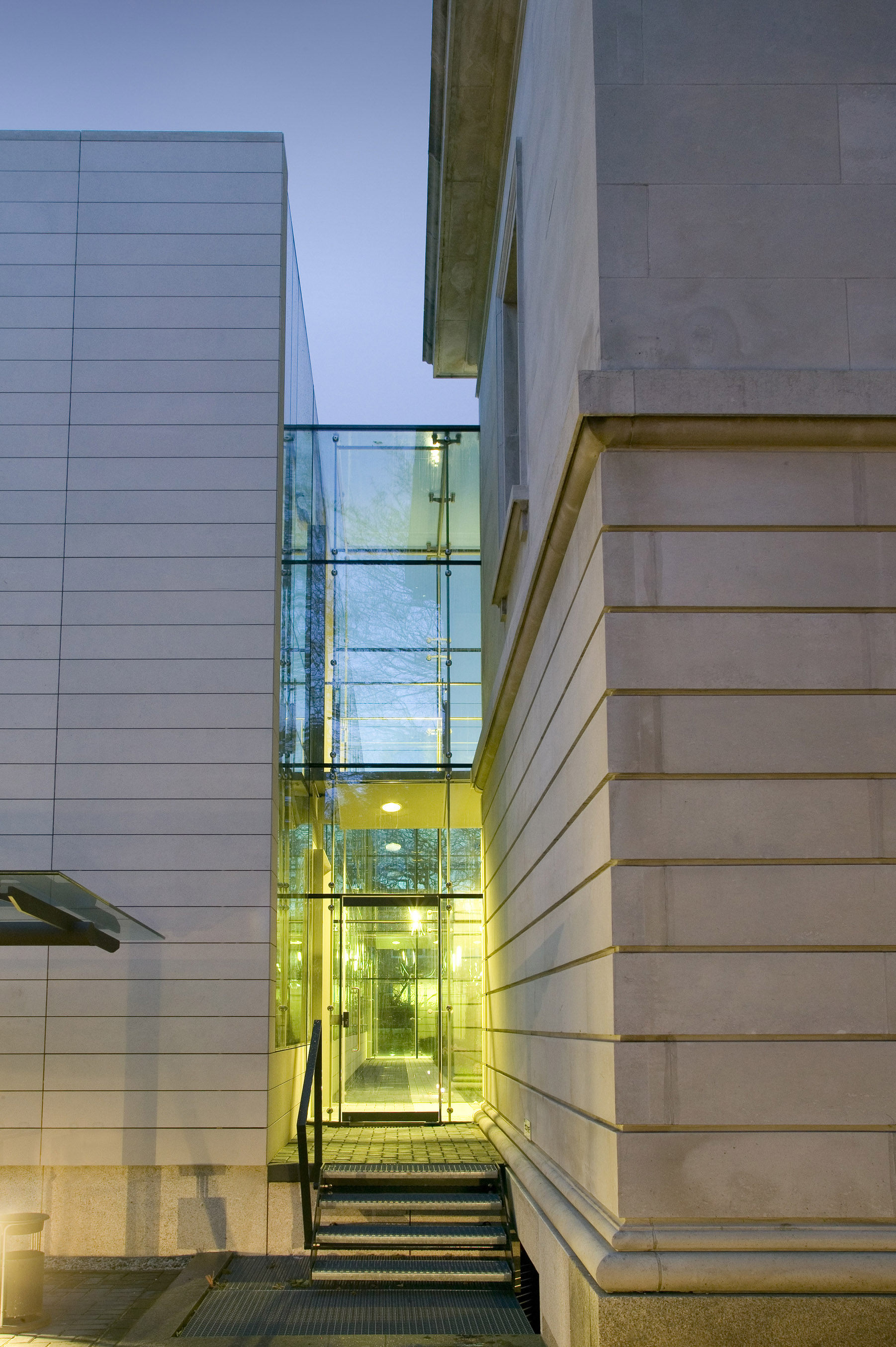
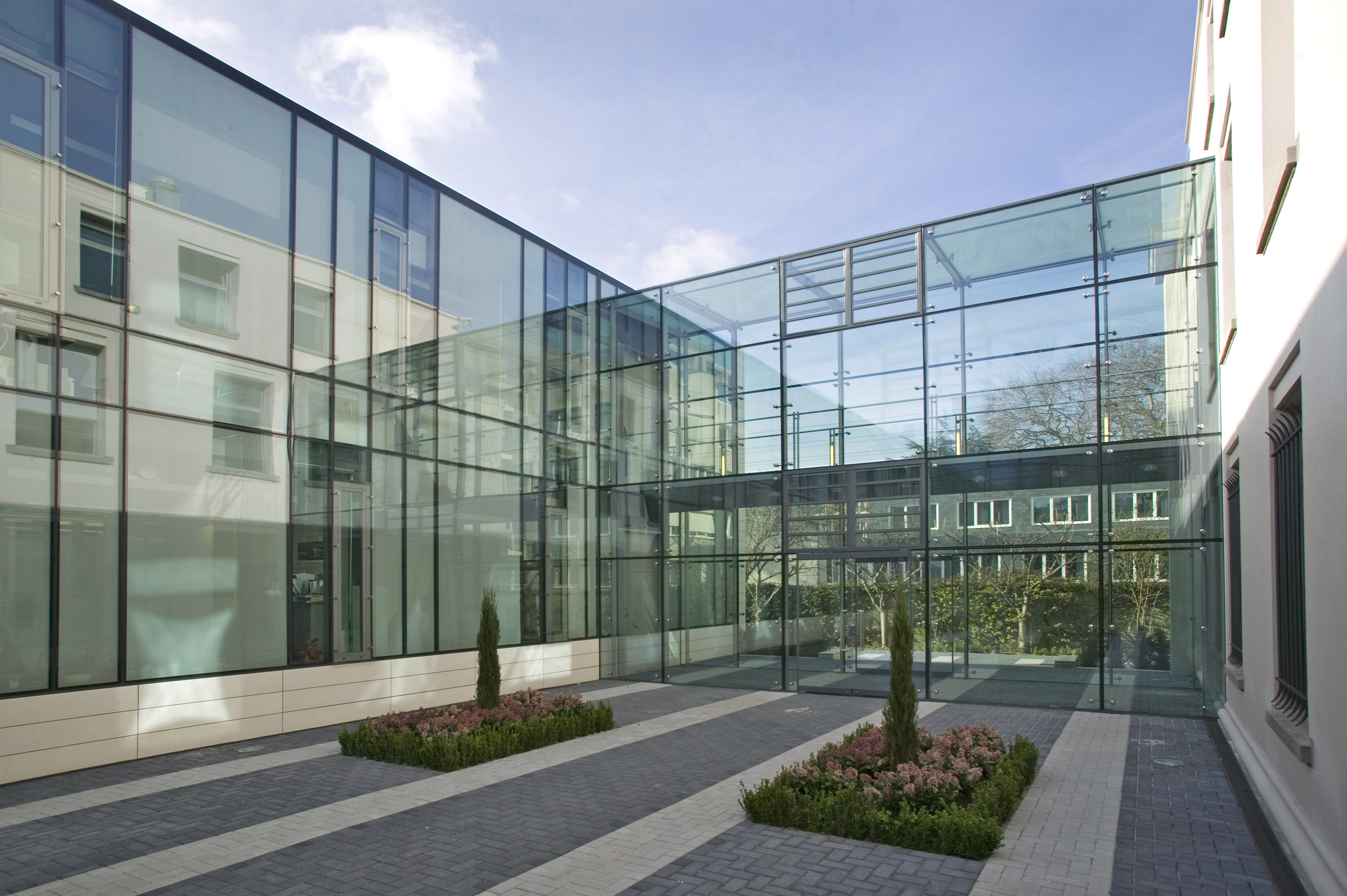
The existing and new buildings are connected by two corridors surrounding a patio; these corridors have been designed to be as transparent as possible. The slender structural framework derives much of its stability from the steel walkways on the first floor. In the existing 1955 villa, the wooden window frames were replaced with aluminum ones, featuring profiles that respect the original design. Within this villa, only the Ambassador’s office remains unchanged. New stairwells were installed in new locations, and the layout of the office rooms was significantly altered, modernizing the building to meet contemporary requirements.