Het Nationale Toneel
Het Nationale Toneel
Het Nationale Toneel
Extra play area behind the Koninklijke Schouwburg
Opwaardering van een ‘achterafstraat’
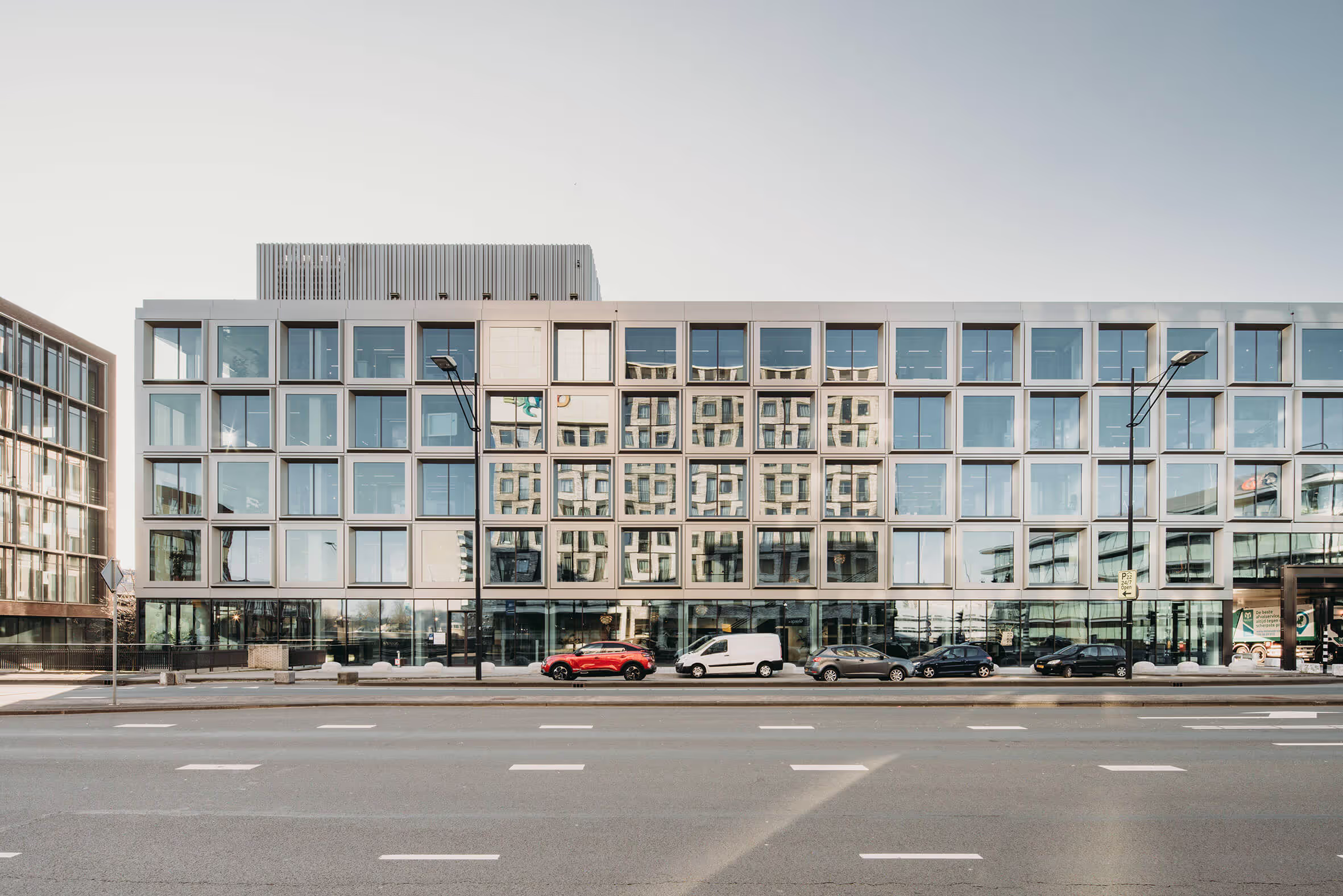
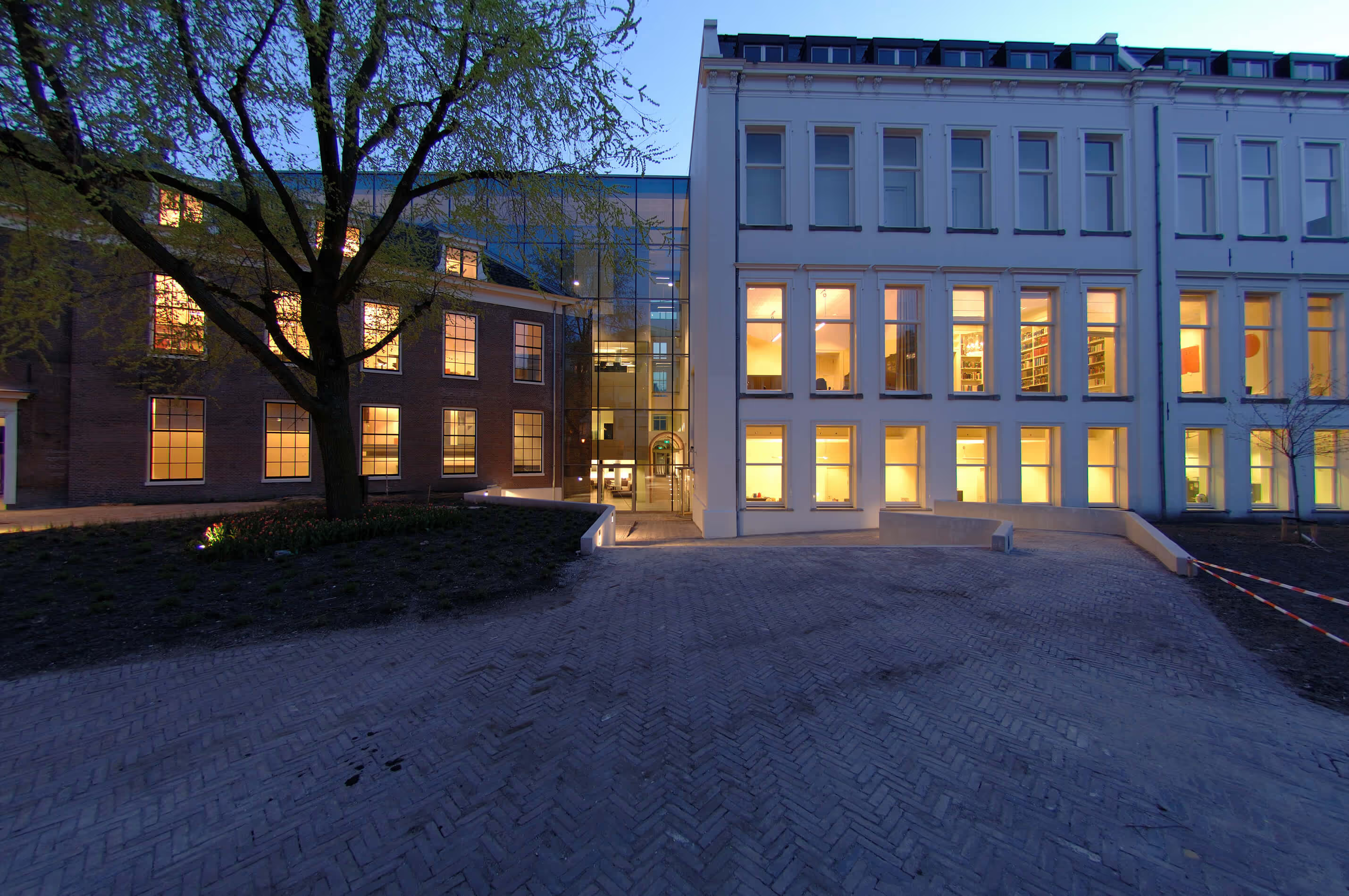
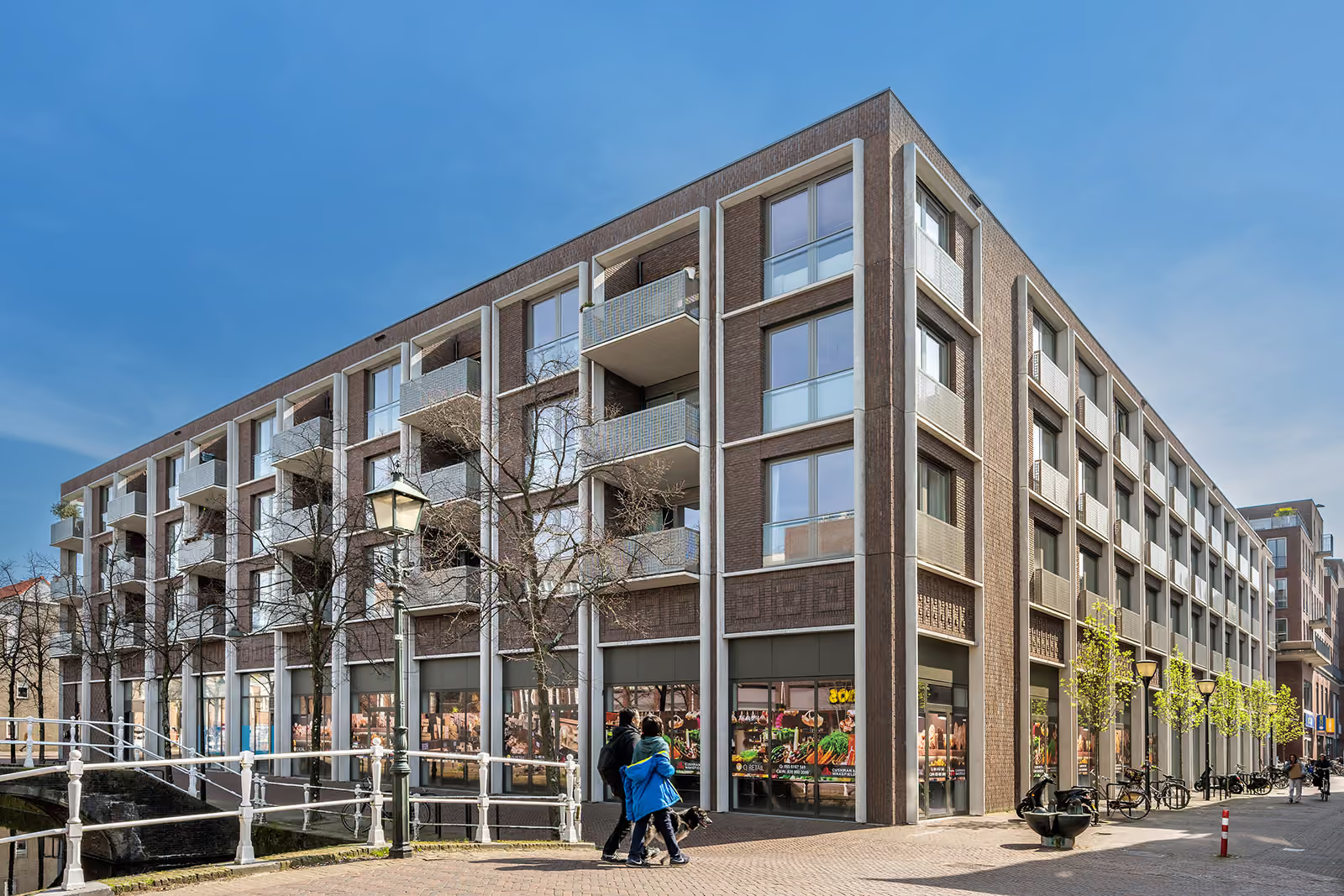
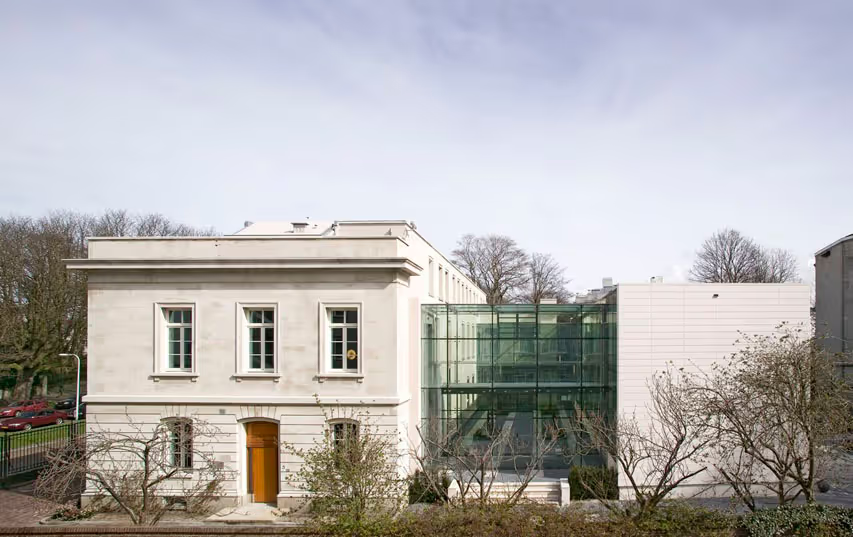
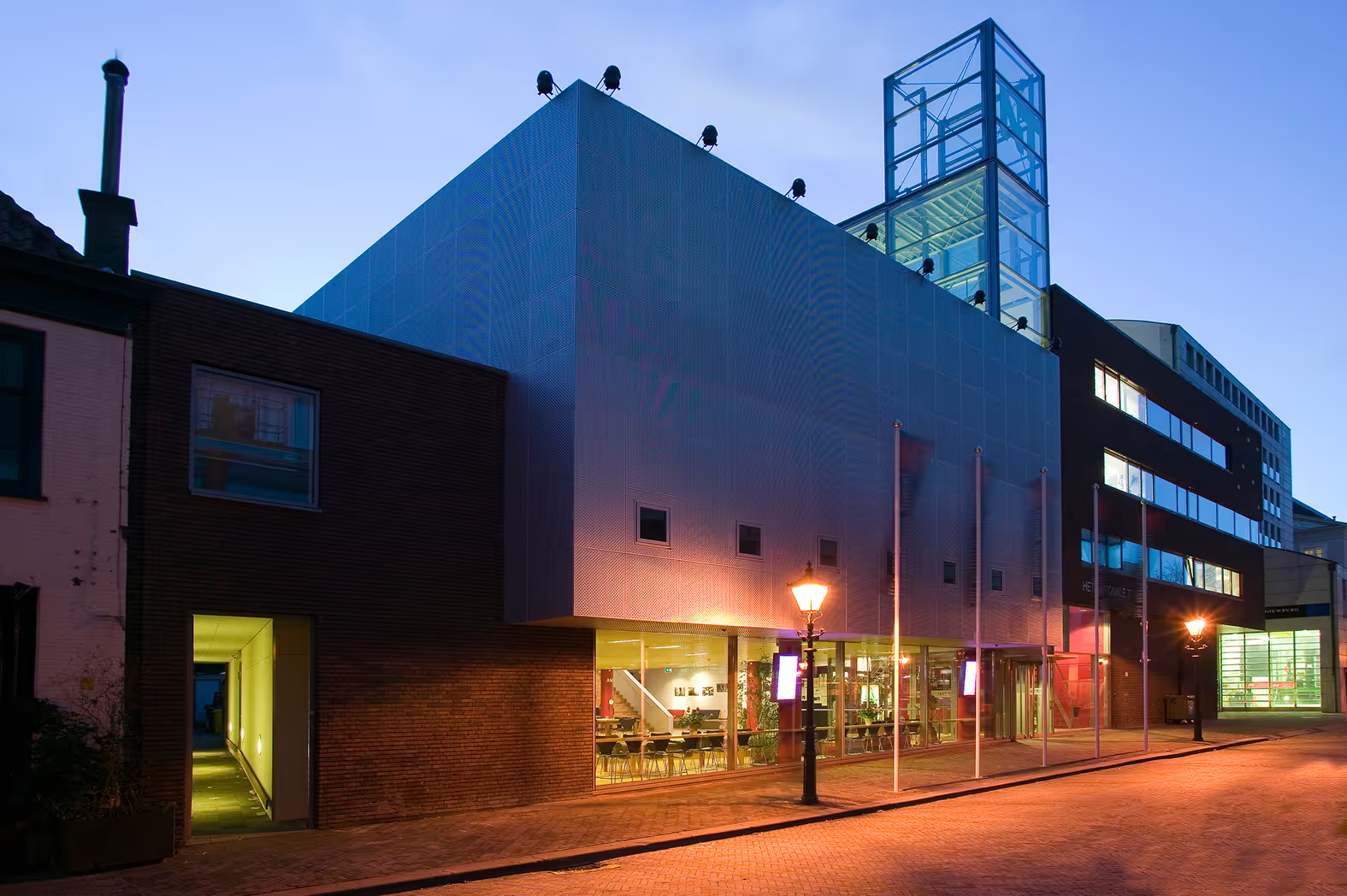
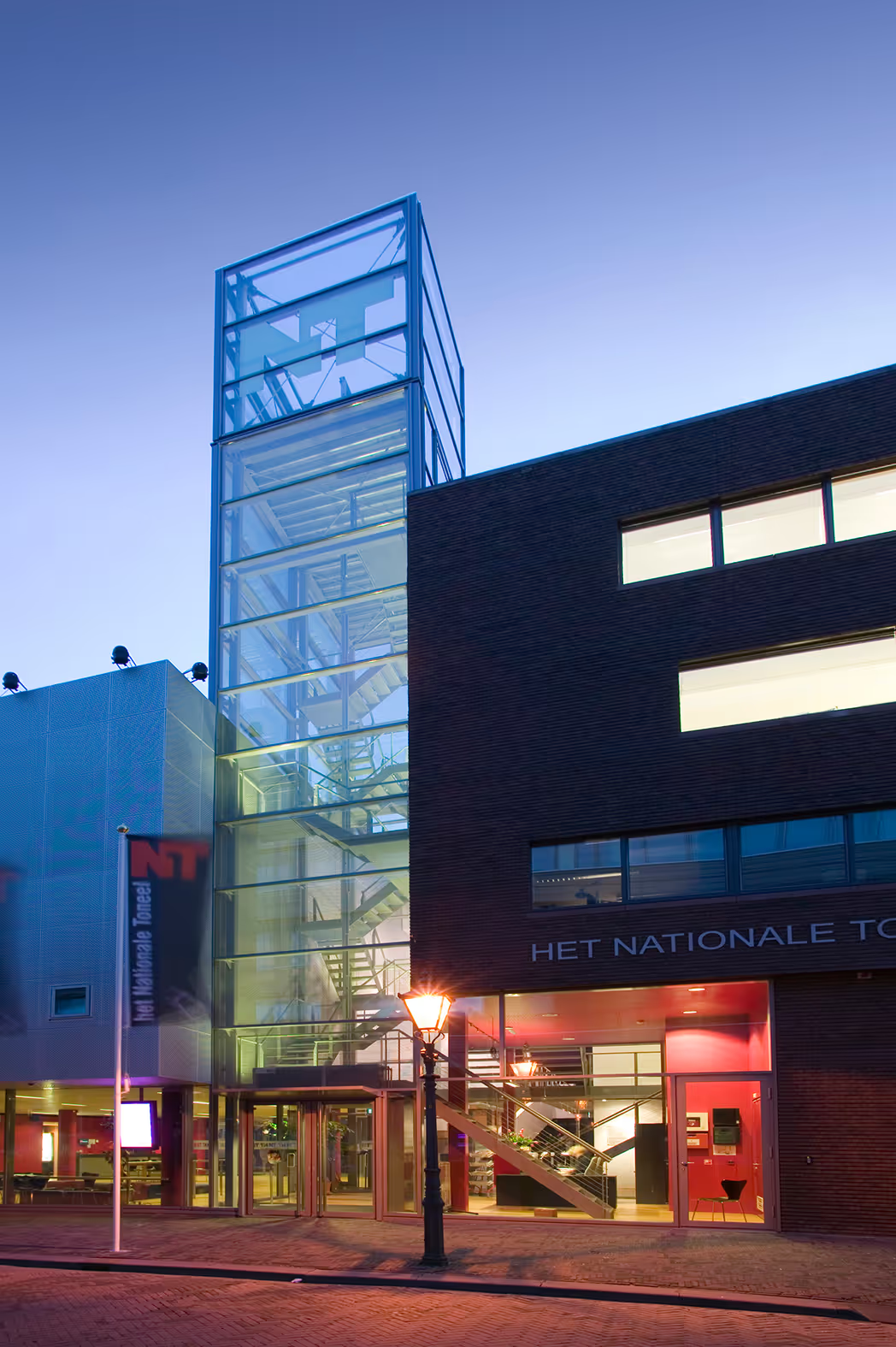
De uitdaging was om de complexe plek achter de Koninklijke Schouwburg optimaal te benutten. De Schouwburgstraat heeft een ander karakter dan het voorname Korte Voorhout met de Koninklijke Schouwburg - een sjieke Haagse laan met monumentale gebouwen en prachtige bomen. De Schouwburgstraat is veel stiller en geslotener, een ratjetoe van gebouwen, inhammen, achterkanten van gebouwen en het massieve ministerie van Financiën. De nieuwbouw moest zorgen voor een nieuwe balans en een opwaardering van de straat; door de open glasgevel die de foyerruimte van het gebouw zichtbaar maakt, heeft het geheel nu een veel opener en lichtere aanblik.
The architecture opens the building to the surroundings
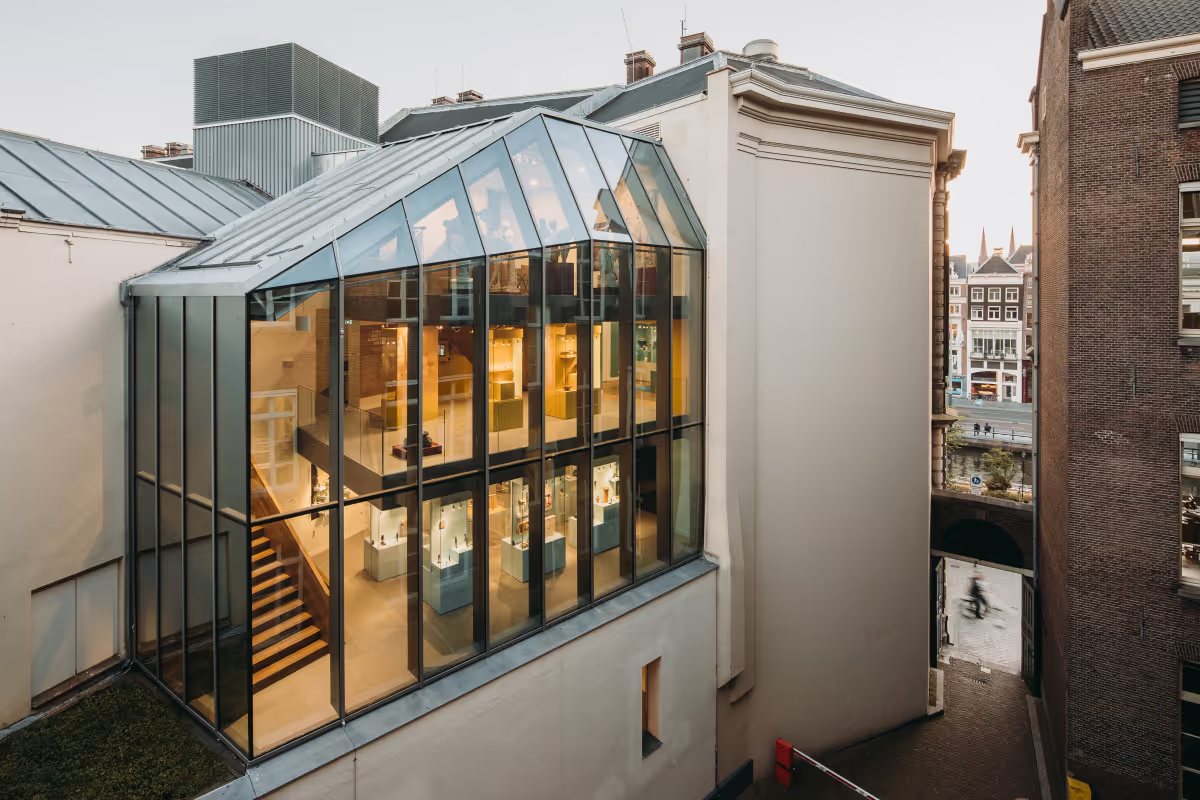
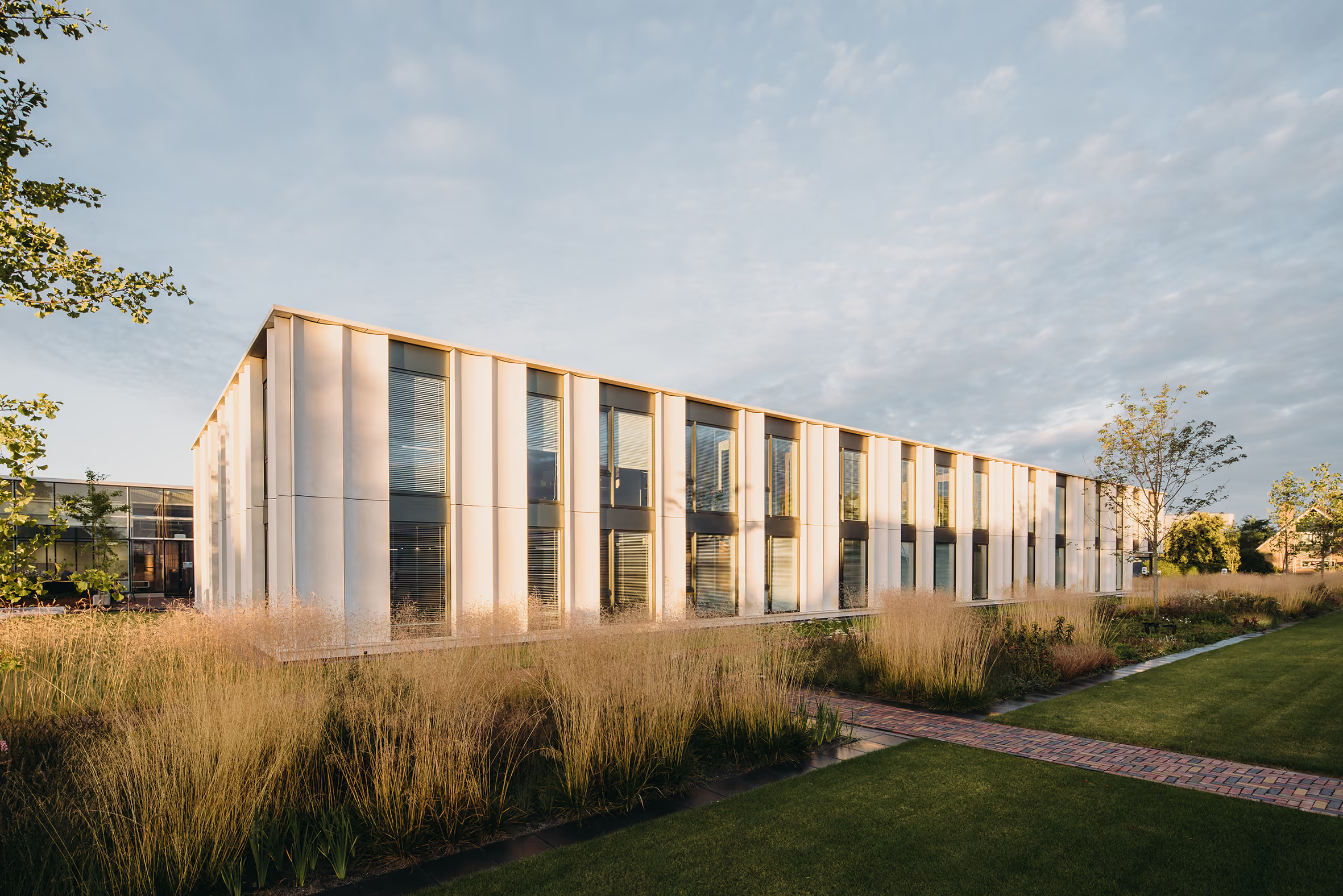
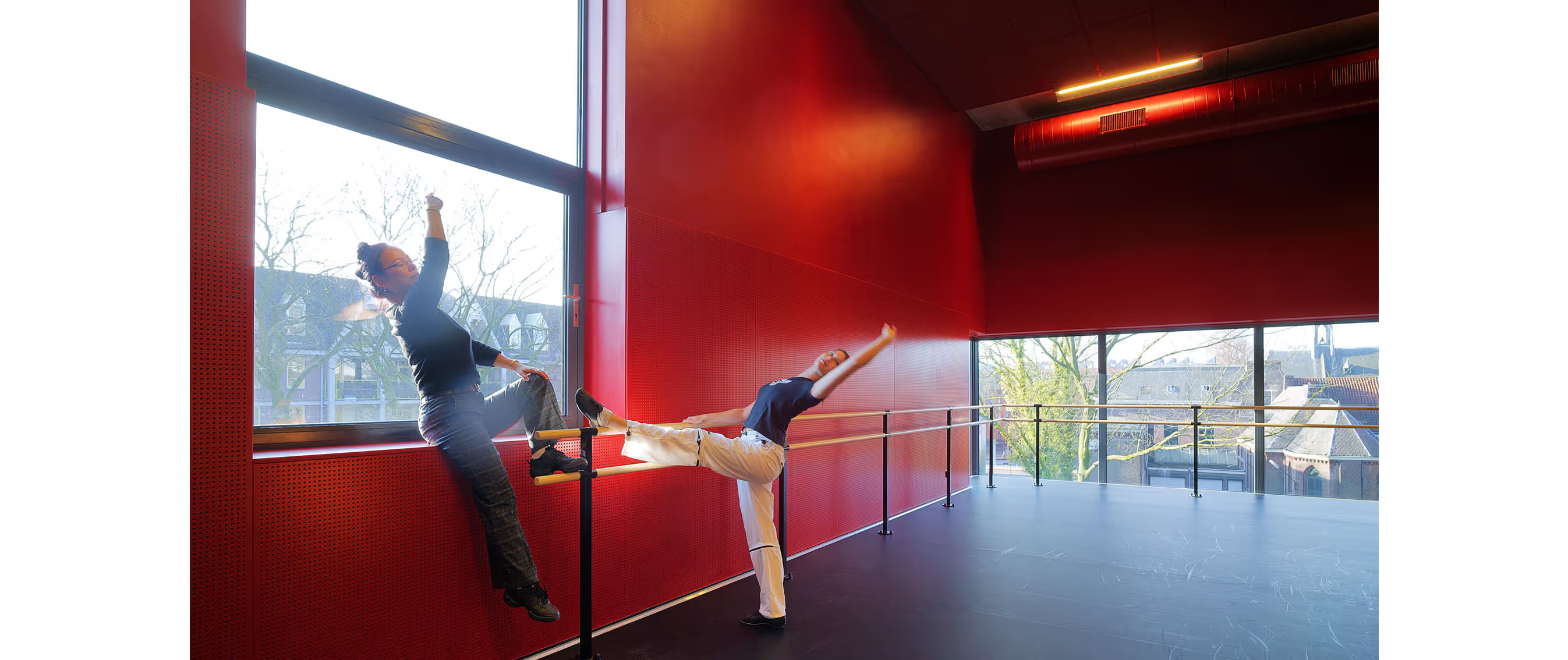
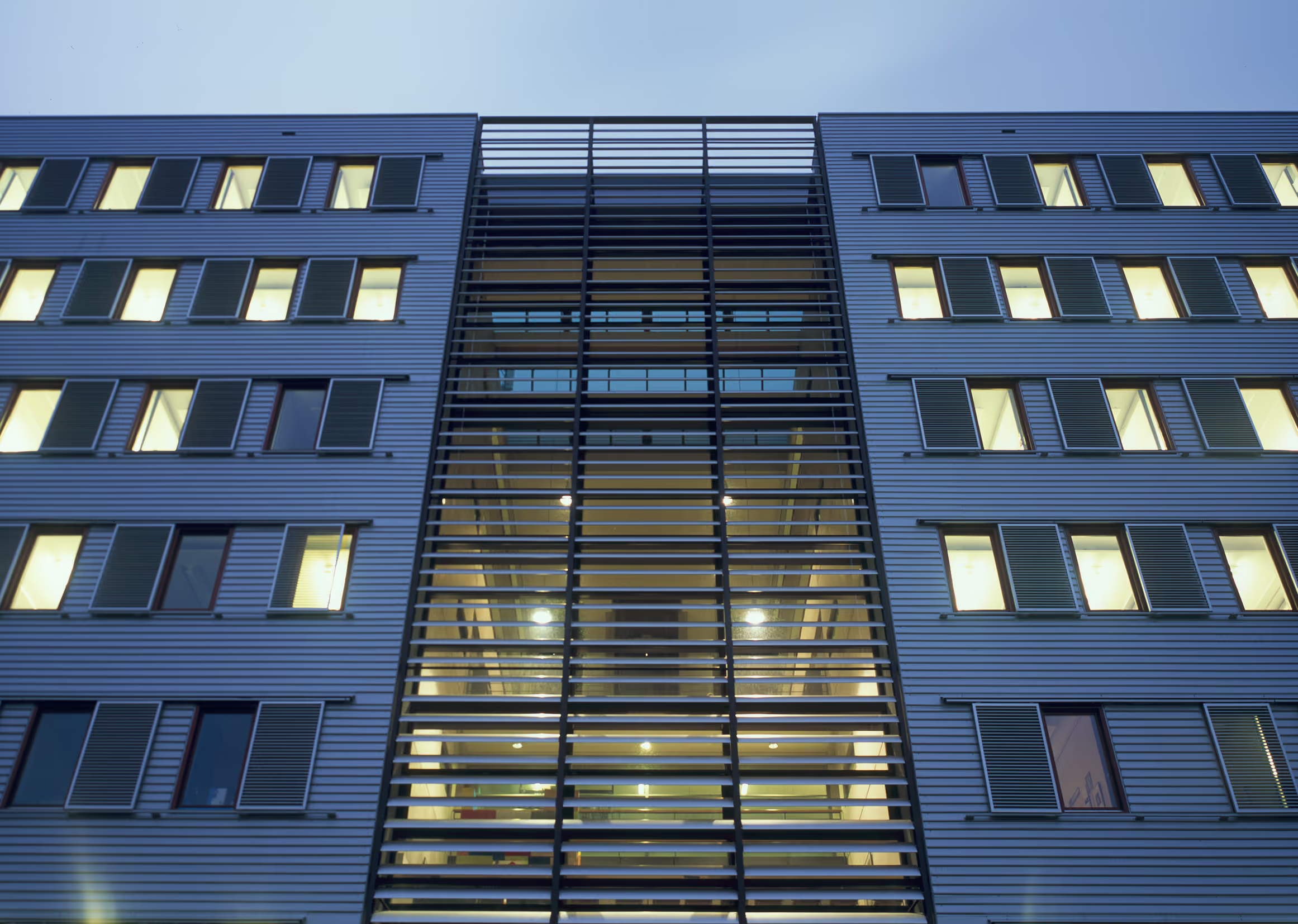
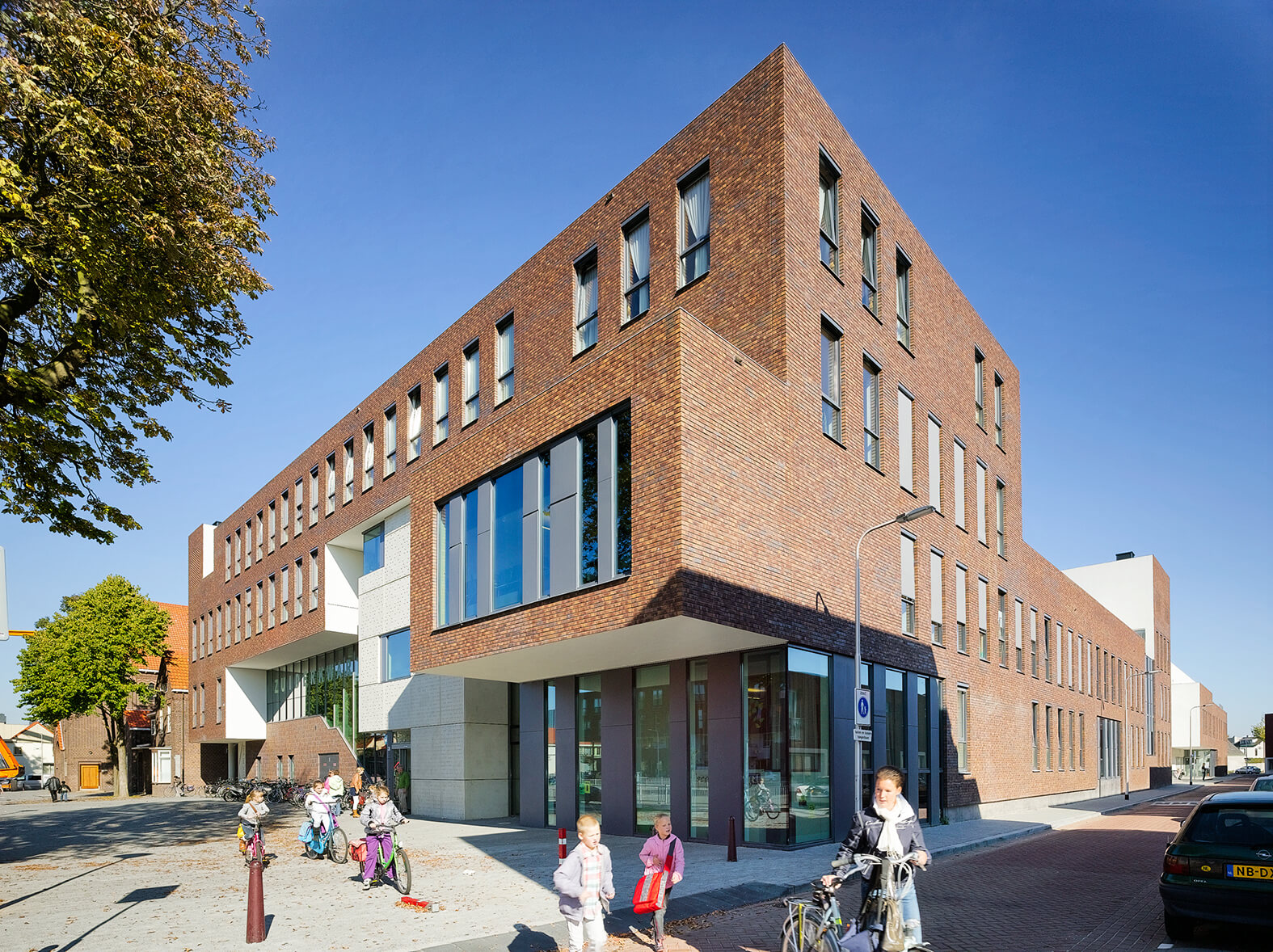
The building consists of a series of distinctively designed volumes that jump along the street wall, with two overhangs: the rehearsal room on the Schouwburgstraat side and the office that crosses the loading and unloading area towards the Koninklijke Schouwburg. At street level, the complex opens with glass facades. In addition to the theater café and foyer that brighten up the street in the evenings, a glass tower has been created in front of the stairs, like a beacon of light that makes the National Theatre visible from Korte Voorhout. The main entrance is located under the glass staircase and, thanks to its openness, creates a completely unique atmosphere. The bright light of the theater colors the street.
An interior that invites you to connect
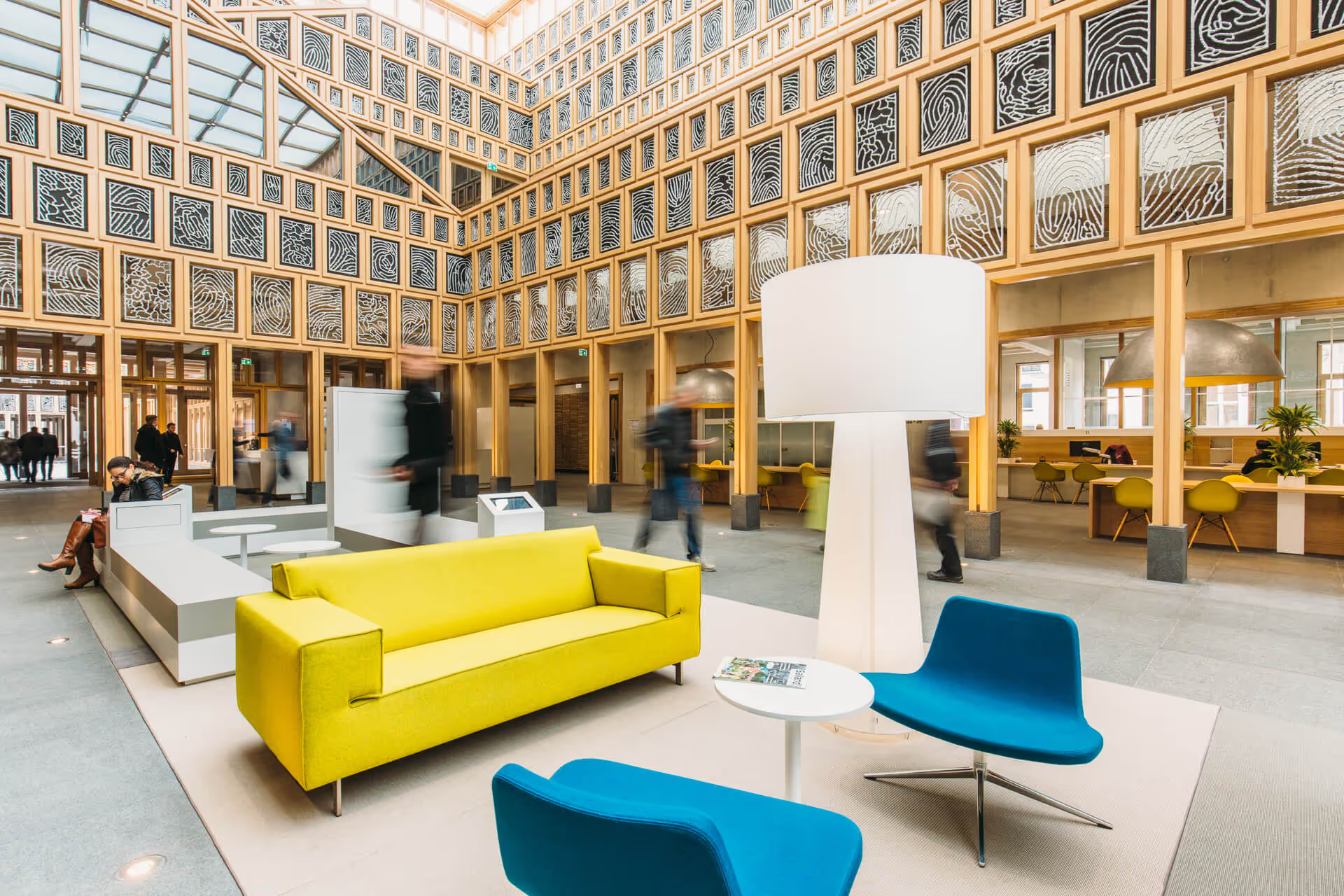
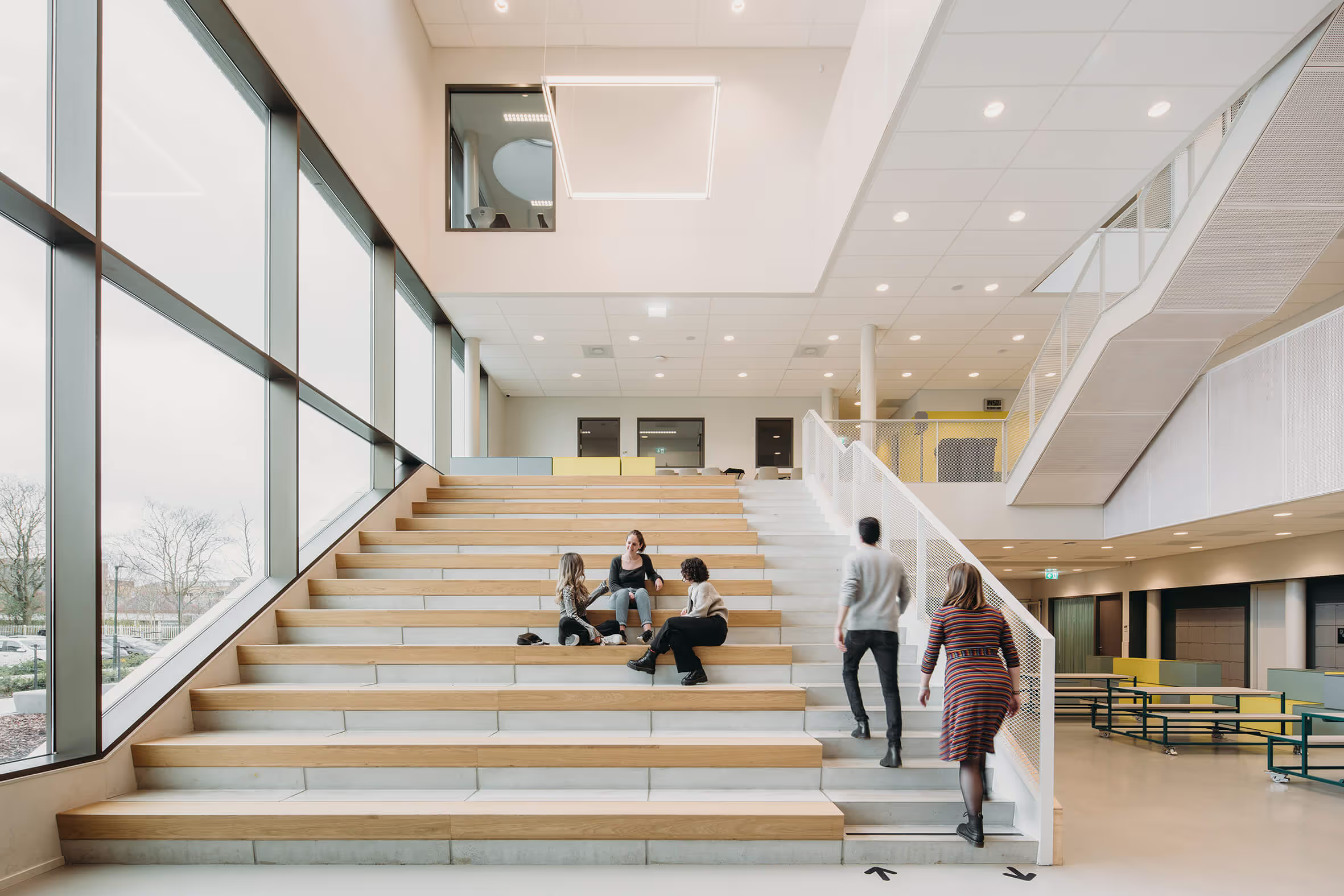
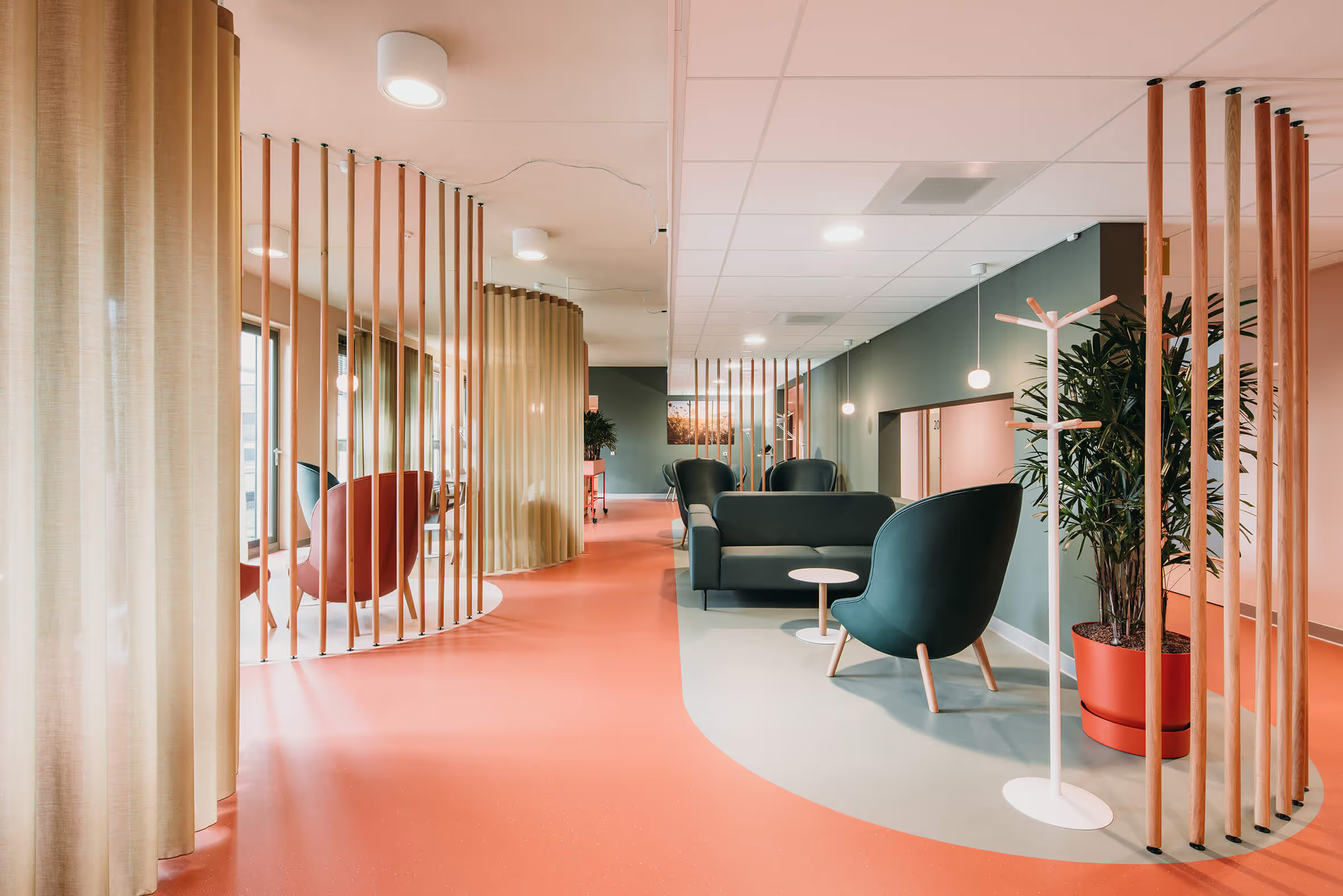
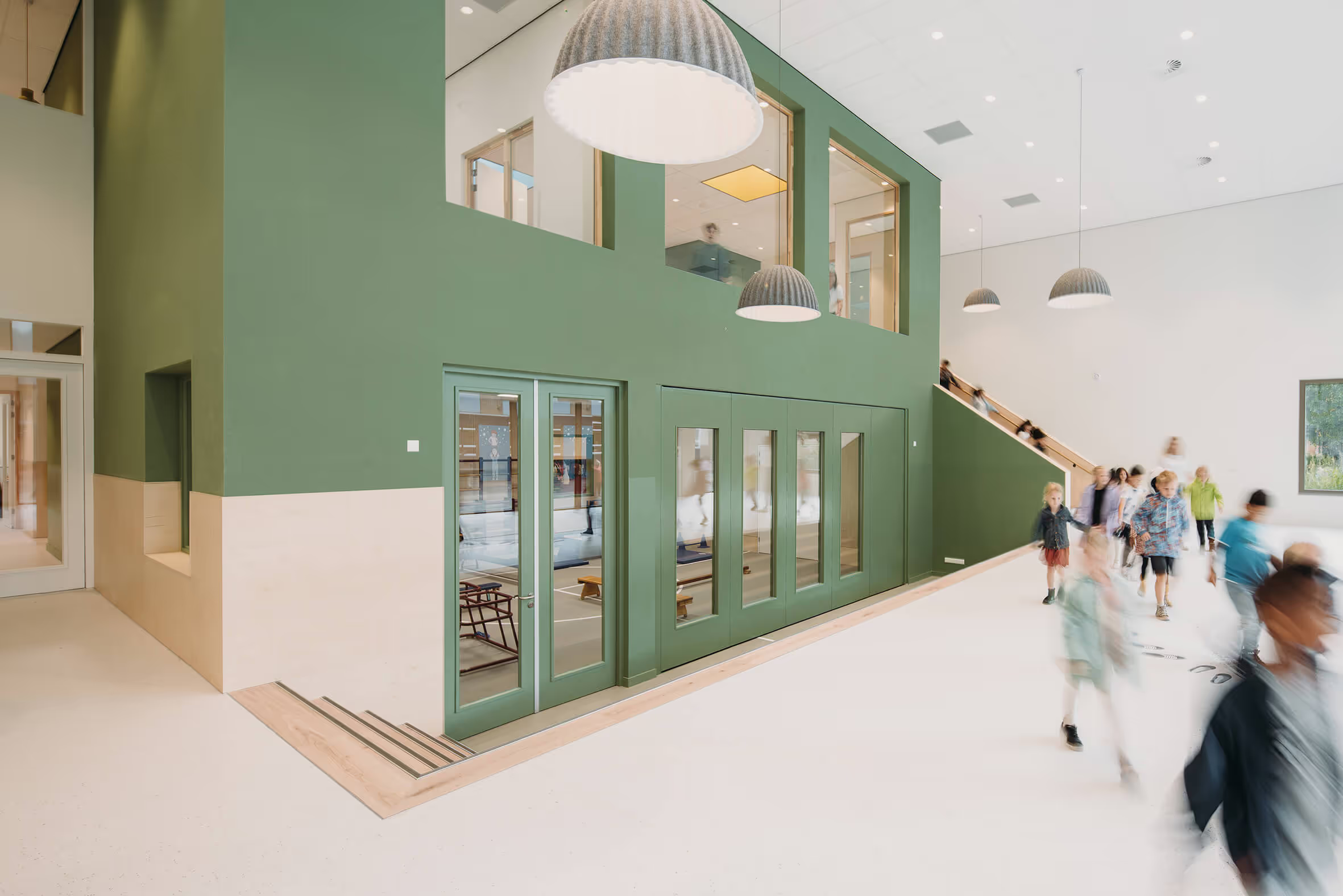
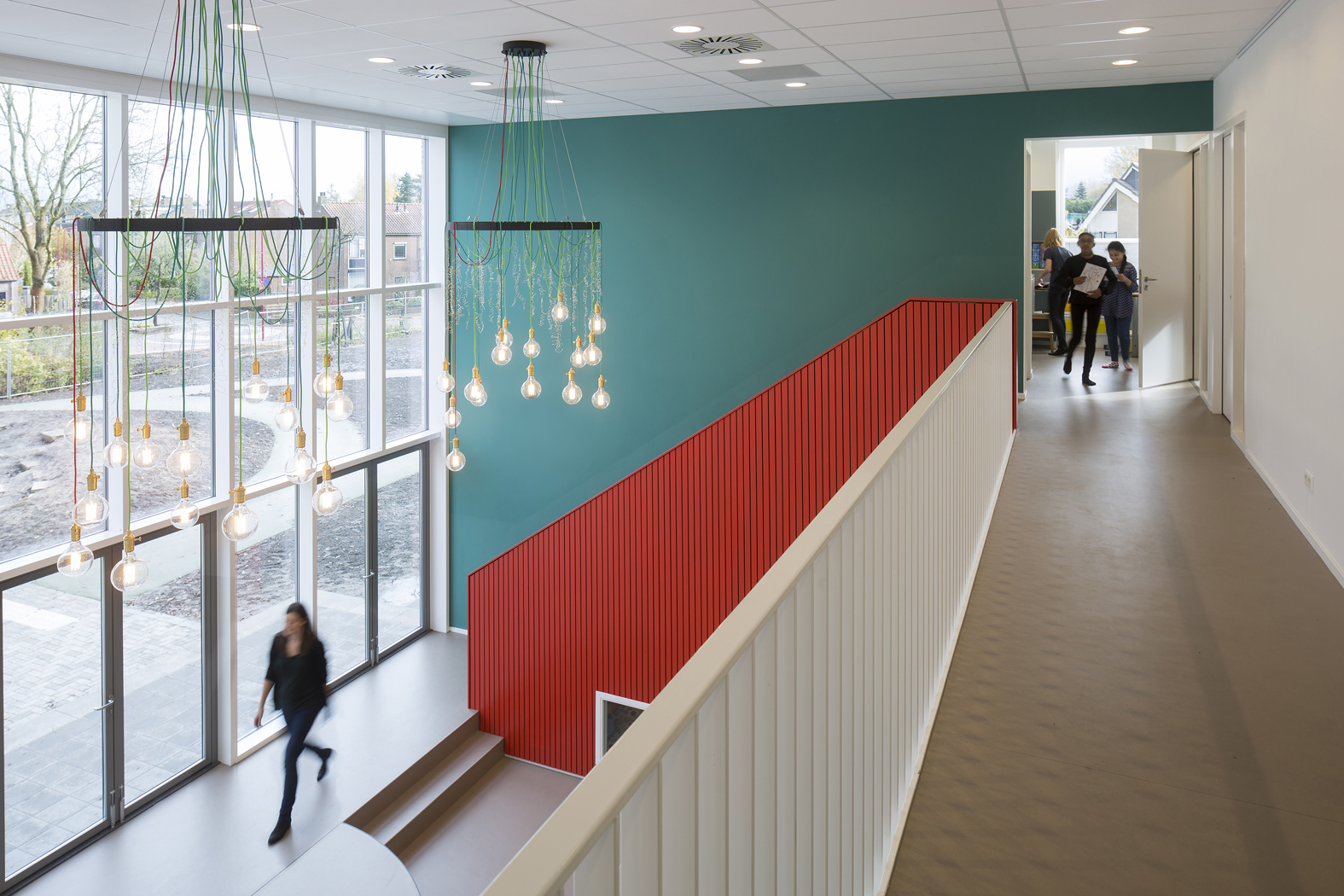
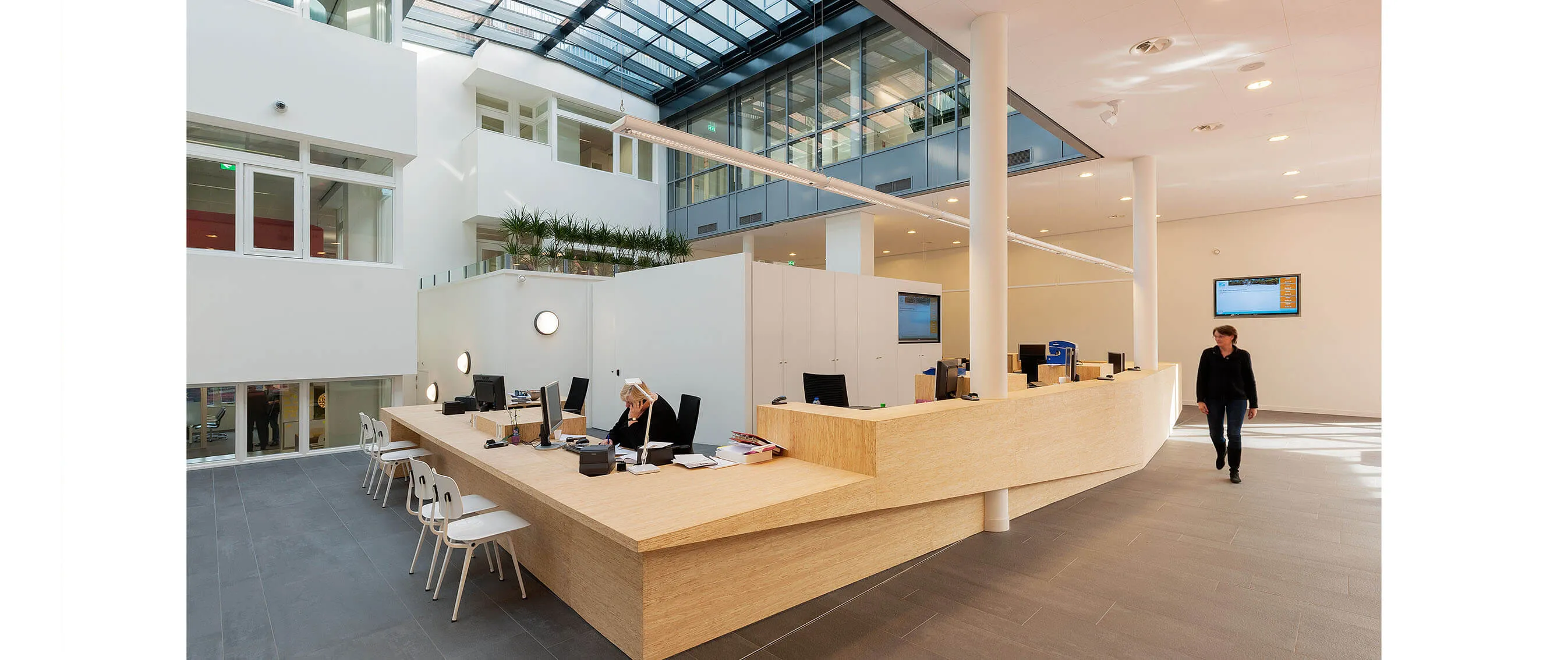
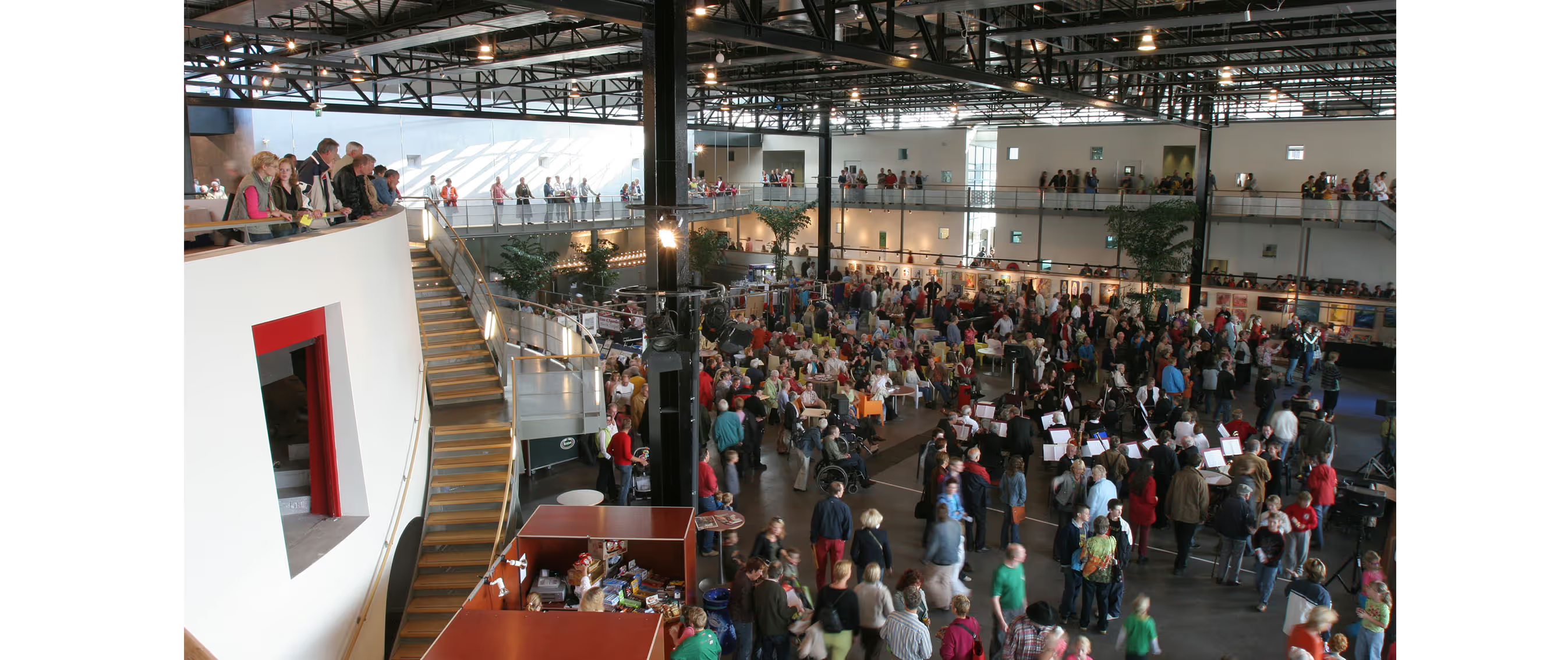
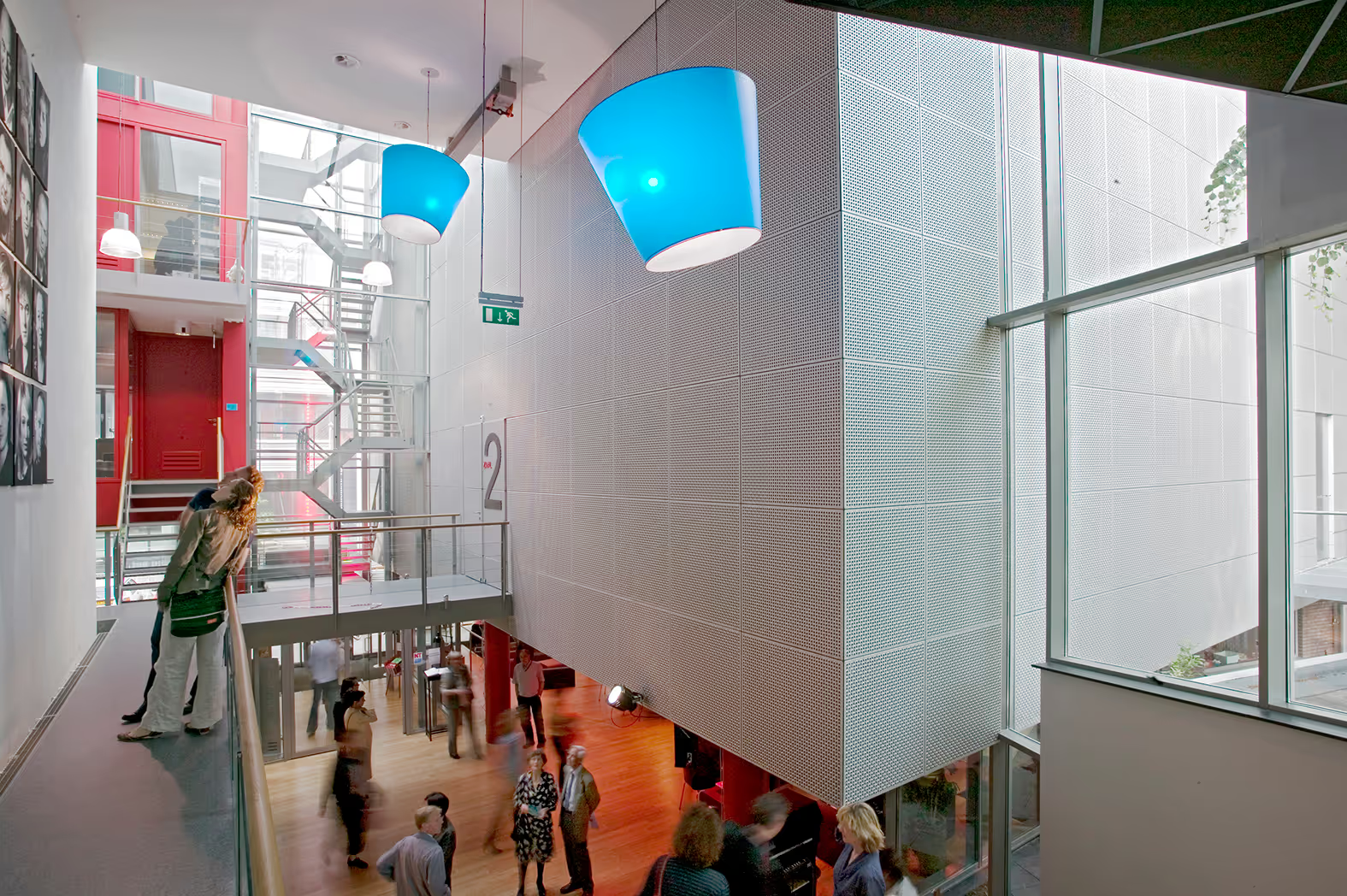
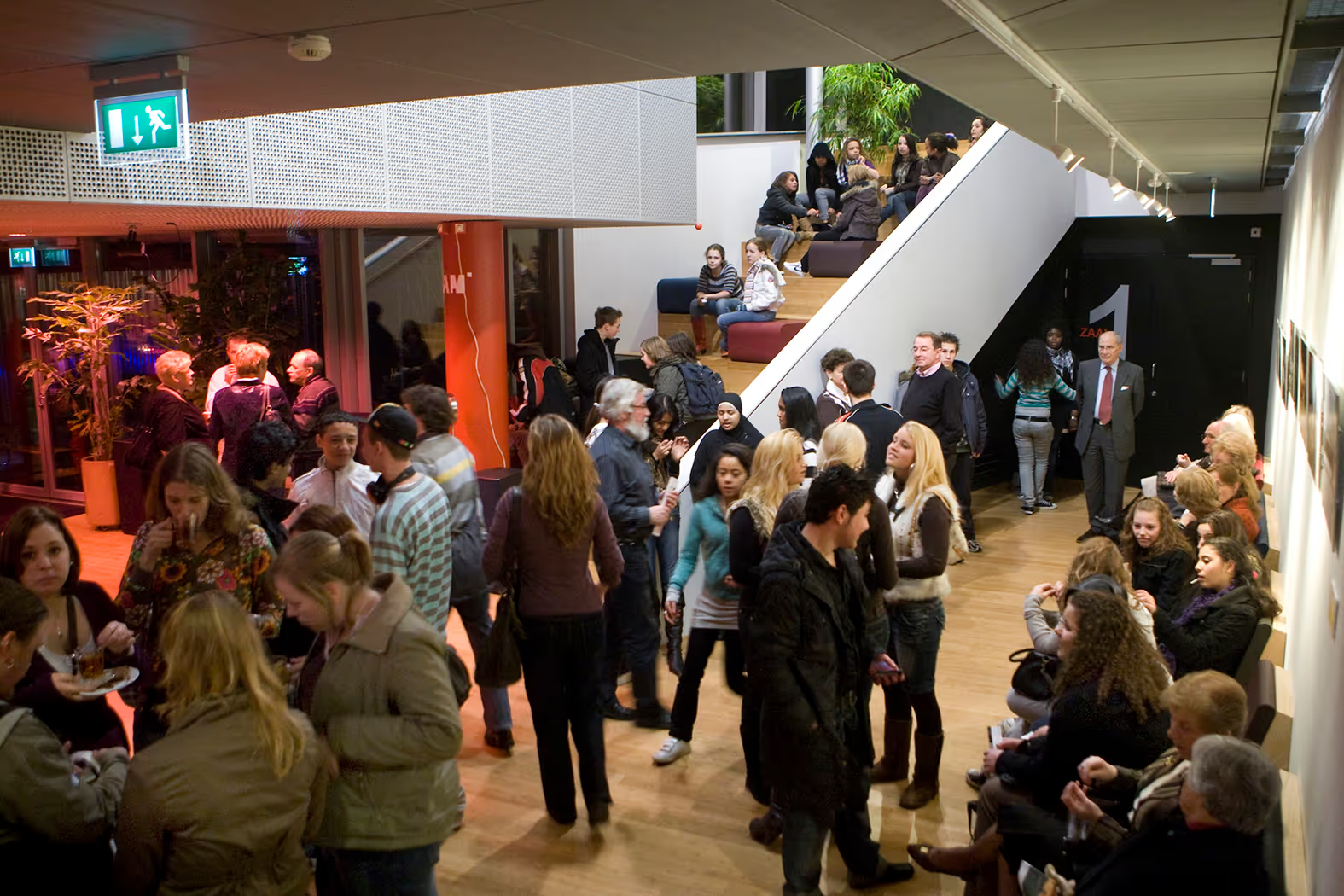
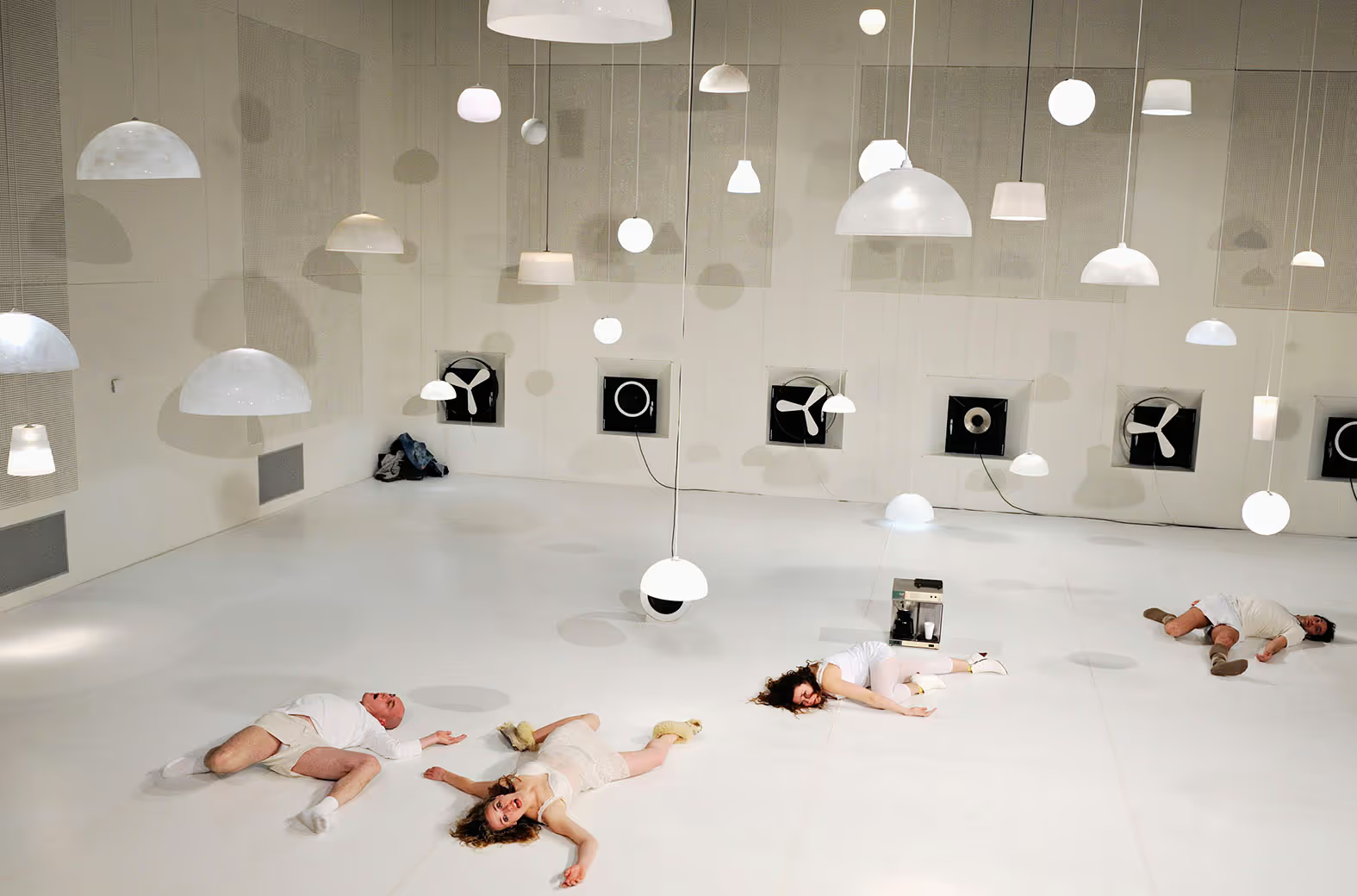
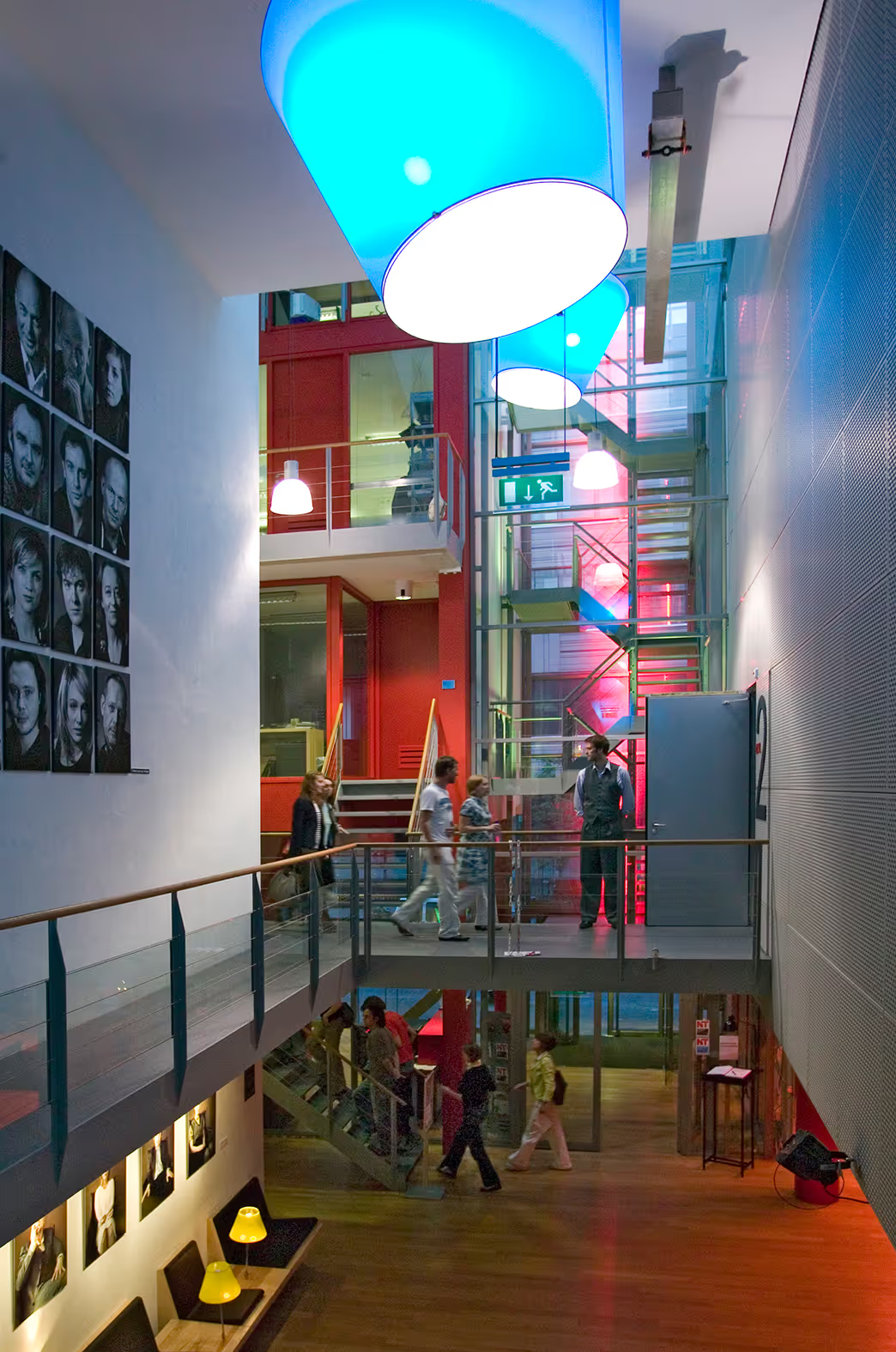
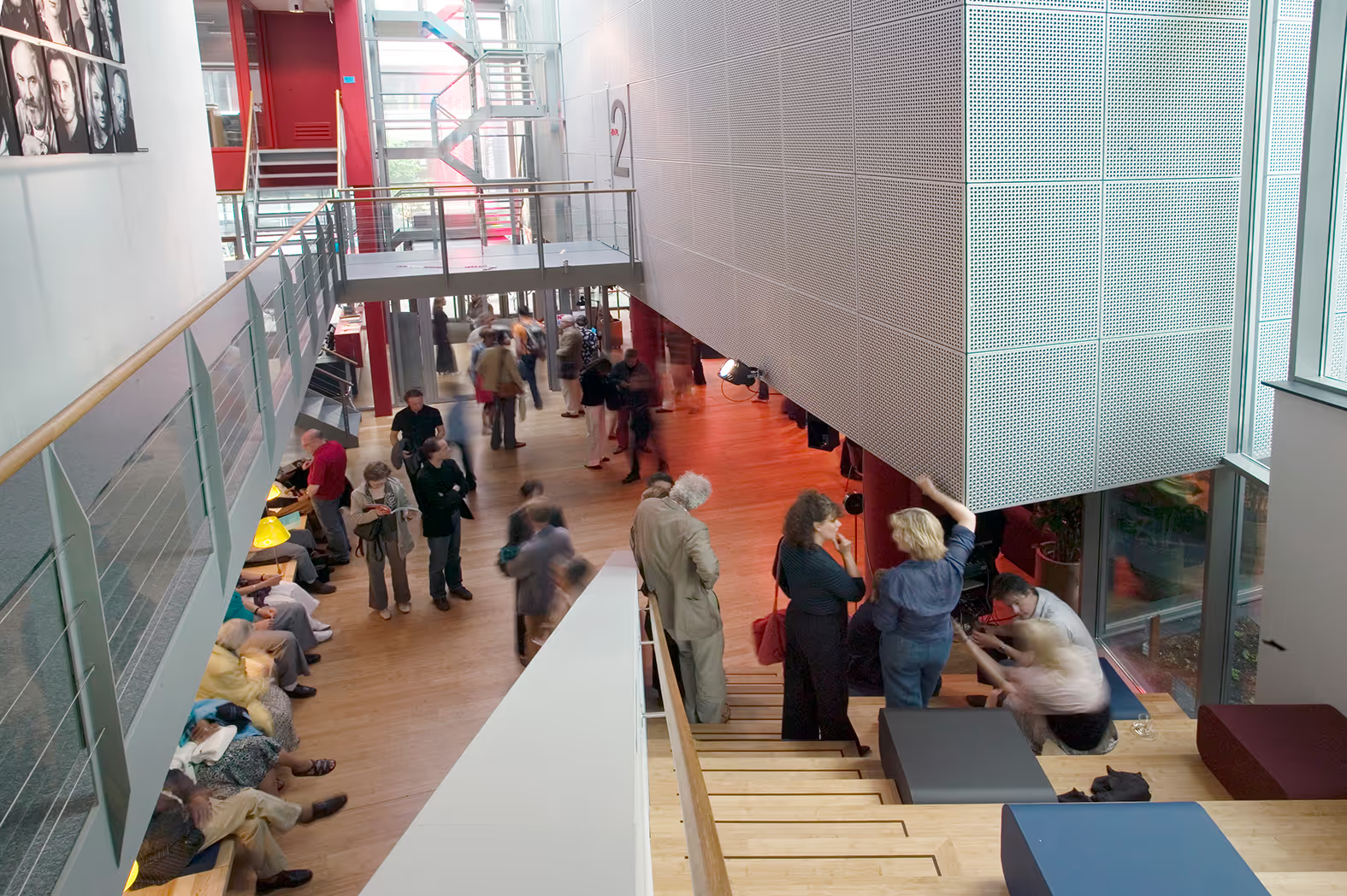
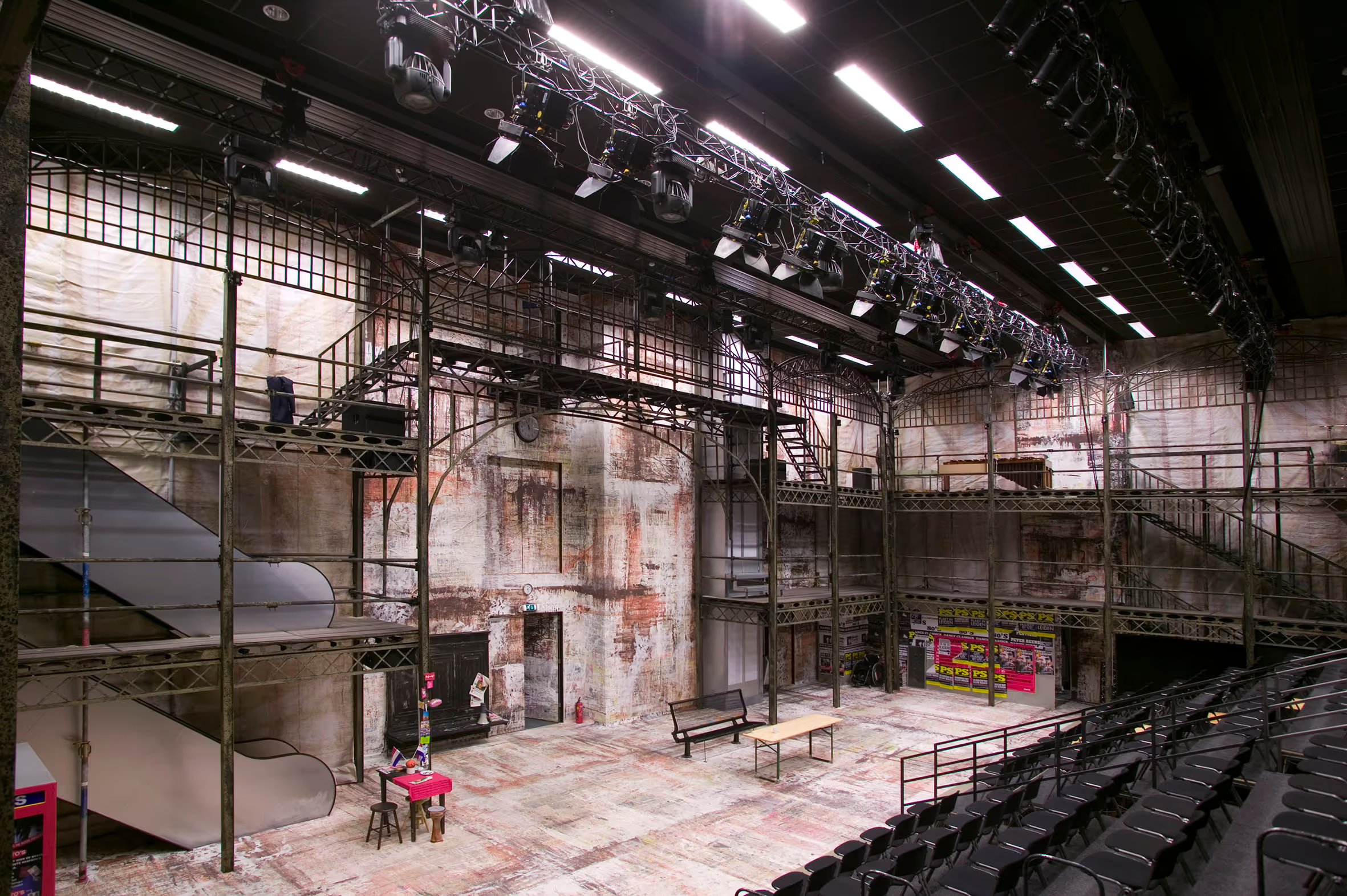
The internal structure of the building is compact. The hall, rehearsal room and offices are placed in the building as recognisable volumes; the spaces in between are filled with the functions of the foyer and circulation. Communication and connection are key here, so that this part literally forms the heart of the building.
A Royal Opening and a New Future
The National Theatre was festively opened in 2008 by their Royal Highnesses Prince Constantine and Princess Laurentien. Since the merger with the Koninklijke Schouwburg and Theater aan het Spui in 2017, the spaces in the new building have been used as HNT Studios.